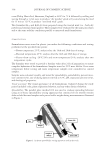
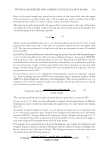
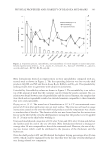
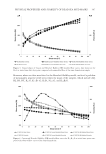
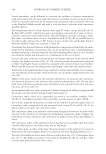
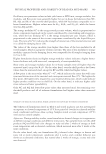
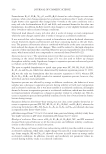
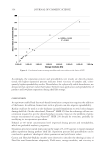
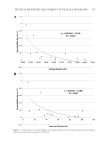
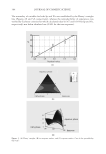
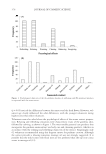
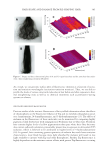
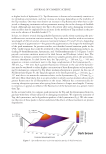
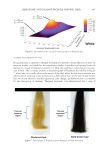
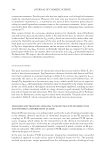
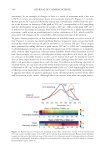
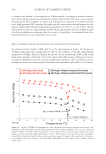
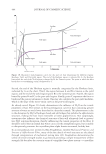
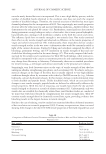
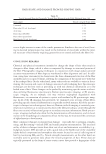
JOURNAL OF COSMETIC SCIENCE 356 low shear rate values are the main rheological parameters that can be used to compare different formulations and record the changes during stability studies. The best formulations from all physical criteria and stability aspects were B10G and K5B5G either with [1% and 5% (w/w)] or without ethanol. Their color was dark gray and they had showed no color changes during stability study. They were easily extrudable and had the best spreading behavior for the in-house products. Separation percent was moderate (5–10%), which was considered the best separation percent for mud prepara- tions at initial time points necessary to avoid signifi cant phase separation on storage. In addition, both formulas showed a typical viscoplastic, shear thinning behavior and were fi tted to both models with good correlation coeffi cient. Optimum values of rheological parameters, spreadability, and separation percent are always required, to balance between product stability, aesthetic acceptance, and easy application. ACKNOWLEDGMENT This study was carried out as a part of the MSc thesis research of SS under the super- vision of SH. We acknowledge the support of the Deanship of Graduate Studies in the University of Jordan. SS acknowledges the scholarship she received from the Scientifi c Research Fund at the Jordanian Ministry of Higher Education and Scien- tifi c Research. Figure 8. Correlation between separation percent (w/w) and storage modulus values (A), stress values at the limit of LVE (B), and spreadability values (C).

PHYSICAL PROPERTIES AND STABILITY OF DEAD SEA MUD MASKS 357 REFERENCES (1) A. Abdel-Fattah and N. Pingitore Jr, Low levels of toxic elements in Dead Sea black mud and mud derived cosmetic products, Environ. Geochem. Health., 31, 487–492 (2009). (2) Z. Ma’or, Y. Henis, Y. Alon, E. Orlov, E. Sorensen, and A. Oren, Antimicrobial properties of Dead Sea black mineral mud, Int. J. Dermatol., 45, 504–511 (2006). (3) B. Abu-Jdayil and H.A. Mohameed, Facial mask comprising Dead Sea mud, J. Cosmet. Sci., 57, 441–454 (2006). (4) A. Khlaifata, O. Al-Khashmanb, and H. Qutoba, Physical and chemical characterization of Dead Sea mud, Mater. Charact., 61, 564–568 (2010). (5) Z. Ma’or, S. Yehuda, S. Magdassi, G. Meshulam-Simon, Y. Gavrieli, Z. Gilad, and D. Efron, Cream Composition Comprising Dead Sea Mud, United States Patents, Patent no. US 6,582,709 B1 (2003). (6) B. Abu-Jdayil and H. Mohameed, Rheology of Dead Sea shampoo containing the antidandruff climba- zole, Int. J. Cosmetic Sci., 26, 281–289 (2004). (7) F. Veniale, A. Bettero, P. Jobstraibizer, and M. Setti, Thermal muds: Perspectives of innovations, Appl. Clay Sci., 36, 141–147 (2007). (8) B. Abu-Jdayil, H. Mohameed, and A. Bsoul, Determination of optimal Dead Sea salt content in a cos- metic emulsion using rheology and stability measurements, J. Cosmet. Sci., 59, 1–14 (2008). (9) V. Zague, D. Silva, A. Baby, A. Kaneko, and M. Velasco, Clay facial masks: Physicochemical stability at different storage temperatures, J. Cosmet. Sci., 58, 45–51 (2007). (10) A. Garg, D. Aggarwal, S. Garg, and A. Singla, Spreading of semisolid formulations—An update, Pharm. Technol., 84–105 (2002). (11) K. Purushothamrao, K. Khaliq, P. Sagare, K. Patil, S. Kharat, and K. Alpana, Formulation and evalua- tion of vanishing cream for scalp, Int. J. Pharma Sci. Tech., 4, 32–41 (2010). (12) R. Vieira, A. Fernandes, T. Kaneko, V. Consiglieri, C. Pinto, C. Pereira, A. Baby, and M. Velasco, Physical and physicochemical stability evaluation of cosmetic formulations containing soybean extract fermented by Bifi dobacterium animalis, Braz. J. Pharm. Sci., 45, 515–525 (2009). (13) T. Mezeger, The Rheology Handbook: For Users of Rotational and Oscillatory Rheometers. (Vincentz Verlag, Hanover, 2002). (14) A. Garakani, N. Mostoufi , F. Sadeghi, M. Hosseinzadeh, H. Fatourechi, M. Sarrafzadeh, and M. Mehrnia, Comparison between different models for rheological characterization of activated sludge, Iran J. Environ. Health Sci. Eng., 8, 255–264 (2011). (15) S. Balaghi, M. Mohammadifar, A. Zargaraan, H. Gavlighi, and M. Mohammadi, Compositional analysis and rheological characterization of gum tragacanth exudates from six species of Iranian Astragalus, Food Hydrocolloid., 25, 1775–1784 (2011). (16) S. Livescu, Mathematical modeling of thixotropic drilling mud and crude oil fl ow in wells and pipe- lines—A review. J. Petrol. Sci. Eng., 98–99, 174–184 (2012). (17) V. Kelessidis, R. Maglione, C. Tsamantaki, and Y. Aspirtak, Optimal determination of rheological pa- rameters for Herschel–Bulkley drilling fl uids and impact on pressure drop, velocity profi les and pene- tration rates during drilling, J. Petrol. Sci. Eng., 53, 203–224 (2006). (18) R. P. Chhabra, “Non-Newtonian Fluids: An Introduction,” in Rheology of Complex Fluids, A. Deshpande, J. Murali Krishnan, and P. Sunil, Eds. (Kumar & Springer, Munich 2010) pp. 1–33. (19) A. Besq, C. Malfoy, A. Pantetb, P. Monneta, and D. Righi, Physicochemical characterisation and fl ow properties of some bentonite muds, Appl. Clay Sci., 23, 275–286 (2003). (20) P. Herh, J. Tkachuk, S. Wu, M. Bernzen, and B. Rudolph, The rheology of pharmaceutical and cosmetic semisolids, Am. Lab., Application Note (1998). (21) S. Colo, P. Herh, N. Roye, and M. Larsson, Rheology and the texture of pharmaceutical and cosmetic semisolids. Am. Lab., Application Note (2004). (22) S. Emeish, Production of natural β-carotene from Dunaliella living in the Dead Sea. JJEES, 4, 23–27 (2012).
Purchased for the exclusive use of nofirst nolast (unknown)
From: SCC Media Library & Resource Center (library.scconline.org)