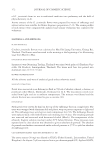
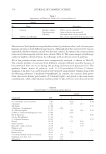
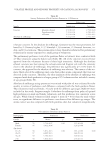
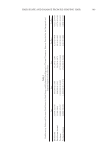
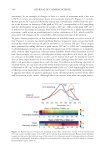
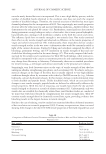
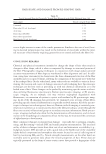
JOURNAL OF COSMETIC SCIENCE 406 once the newly desired hair set is incorporated. This is not a high fi delity process, and the number of disulfi de bonds reformed in the oxidation step does not reach the original number of disulfi de linkages. Therefore, the internal structure of the fi ber has more open channels/pathways for the incorporation of H2O. Not surprisingly, wet tensile properties decrease after the reduction step and increase following oxidation—further evidence that demonstrates the role played by cystine (41). Furthermore, many lipids are also removed during permanent waving leading not only to a hair surface that is more porous/hydrophilic, but probably also a damaged cell membrane complex in the both the cuticle and cortex. The infl uence lipids have on tensile strength is not entirely clear. One study examined their effect on dry tensile strength and observed no difference in the tensile properties of virgin and solvent extracted hair (46). Unfortunately, these researchers did not conduct tensile strength studies in the wet state—information that would be extremely useful in light of the current discussion. Studies by Cheng and coworkers compared the effects of bleaching, permanent waving, and UV irradiation on tensile strength of hair and con- cluded that bleaching resulted in the most damage (47). This study compared the break- ing load for the samples and is summarized in Table III. Such fi ndings, while instructive, should be interpreted with caution as treatment protocols and experimental procedures may change from laboratory to laboratory. Unfortunately, there are no standard procedures for tensile testing—a technique used almost universally in the personal care industry. Surprisingly, very little literature exists on the topic of tensile strength of hair that has undergone alkaline straightening procedures, such as relaxing (48). To achieve such geo- metrical changes in the shape of the fi ber, hair is usually exposed to very high alkaline conditions brought about by treatment with either lye (NaOH) or non-lye (e.g., lithium hydroxide, calcium hydroxide) relaxers. In this manner, damage is indiscriminately done to both disulfi de and peptide bonds. Unlike disulfi de bonds, which are associated with changes in wet tensile strength, peptide bonds are believed to additionally infl uence dry tensile properties. With this line of reasoning, one would expect both the dry and wet tensile strength to decrease as a result of relaxer treatment (41). Unfortunately, only wet tensile data are available for chemically relaxed hair until further studies are conducted we must wait with bated breath for complimentary dry tensile strength data. Table IV contains tensile strength data for chemically treated hair again, providing evidence that bleaching results in the largest decrease in tensile strength. Similar to the case of relaxing, very few studies have examined the effects of thermal treatment of hair in relation to its tensile properties (8,49). Contrary to expectations, there is a trend showing little change in the dry (65% RH) tensile properties of thermally exposed hair and Table III Comparison of Different Chemical Treatments and Physical Insults to Hair and Their Infl uence on Tensile Properties (47) Hair sample Breaking load (N) Untreated 94.13 UV irradiation 76.95 (96 h) Bleaching 75.22 (12% H2O2) Permanent waving 89.25 (pH 7) 78.53 (pH 9) 76.28 (pH 10)

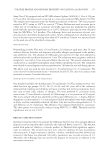
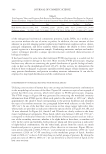
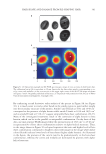
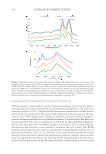
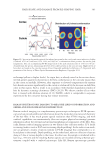
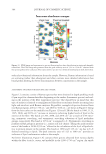
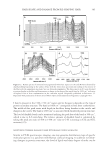
HAIR SHAPE AND DAMAGE FROM RE-SHAPING HAIR 407 Table IV Tensile Strength Data for Chemically Treated Hair Measured in the Fully Hydrated State (48) Hair sample Tensile strength (N·m)/1000) Untreated 1.21 Hair color (30 vol. developer) 1.14 Acid wave 0.99 Hair relaxer (NaOH) 0.78 Hair relaxer (guanidine) 0.70 Hair bleach (30 vol. developer) 0.48 even a slight increase in some of the tensile parameters. Similar to the case of wool, heat- ing to elevated temperatures may result in the formation of cross-links within the inter- nal structure of hair thereby requiring greater forces to extend and break the fi ber (50). CONCLUDING REMARKS Chemical and physical treatments intended to change the shape of hair often result in changes to fi ber shape, which is often accompanied by damage to structural proteins of the fi ber. Photographic imaging techniques in conjunction with image analysis provide accurate measurements of fi ber shape as manifested in fi ber alignment and curl. In addi- tion, using laser stereometry we characterize the three-dimensional structure of the fi ber assembly and its occupied volume, allowing for comparison of the initial state with that of the reshaped hair. On the other hand, many other tools are available to assist in deter- mining the location and extent of damage associated with reshaping hair. Spectroscopic techniques are the best tools at providing us with real chemical information as to the health state of hair. These changes can be probed by monitoring specifi c amino acid resi- dues utilizing fl uorescence spectroscopy, Raman spectroscopic imaging, or IR spectro- scopic imaging. As an example, one may monitor tryptophan degradation with fl uorescence, or conversion of cystine to cysteic acid residues by IR spectroscopic imag- ing. In all of the IR imaging data presented, we examined cross sections of hair fi bers, providing specifi c chemical information in a spatially resolved manner. All of the spectro- scopic techniques are advantageous however, Raman confocal imaging is extremely pow- erful since it permits us to noninvasively dissect the fi ber providing a z-line (through the fi ber cross section) of functional group or secondary structure information. Both spectro- scopic imaging methods also allow for the determination of beta keratin, and its local- ization in the morphological components of hair. In this way, we monitored the conversion of alpha keratin to beta keratin. More common techniques to measure hair damage—especially due to perming, straight- ening, and fl at ironing—include DSC and tensile property measurements. The increased utility of these techniques stems from their ease of use and instrument accessibility (e.g., budgetary factors). DSC provides us with a quick look at the health state of the crystalline (alpha-helical component) and amorphous (the matrix located in cortical cells) regions of hair by monitoring ΔHD and TD. Tensile strength measurements, on the other hand, are normally used to generate data about the tensile properties of hair. These data are typically presented in the form of stress–strain curves that provide a fi ngerprint of the
Purchased for the exclusive use of nofirst nolast (unknown)
From: SCC Media Library & Resource Center (library.scconline.org)