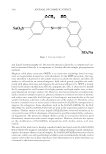
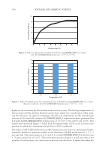
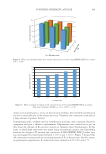
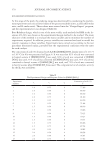
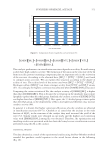
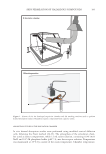
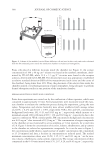
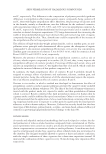
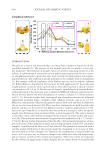
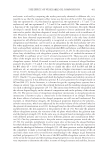
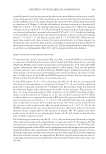
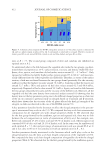
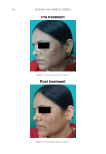
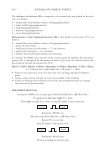
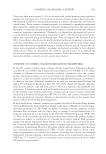
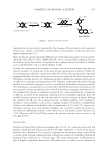
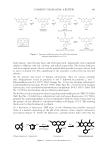
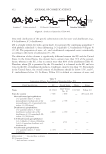
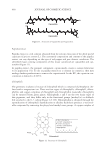
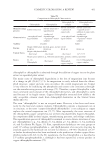
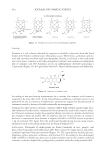
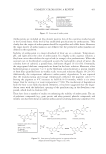
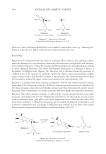
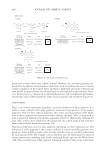
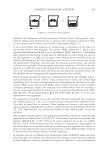
469 COSMETIC COLORATION: A REVIEW formation, dye adsorption, and dye precipitation. In more detail, a lake pigment is pre- pared by adding water-soluble dye into an aqueous slurry of inorganic substratum then, it is precipitated with a metallic salt to make a lake pigment (Figure 22). In the United States, lake pigments are named using a combination of the name of a dye and the cation of the precipitant. For instance, FD&C Yellow No. 5, which is pre- cipitated with aluminum chloride, can be identified as FD&C Yellow No. 5 Aluminum Lake without the knowledge of what kind of substratum was used. From the name of the lake pigments, it is difficult to recognize what substratum was used. Previously, an alumina substratum was the only substratum used, so there was no need to put it into the nomenclature. Nowadays, substrata other than alumina–barium sulfate, and calcium carbonate–are used widely. Even though the substratum comprises of 56–89% of the lake pigment, it is difficult to notice which substratum was used with the current nomencla- ture (108). Although United States and China list lake pigments on product labels, the EU and Korea do not distinguish lake pigments from pure dyes on labels. Toners are pigments made by replacing of sodium metals with metals of higher valence, such as barium and calcium, without using a substratum to achieve the desired high insolubility (104). A toner is distinguished from a lake pigment by the absence of a sub- stratum. When a dye combines with higher valence metals to become a toner, it renders increased lightfastness, higher color strength, and modified shade (109). For example, a calcium cation substituted for the sodium ion in the pigments Deep Maroon (CI 15880, D&C Red No. 34) and Lithol Rubine BCA (CI 15850, D&C Red No. 7) are the most representative toner pigments. True pigments are insoluble (water, oils, and other solvents) compounds that contain no salt-forming group (e.g., salt, acid, or lactone group) to promote their solubility (106). They have no metal ions or substrata. These pigments are known as the most stable organic pigments, although their existence is relatively rare (19,106). Helidone Pink CN (CI 73360, D&C Red No. 30) and Permaton Red (CI 12085, D&C Red No. 36) are true pigments. Any certified colorants (toners or true pigments) mixed with a diluent are considered lake pigments in the United States (10,106,107). For instance, Japan does not permit lake pigment D&C Red No. 30 (CI 73360) to be used in cosmetics, but in the case of D&C Red No. 30 (CI 73360) being mixed with a diluent, it is regarded as a lake pigment in the United States, but a mixture produced by combining a true pigment and a diluent in Japan. Certain pigments like toners and true pigments can have different labels compared to those of the United States, based on its own regulations. In summary, the use of a different type of metal salt results in different shades and solu- bility from pure dye colorants. It is essential to have a distinct nomenclature for colorants in which different cations are combined with pure dye. Moreover, a universal definition Figure 22. Preparation of lake pigments.

470 JOURNAL OF COSMETIC SCIENCE of a lake pigment is required for consistency in the cosmetic colorant labeling system between countries. CONCLUSION In this report, cosmetic colorants were categorized into three groups (synthetic, inor- ganic, and natural) and reviewed. It also presented an overview of the general properties of cosmetic colorants and a comparison of the differences in regulations between the EU, the United States, China, and Korea. Narrowing regulatory system gaps between countries is a key challenge facing the cosmetic colorant industry. First, to ensure international consistency on safety and reg- ulation, a positive list of cosmetic colorants should be harmonized between countries. Especially if one country has banned a colorant used in cosmetics but other countries still permit its use, it will cause confusion among consumers. Furthermore, the ingredients listed on the positive list should be identified by their INCI names. The ingredient list of natural colorants is somewhat vaguely identified compared to that of synthetic colorants. In addition, the naming of chemical compounds in the specifications should be written in exact chemical names rather than ambiguous terms (e.g., higher sulfonated subsidiary colors). Second, generally accepted uniform specifications, standards, and methods should be adopted. Although a cosmetic colorant is included on the positive list, it may have dif- ferent structures because each country has set its own definition in its specification. The specification includes the definition, origin, manufacturing process, purity criteria, and so on. Additionally, it is recommended that the testing methods and procedures be har- monized to minimize the misinterpretation of test results. Lastly, natural colorants have presented stability concerns rather than safety issues before now. Rather than limiting the types of natural colorants and regulating their use, encouraging manufacturers to be responsible for ensuring the safety of their products could be an alternative approach. This report ultimately aimed to provide a common understanding of cosmetic colorant regulations, and support manufacturers’ trading of cosmetics around the world. National regulatory authorities and manufacturers in each country should continue to promote international regulatory collaboration to develop the harmonization of cosmetic colorants.
Purchased for the exclusive use of nofirst nolast (unknown)
From: SCC Media Library & Resource Center (library.scconline.org)