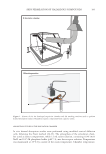
379 Address all correspondence to Sergio Armenta at sergio.armenta@uv.es J. Cosmet. Sci., 72, 379–398 (July/August 2021) Skin Permeation of Hazardous Compounds of Tobacco Smoke in Presence of Antipollution Cosmetics SORAYA PONTES-LÓPEZ, ANA GONZÁLVEZ, FRANCESC A. ESTEVE-TURRILLAS, AND SERGIO ARMENTA Department of Analytical Chemistry, University of Valencia, Burjassot 46100, Spain (S.P.-L., F.A.E.-T, S.A.) RNB, Cosmetic Laboratory, Industrial Estate La Pobla L’Eliana, La Pobla de Vallbona 46185, Spain (A.G.) Accepted for publication May 14, 2021. Synopsis Negative health effects of active and passive smokers have been widely described, but the effect of tobacco smoke on the skin has been less explored. In this study, an analytical methodology has been developed to eval- uate the dermal permeation of hazardous compounds present in tobacco smoke, using an exposition chamber to simulate finite and infinite smoking conditions, in vitro vertical Franz diffusion cells, and Strat-M® mem- branes as human skin simulants. Moreover, the antipollution effect of three cosmetics has been evaluated, showing a significant efficacy to reduce dermal permeation of hazardous tobacco-smoke compounds such as of nicotine and aromatic hydrocarbons. INTRODUCTION Cigarette smoke is a complex mixture, consisting of thousands of compounds, many of which are known carcinogens, cocarcinogens, or tumor promotors (1). It is a dynamic mixture of sidestream and exhaled mainstream smoke resulting from combustion of cig- arettes. Health effects of cigarette smoking are well known (2), but smoking effects on skin have been less studied. The presence of free radicals, both in the tar and the gas phase (3,4), converts the smoke into a highly reactive nature with potential damaging effects on the skin surface (5). It is known that cigarette smoking induces premature skin aging (6,7). The relationship between cigarette smoking and skin aging is supported with epi- demiological studies and in vitro mechanistic evidence (8,9,10). It has been also evidenced that cigarette smoke can be associated with psoriasis (11).
Purchased for the exclusive use of nofirst nolast (unknown)
From: SCC Media Library & Resource Center (library.scconline.org)