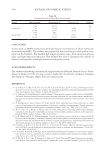
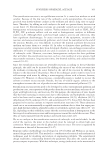
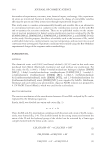
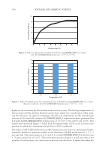
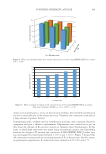
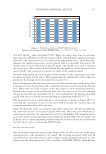
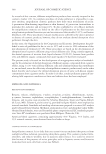
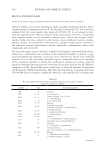
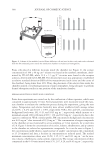
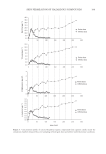
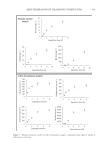
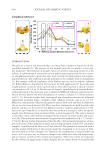
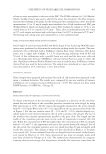
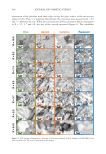
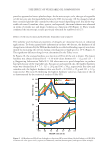
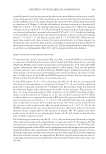
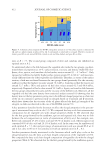
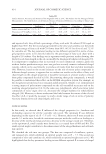
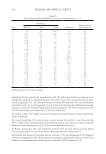
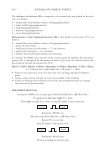
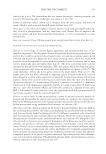
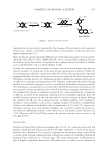
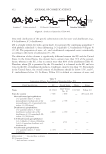
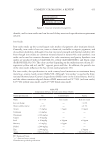
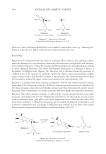
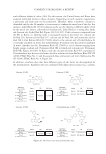
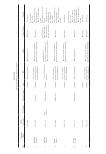
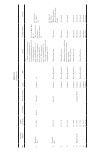
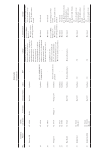
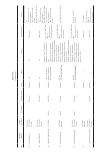
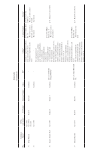
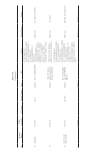
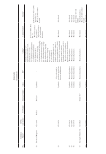
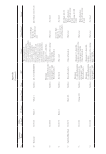
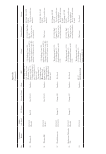
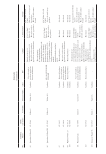
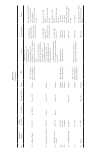
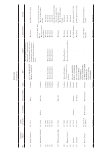
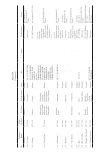
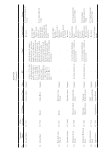
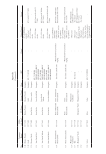
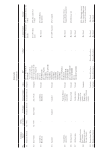
410 JOURNAL OF COSMETIC SCIENCE For R = 8:2, R = 7:3, and R = 5:5, all the oleogels exhibited the same SAXS and WAXS scattering profiles (Figure 4A and B). In the SAXS regime, only one main peak followed by its higher order reflections was detected. This peak gave a d-spacing of 57.1 Å. In the WAXS regime, six peaks were located at the same position whatever the oil used (4.6, 4.5, 4.0, 3.8, 3.6, and 3.5 Å). The d-spacing for the SAXS and WAXS regime could not be associated to the d-spacings measured for oleogels containing only BO (R = 10:0) or only BA (R = 0:10). This observation is in line with the results obtained by Blach et al. on oleogel based on stearic acid/stearyl alcohol (20). Therefore, only one type of crystal was present in those systems: mixed crystals of BO and BA. The two components co-crystal- lized to give only one crystalline structure as already observed in oleogels based on stearyl alcohol/stearic acid (19,20,22). When the concentration of BA was higher than the concentration of BO (R = 3:7 and R = 2:8), the scattering spectra were similar for all oils. In the SAXS regime, for both R = 3:7 and R = 2:8, the peak corresponding to the d-spacing of 57.0 Å observed pre- viously for R = 8:2, R = 7:3 and R = 5:5 remained. Mixed crystals were also present for these two ratios. Furthermore, another peak appeared on the spectra associated with a d-spacing of 48.3 Å corresponding to the d-spacing found for oleogels containing pure BA (R = 0:10). These two oleogels (R = 3:7 and R = 2:8) were then composed of mixed crystals of BO/BA and of pure BA crystals. The WAXS spectra confirmed this Figure 4. (A) SAXS and (B) WAXS spectra of oleogels with varying ratios of behenyl alcohol:behenic acid (BO:BA), with a total of 10 wt.% oleogelator in various oils: olive, apricot, camelina, and rapeseed. The mea- surements were carried out at 25°C. The spectra were shifted in intensity for clarity.

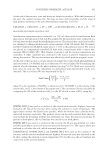
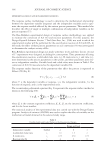
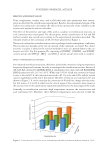
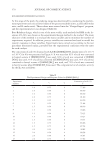
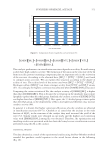
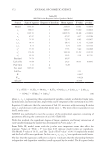
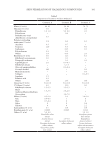
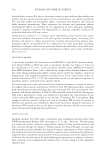
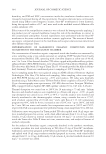
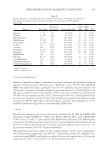
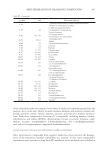
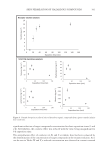
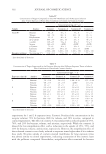
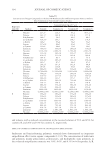
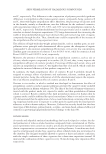
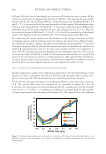
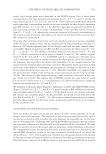
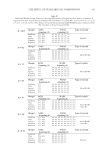
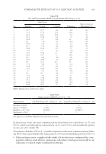
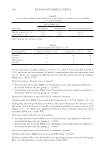
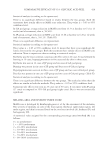
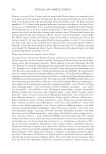
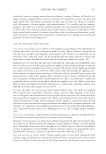
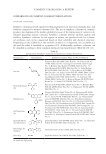
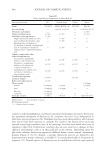
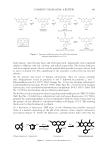
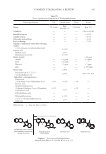
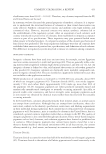
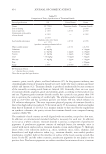
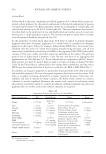
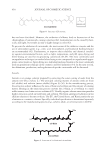
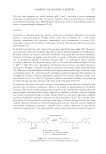
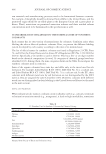
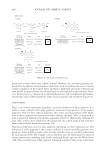
411 THE EFFECT OF VEGETABLE OIL COMPOSITION result, since height peaks were identified in the WAXS regime. Five of these peaks corresponded to the ones determined previously for R = 8:2, 7:3, and 5:5 giving the same d-spacings (4.6, 4.5, 4.0, 3.8. and 3.6 Å). Three additional peaks were observed with d-spacings corresponding exactly to the ones obtained for the oleogels containing pure BA crystals (4.3, 4.15, and 3.7 Å). All the d-spacings are presented in Table II. The scattering intensity of the peak corresponding to the pure BA crystals increased from R = 3:7 to R = 2:8, whereas the scattering intensity of the peak corresponding to the mixed crystals decreased. The quantity of mixed crystals decreased in favor of pure BA crystals by increasing R. The same effect of R was observed in terms of crystalline particles structure, regardless of the oil used to produce them. All the oleogels had the same crystalline structure as a function of R, which explained why all the oleogels exhibited the same thermal behav- ior by DSC. Mixed crystals between BO and BA were present for three ratios: R = 8:2, R = 7:3, and R = 5:5. The smallest crystalline particles were observed for R = 8:2 and R = 7:3, which correspond to molar ratios of around 2.4 and 4.2. The smallest crystals observed for R = 8:2 and R = 7:3 in the BO:BA system in comparison to the other ratios could come from a decrease in interfacial tension for these specific ratios (18). Indeed, in the literature, the same effect was observed by Gandolfo et al. for oleogels based on the mixed systems stearyl alcohol and stearic acid (18). Monolayers based on stearyl alcohol and stearic acid exhibited a minimum area per molecule leading to a decrease in inter- facial tension for molar ratio equal to 3:1 (45). Therefore, Gandolfo et al. supposed that the nucleation rate linked to the interfacial energy increased for specific ratio in oleogels (18,46). This decrease of the interfacial energy could result into a decrease in the aver- age crystal size (18,46). We suppose that in BO/BA system the same behavior could also occur for a molar ratio of 3:1 corresponding to an optimal weight ratio comprised between the weight ratio R = 8:2 and R = 7:3. We proposed a schematic phase diagram to summarize our DSC and SAXS/WAXS results (Figure 5). For R =8:2, R = 7:3, and R = 5:5, mixed crystals of BO and BA were observed (one crystalline phase). For R = 3:7 and R = 2:8 the mixed crystals were present with pure BA crystals: two crystalline phases. As shown by DSC, the mixed crystals melt before the pure BA crystals for R = 3:7 and R = 2:8. This proposed phase diagram was in accordance with the phase diagram for the binary stearic acid/stearyl alcohol system in oil proposed by Bot and Flöter (16). OIL PROPERTIES AND LINK WITH OLEOGEL PROPERTIES From our multiscale approach, we did not observe an effect of the vegetable oil on the oleogel structural properties. The evolution of the microstructure observed by optical microscopy as function of R remained the same whatever the vegetable oils. In the same way, we determined by combining DSC and SAXS/WAXS experiments that the crystal- line structure evolution as a function of R was the same for all the oils studied. We only observed an effect of oil on the oleogel physical properties, oleogels hardness, and oil loss. We compared the results described in this study with the previous ones obtained for the same BO/BA oleogelator system in the same conditions in sunflower oil, for which the optimal R was 7:3 (27). The oleogels were classified into two groups based on the optimal R obtained in terms of highest hardness and lowest oil loss during centrifugation process. The first group composed of sunflower, apricot, and rapeseed oils exhibited an optimal
Purchased for the exclusive use of nofirst nolast (unknown)
From: SCC Media Library & Resource Center (library.scconline.org)