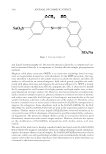
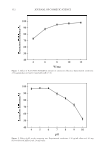
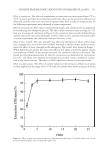
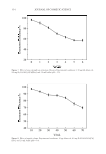
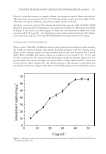
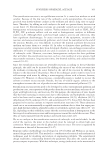
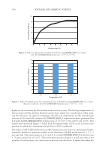
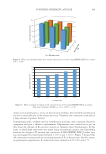
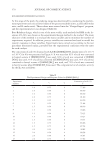
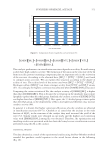
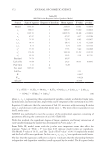
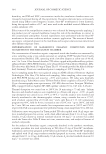
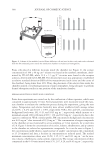
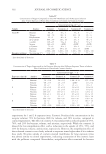
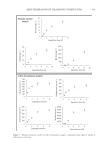
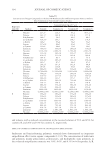
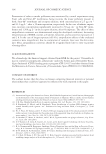
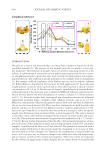
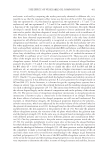
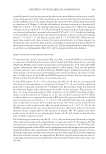
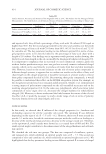
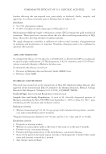
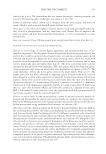
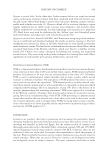
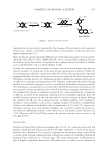
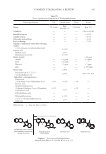
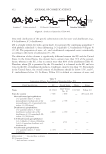
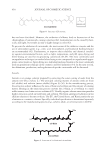
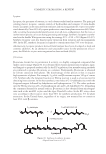
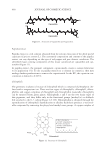
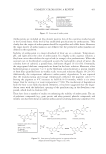
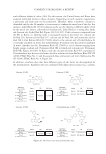
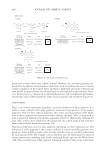
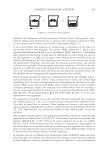
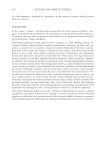
348 JOURNAL OF COSMETIC SCIENCE 2 and liquid chromatography (4). Because the matrix in lipsticks is complex and can- not be measured directly, it is important to develop effective sample pre-preparation methods. Magnetic solid phase extraction (MSPE) is an extraction technology based on mag- netic or magnetizable materials as solid absorbents. In the MSPE procedure, the mag- netic adsorbent is dispersed in the sample solution to adsorb the analyte, and then, the analyte is collected by an external magnetic fi eld, which greatly simplifi es the tradi- tional solid phase extraction and improves the extraction effi ciency (5). MSPE is mainly based on the surface modifi cation of Fe3O4 nanoparticles SiO2 is often used to modify Fe3O4 nanoparticles, and because of its high porosity and high surface area, it has a good adsorption of target analytes (6). However, the material also has its limitations unlike chemical adsorption process, physical adsorption is limited in terms of porosity and surface area, especially the blockage of oil and organic macromolecules in the real sample, leading to a decrease in the adsorption rate of the analyte (7). Therefore, it has become a research focus in recent years to functionalize Fe3O4@SiO2 nanoparticles to improve the adsorption. Some adsorbents such as Fe3O4@SiO2@MOFs (8), Fe3O4@ SiO2@ILs (9), and Fe3O4@SiO2@GO (10) are used in the separation analysis of target analytes. Choline amino acid ionic liquids ([Ch][AA] have attracted attention in re- cent years because of their advantages of nontoxicity, good biocompatibility, and natu- ral degradation. The positively charged choline cations in its structure showed a good electrostatic interaction with anionic target analytes. However, there are few reports on the modifi cation of Fe3O4@SiO2 nanoparticles with choline amino acid ionic liquids. The aim of this work was to develop a method which was based on Fe3O4@SiO2@[Ch] [Pro], followed by magnetic solid-phase extraction–high-performance liquid chromatog- raphy to determine allura red in real samples. Fe3O4@SiO2@[Ch][Pro] was selected as an extractant, which was with good biological affi nity and environmentally friendly, and no organic solvent that was of great importance from the perspective of green chemistry was consumed in the entire extraction process. Figure 1. Structure of allura red.

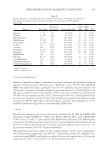
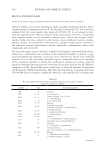
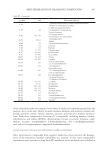
3493 CHOLINE PROLINE IONIC LIQUID-FUNCTIONALIZED O 4 @SIO 2 FE3FE 43 2 EXPERIMENTAL REAGENTS Anhydrous iron trichloride, ferrous sulfate heptahydrate, polyethylene glycol 400, ammonia, anhydrous ethanol, tetraethyl orthosilicate, choline chloride, proline (Pro), sodium hydrox- ide, hexamethylene bis-isocyanate, potassium bromide, dimethyl sulfoxide, and acetone were purchased from Sinopharm Chemical Reagent Co. Ltd. (Beijing, China). INSTRUMENT The following instruments were used in this study: a constant temperature oscillator (Guohua Electric Co., Ltd. Jintan, China), infrared spectrometer (Bruker, Germany), LC1220 high-performance liquid chromatography (Agilent Technologies, Santa Clara, CA), and DZF-6020 vacuum drying oven (Shanghai Jinghong Experimental Equip- ment Co., Ltd., Shanghai, China). SYNTHESIS OF FE3O4@SIO2 First, FeCl3 (0.02 mol), FeSO4·7H2O (0.01 mol), and polyethylene glycol 400 (30 mL, 10%) were dissolved into 75 mL of deionized water at 80°C. Next, 50 mL of NH3 aqueous was added under vigorous stirring and nitrogen protection. Then, the obtained magnetic nano- ions were separated by a magnet and rinsed three times with deionized water the product was dispersed with 240 mL of ethanol, 60 mL of distilled water, and 15 mL of ammonia water, and sonicated for 20 min. After sonication was completed, 1.7 mL of tetraethyl orthosilicate was added, and the mixture was stirred at 60°C for 12 h. Finally, it was washed twice with water and ethanol to obtain Fe3O4@SiO2 (11). SYN THESIS OF CHOLINE PROLINE IONIC LIQUID ([CH][PRO]) Ref erring to the synthesis method of [Ch][AA] reported in the literature, [Ch][AA] was obtained by ion exchange and neutralization reaction, and the brief steps are as follows: fi rst, [Ch]OH was obtained by passing [Ch]Cl through a ion exchange column. Then, [Ch][Pro] solution was obtained by a simple neutralization reaction between [Ch]OH and Pro. Last, the solution was dried to obtain [Ch][Pro] (12). SYN THESIS OF FE3O4@SIO2@[CH][PRO] A m ixture of Fe3O4@SiO2 (0.2 g), [Ch][Pro] (0.4 g), and dimethyl sulfoxide (40 mL) was dispersed ultrasonically for 1 h in a 250-mL three-necked fl ask and transferred to a water bath and stirred at 70 °C for 2 h then, 1.0 mL of hexamethylene diisocyanate was added, and stirring was continued for 48 h. After the reaction, the product was separated with a magnet, and washed with distilled water and anhydrous ethanol three times. Finally, the product was dried at room temperature for 48 h to afford Fe3O4@SiO2@[Ch][Pro]. EXTR ACTION PROCEDURE The extraction of allura red was carried out in a 10-mL tube. A mixture of 1.0 mL of 100 μg/mL allura red standard solution and 2.0 mL buffer (pH = 5.0) was diluted with
Purchased for the exclusive use of nofirst nolast (unknown)
From: SCC Media Library & Resource Center (library.scconline.org)