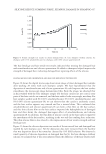
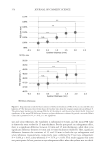
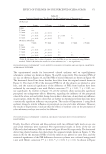
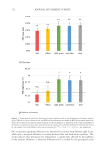
348 JOURNAL OF COSMETIC SCIENCE Amount of Lather Score (out of 100)=instant foam volume (ml) /400 (ml) x 100 (400 ml is an internal foam volume with set lather score of 100 points) Lather Stability Score (out of 100)=100 (ml) height of liquid below foam (ml) x 100 (100 ml is an internal height of liquid below foam with set foam stability of 100 points). Sebum cleansing test was carried out by applying 1.0 g of artificial sebum**** to the dried, undamaged Asian flat hair swatches (16 g, purchased from Beaulax Co., Ltd.). The hair swatches were mounted to a Dynamic Combing Tester SK-7A (Techno Hashimoto, Nara City, Japan), 1.0 g of shampoo was applied evenly to the hair swatches, and the swatches were combed by wet brush five times. Then the hair swatches were rinsed and combed five times under a warm-water shower. The shower was stopped, and the hair swatches were combed three times. Finally, the hair swatches were allowed to dry naturally overnight and placed in an 80°C incubator for 1 hour for further drying. Three hair swatches were tested for each shampoo sample. The cleaning rate was calculated by the following formulas: sebum cleansing rate percent=(weight of sebum rinsed off (g) /weight of sebum applied [g]) x 100 weight of sebum applied (g)=weight of hair swatch after sebum applied (g)− weight of hair swatch before applying sebum (g) weight of sebum rinsed off (g)=weight of sebum applied (g)−(weight of hair bundle after drying [g]−weight of hair bundle before applying sebum [g]). ****artificial sebum composition (10): wild soybean oil 48%, oleic acid 13%, myristic acid 12%, squalene 12%, paraffin 10%, glyceryl oleate 3%, cholesteryl stearate 2% HAIR DYNAMIC COMBING TEST AND HAIR FLYAWAY CONTROL TEST*** Dynamic combing test was performed using the dynamic combing tester SK-7A (Techno Hashimoto) on Asian damaged flat hair swatches. It was conducted as follows (11): The hair swatches were wet by warm-water shower, and 1.5 g of shampoo was applied evenly on both sides of hair swatches. The hair swatches were combed five times without shower, and the combing force during lathering was recorded. The hair swatches were combed 10 times while rinsing in the shower the first 5 combing-force data were recorded during Rinse 1, and the second 5 combing-force data were recorded during Rinse 2. Then the hair swatches were combed five times and the combing-force data were recorded as After Rinse. The hair swatches were dried overnight, and the dry hair swatches were combed without shower four times the combing-force data were recorded as Dried. We separated the rinse stage to Rinse 1 and Rinse 2 to observe the different combing-force data during different rinsing stages and to probe the performance of shampoos with amodimethicone and silicone polyquaternium-18, as compared to nonsilicone. Three hair swatches were tested for each shampoo sample. Hair flyaway control test was conducted as follows: 1) 3 g, 20 cm ponytail damaged hair swatches were rinsed with 40°C water for 10 seconds, towel dried and combed through, then dried at 25°C and 30% relative humidity (RH) for 18 hours 2) photos were taken in a photographing box 3) hair swatches were wetted with 40°C water, then a 0.2 g testing sample was applied, washed, and rinsed with 40°C water, towel dried and combed through, then dried under 25°C at 30% RH for 18 hours 4) photos were taken in a photographing box and 5) the flyaway and total volume were calculated by the area

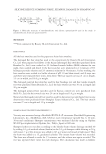
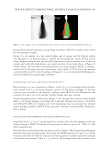
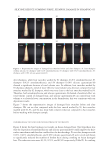
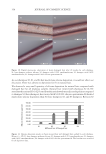
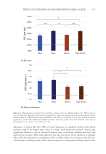
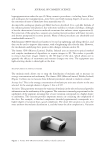
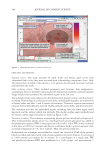
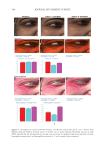
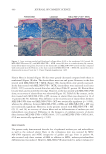
349 Silicone Reduce Combing Force, Flyaway, Damage in Shampoo change before and after shampoo using Image J software. Three hair swatches were tested for each shampoo sample. Figure 2 is an example of a hair swatch photo and its image used for flyaway control test. Breugnot et al. had developed a method for measuring the volume of hair swatch using computer software that separated the high-density and low-density areas of the hair swatch, and called the high-density area (green portion in the right image of Figure 2) “bulk volume,” the low-density area (red portion in the right image of Figure 2) “flyaway,” and the area of the green plus the red portions “total volume” (12). In this study, we used a similar method and the same wording as Breugnot et al., and calculated the flyaway area and total volume area using Image J software. HAIR BREAKAGE TEST AND HAIR TENSILE STRENGTH TEST*** Hair breakage test was conducted as follows: 1) the 10 g, 30 cm damaged hair swatches were treated with 1 g of testing shampoo, rinsed off and dried overnight 2) the hair swatches were mounted on the dynamic combing tester SK-7A (Techno Hashimoto) and combed 100 times and 3) the number of fallen broken hairs was counted. Tensile strength test was conducted as follows: 1) the damaged hair swatches were washed with 1 g of testing shampoo and rinsed off 2) the hair swatches were kept at 20oC±5oC and 65%±10% RH for 24 hours and 3) the maximum load was measured at the hair tensile breakage point by AGS-X Series electronic universal testing machine (Shimadzu, Kyoto, Japan). DIGITAL MICROSCOPE OBSERVATION AND SILICONE DEPOSITION TEST Single fiber from 2 x 1 g, 27 cm damaged hair swatches after 28-time shampoo wash was observed using a VHX-7100 (Keyence Corporation of America, Itasca, IL, USA) at 1,000 times magnification. Hair swatches used for deposition test were treated as follows: All the natural and damaged Asian hair swatches were previously cleansed by 10% SLES solution at 0.6 g per 2 x 1 g hair swatches and rinsed off. One set of natural and damaged hair swatches was dried overnight for baseline measurement. Then 2 x 1 g natural and damaged Asian hair swatches were Figure 2. An example of a hair swatch photo and its image used for calculation for flyaway control test.
Purchased for the exclusive use of nofirst nolast (unknown)
From: SCC Media Library & Resource Center (library.scconline.org)