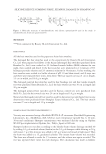
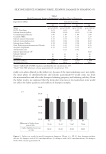
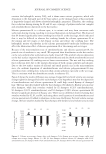
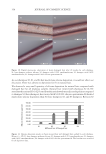
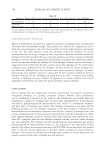
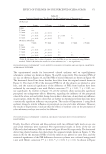
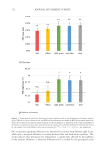
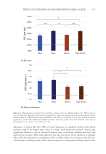
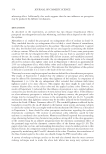
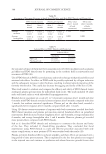
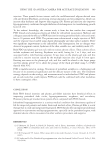
350 JOURNAL OF COSMETIC SCIENCE washed with 0.6 g shampoo samples, rinsed off, and dried overnight. Gloves were employed during shampooing, and the hair samples were carefully handled to avoid contamination. The baseline was extracted for all samples’ deposition data. The amount of silicone adsorbed by the hair was determined by Inductively Coupled Plasma Optical Emission Spectroscopy (ICP-OES) Spectrometers (AMETEK, Inc., Berwyn, PA, USA). The hair samples were cut and digested in 65% nitric acid and diluted with high purity water before the analysis. A working standard curve was made according to the National Institute of Standards and Technology standard, and the amount of silicon was calculated at a silicon-specific wavelength. The concentrations of silicones were derived from the amounts of silicon by multiplying with a factor from the calculation according to silicone molecular weight (factor for amodimethicone is 2.67 factor for silicone quaternium-18 is 3.38). As the factor for dimethicone (PDMS) is 2.64 (13), we think our calculation is right. HAIR SWATCH SENSORY TEST Damaged hair swatches weighing 2 x 1 g and measuring 27 cm were washed (with 0.6 g of shampoo) and dryer-dried 28 times to mimic consumer habits. Eight internal panelists performed the evaluation. RESULTS AND DISCUSSION SHAMPOO SAMPLE PREPARATION AND ITS BASIC PHYSICAL PROPERTY The model transparent shampoo samples are prepared as Table I. Microemulsions containing 0.21%, 0.42% amodimethicone and 0.18% silicone quanternium-18 were added to the formulation. The addition of 0.21% amodimethicone and 0.18% silicone quaternium-18 slightly reduced the viscosity of shampoo compared to the control without silicone however, the reduction was not significant. The addition of 0.42% amodimethicone reduced the shampoo viscosity significantly. The viscosity of shampoo was built by the packing of anionic surfactant micelle and supported by amphoteric surfactant, nonionic surfactant, and cationic polymer 0.42% amodimethicone added in the shampoo may cause the loose packing of the micelle. The addition of 0.21% amodimethicone didn’t affect the shampoo viscosity significantly, therefore by adjusting the quantity of amodimethicone, the viscosity reduction should be minimized. All the shampoo samples were very transparent, and the transmittance rates were very high, as shown in Table I. This result demonstrated our first hypothesis: both amodimethicone and silicone quanternium-18 were in a microemulsion state, the particle size was very small (less than 100 nm), and the microemulsions themselves were very transparent and stable, therefore once added to shampoo the overall transparency was not affected. Figure 3 shows shampoo lather test results. Addition of 0.21%, 0.42% amodimethicone, and 0.18% silicone quaternium-18 did not affect the lather quantity and stability compared to the base shampoo sample without silicone. Both amodimethicone and silicone quaternium-18 used here were microemulsions their particle size was less than 100 nm. We hypothesized that the particle size was too small to puncture the shampoo’s foam membrane, and the shampoo’s foaming ability and stability would hardly be affected. The results indicated this is the case. In addition, as both amodimethicone and silicone quaternium-18 were in the microemulsion state, it also demonstrated that both microemulsions were very

351 Silicone Reduce Combing Force, Flyaway, Damage in Shampoo stable even when diluted in the lather test, because if the microemulsions were not stable, the inner phase of amodimethicone and silicone quaternium-18 would come out from the microemulsion and affect the shampoo lathering property and lathering stability. From the lather results, we supposed that the molecular structure at microemulsion state would not affect the lather quantity and stability of shampoo samples. Table I Model Transparent Shampoo Formulations and Basic Physical Properties Ingredients (INCI) Concentration [%]S1 S2 S3 S4 Water qs to 100.00 qs to 100.00 qs to 100.00 qs to 100.00 EDTA Disodium 0.05 0.05 0.05 0.05 Sodium Laureth Sulfate 12.60 12.60 12.60 12.60 Cocamidopropyl Betaine 1.80 1.80 1.80 1.80 Cocamide MEA 1.20 1.20 1.20 1.20 Sodium Lauroyl Glutamate 0.15 0.15 0.15 0.15 Sodium Lauroamphoacetate 0.09 0.09 0.09 0.09 Sodium Lauryl Sulfate 0.28 0.28 0.28 0.28 Guar Hydroxypropyltrimonium Chloride 0.30 0.30 0.30 0.30 Acrylates Copolymer 0.15 0.15 0.15 0.15 Amodimethiconea -0.21 0.42 -Silicone Quaternium-18b ---0.18 Sodium Chloride qs qs qs qs Preservative qs qs qs qs Fragrance qs qs qs qs Viscosity (mPa.s) 2,200 1,750 1,350 1,800 Transmittance (%)99.6 99.3 96.5 99.6 a Silsoft@ AM1021N LV PMF emulsion, amodimethicone concentration: 21%. b Silsoft@ Silk PMF emulsion, silicone quaternium-18 concentration: 36%. S1 S2 S3 S4 Amount of Lather Score (out of 100) 72.50 71.67 71.67 72.50 Lather Stability Score (out of 100) 66.82 66.82 66.82 66.82 40.00 50.00 60.00 70.00 80.00 90.00 n=3 Figure 3. Lather test results for model transparent shampoos. Means +/− SD. S1: base shampoo without silicone S2: shampoo with 0.21% amodimethicone S3: shampoo with 0.42% amodimethicone S4: shampoo with 0.18% silicone quaternium-18.
Purchased for the exclusive use of nofirst nolast (unknown)
From: SCC Media Library & Resource Center (library.scconline.org)