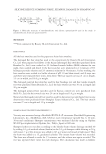
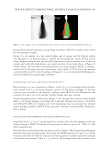
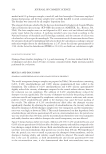
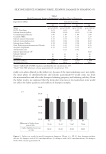
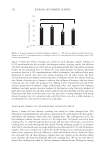
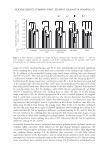
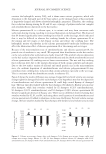
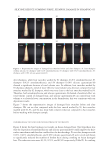
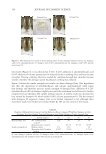
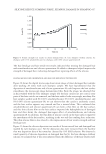
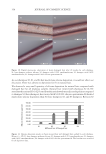
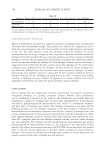
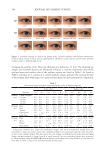
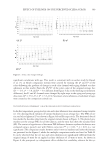
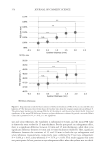
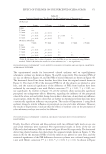
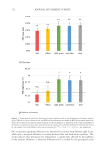
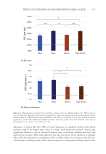
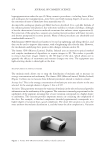
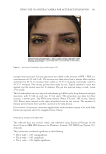
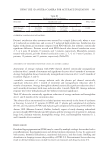
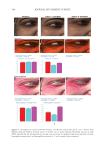
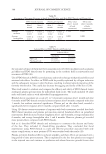
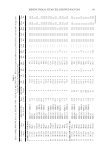
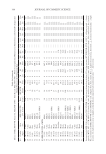
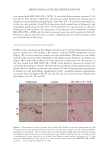
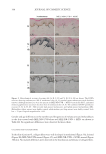
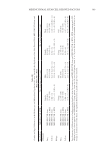
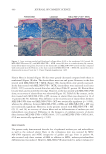
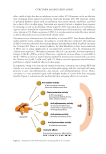
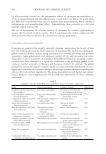
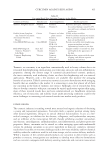
371 EFFECT OF EYELINER ON THE PERCEIVED SCLERA COLOR PSYCHOPHYSICAL EXPERIMENT 2: HUE-ROTATED COLORED EYELINERS AND AN EQUAL-LIGHTNESS ACHROMATIC EYELINER The experimental results for hue-rotated colored eyeliners and an equal-lightness achromatic eyeliner are shown in Figure 7A and B, respectively. The measured PSEs of eye size are shown in Figure 7A, and the PSEs of scleral whiteness are shown in Figure 7B. The horizontal dotted line shows baseline data (data from the original stimuli shown in Figure 1). The mean ± SE of the measured PSEs for all the subjects are plotted as error bars, and the statistical significance of the difference of PSEs from baseline have been evaluated by one-sample t-test with Holm’s correction (**:p 0.01, *:p 0.05, n.s.: not significant). As evident in Figure 7A, all the eyeliners show statistically significant perceptual eye enlargement effects. Moreover, regarding the influence of the perceptual color of the sclera, red and yellow, being close in hue to skin tone, do not show any influence on perception, while the three colors that are farther in chromaticity from skin tone show a statistically significant influence on perception. The results of Experiment 1 using black eyeliners showed a similar influence on perceptual eye size and sclera whiteness. However, the results of Experiment 2 indicate that the effects of eyeliner color on the perception of sclera whiteness and eye size tend to be different. PSYCHOPHYSICAL EXPERIMENT 3: BROWN AND BLUE EYELINERS WITH TWO DIFFERENT LIGHT LEVELS Finally, the effects of brown and blue eyeliners with two different light levels on eye size and scleral whiteness were examined. The experimental results in terms of the eye size PSEs and scleral whiteness PSEs are shown in Figure 8A and B, respectively. The horizontal dotted line shows baseline data (data from the original stimuli shown in Figure 3). The mean ± SE for the measured PSEs of all the subjects are plotted as error bars, and the statistical significance of the PSE differences between eyeliners was evaluated using paired t-test with Holm’s correction (**:p 0.01, *:p 0.05, †: p 0.1). As shown in Figure Table II Statistical Significance Test Results for All Combinations of Experiment 1a (A) Eye size 0 mm 0.5 mm 1.0 mm 1.5 mm 2.0 mm 0 mm – 0.5 mm n.s. – 1.0 mm p 0.01 p 0.01 – 1.5 mm p 0.01 p 0.01 p 0.05 – 2.0 mm p 0.01 p 0.05 n.s. n.s. – (B) Sclera whiteness 0 mm 0.5 mm 1.0 mm 1.5 mm 2.0 mm 0 mm – 0.5 mm n.s. – 1.0 mm p 0.01 p 0.01 – 1.5 mm p 0.01 p 0.01 n.s. – 2.0 mm p 0.01 p 0.05 n.s. n.s. – a Table II (A) shows the p values of paired t-tests for PSEs of eye size corrected using Holm’s method. Table II (B) shows the results for sclera whiteness (n.s. =not significant).

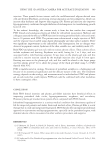
372 JOURNAL OF COSMETIC SCIENCE 8A, statistically significant differences are obtained for eyeliners with different light levels, while only a marginal difference is evident between blue and dark brown eyeliners. This result indicates that perceptual eye enlargement is significantly affected by the lightness of the eyeliner. However, a distinctly different trend is evident for the perceptual sclera Figure 7. Experimental results for hue-rotated colored eyeliners and an equal-lightness achromatic eyeliner (grey). PSEs of eye size are shown in (A), and PSEs of sclera whiteness are shown in (B). The horizontal dotted line shows the baseline (data from the original stimuli are shown in Figure 1). The mean ± SE of measured PSEs for all subjects are plotted as error bars, and the statistical significance of the PSE differences from baseline tested by one-sample t-test with Holm’s correction are presented as **:p 0.01 *:p 0.05 n.s.: not significant.
Purchased for the exclusive use of nofirst nolast (unknown)
From: SCC Media Library & Resource Center (library.scconline.org)