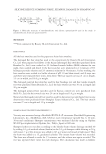
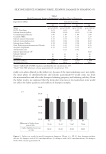
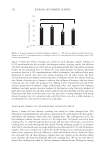
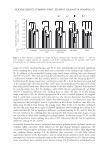
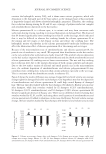
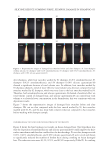
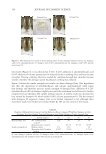
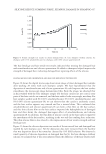
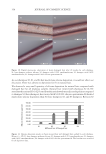
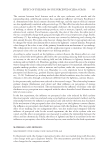
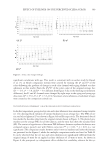
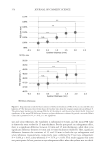
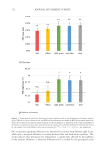
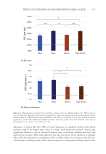
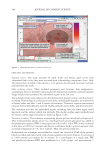
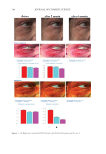
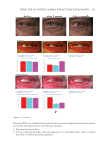
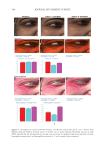
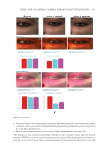
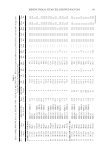
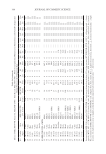
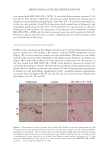
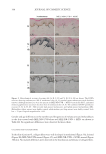
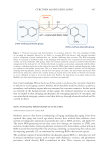
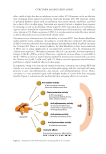
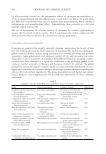
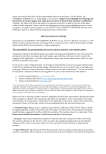
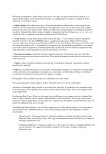
373 EFFECT OF EYELINER ON THE PERCEIVED SCLERA COLOR whiteness in Figure 8B. The PSEs of sclera whiteness in standard stimuli with bluish eyeliners tend to be higher than those in images with brownish eyeliners. Statistically significant differences can be observed between navy and brown eyeliners and navy and dark brown eyeliners. This result indicates that the perceptual sclera whiteness is strongly affected by the chromaticity coordinates of the eyeliner, and a navy eyeliner is the effective color design to simultaneously achieve the perceptual eye enlargement and perceptual sclera Figure 8. Experimental results for brown and blue eyeliners with two different light levels: PSEs of (A) eye size and (B) sclera whiteness. The horizontal dotted line shows the baseline (data from the original stimuli shown in Figure 3). Mean ± SE of measured PSEs for all subjects are plotted as error bars, and the statistical significance of the PSE differences between eyeliners tested by paired t-test with Holm’s correction are presented as **:p 0.01 *:p 0.05 †: p 0.1.

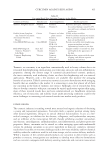
374 JOURNAL OF COSMETIC SCIENCE whitening effect. Additionally, this result suggests that the two influences on perception may be produced by different mechanisms. DISCUSSION As described in the experiments, an eyeliner has two illusory beautification effects: perceptual eye enlargement and sclera whitening, and these effects depend on the color of the eyeliner. Matsushita et al. studied the perceptual eye enlargement effect of eyeliner in detail (3). They concluded that the eye enlargement effect is likely a visual illusion of assimilation, in which the eye becomes assimilated to the eyeliner. The results of Experiment 1 support this idea the thicker black eyeliner made the eye area larger by assimilating the shadow of the eye contour. When the thickness of the eyeliner reached 2.0 mm, some participants could not feel the eye enlargement effect because it was too thick to assimilate with the contour of the eye. As a result, the mean PSE did not increase, and variability increased. As evident from the experimental results, the eye enlargement effect seems to be strongly affected by eyeliner color lighter colors used in Experiment 2 showed an approximately 2.0% eye enlargement effect, while darker colors used in Experiments 1 and 3 showed an approximately 4.0% eye enlargement effect. This indicates that the lightness of the eyeliner is difficult to assimilate if it is close to the shade of the eye contour. There may be a more complex perceptual mechanism behind the sclera whiteness perception. The results of Experiment 3 showed that the influence of perceptual sclera whiteness may be affected by chromaticity rather than lightness of the eyeliner. A comparison of Experiments 1 to 3 for the eye enlargement effect revealed that eyeliners with lower lightness tended to be more effective. This implies that there might be some kind of contrast illusion effect on the sclera color and the applied eyeliner color. However, the results of Experiment 1 indicated that the influence of perception is not a simple lightness contrast because the thickest eyeliner (2.0 mm) did not show a larger effect. If the influence on sclera whiteness perception is induced by the lightness contrast, the perceptual color change may be increased by an increase in the surrounding field size (8–11). A possible mechanism other than lightness contrast may be the effect induced by the boundary line, such as the Craik–O’Brien–Cornsweet effect (17). The test-field lightness is affected by the boundaries created by the on-off channel in the human vision system, and using eyeliners to clarify the outline of the eyes might work on this mechanism (18). However, as described in Experiment 3, there should be other perception mechanisms regarding the eyeliner chromaticity coordinates. The increase in perceptual sclera whiteness caused by blue eyeliners is considered color assimilation. Monnier and Shevell reported that surrounding rings alternating between two chromaticities produce a strong shift in the color appearance of the centered ring by an additive integration from the chromatic assimilation effect of the proximal rings and the chromatic contrast effect of the distant rings (19–20). The pupil, sclera, blue eye line, and surrounding skin may have created a similar pattern to this illusion. Herein, the comparison stimuli for perceptual sclera whiteness measurements were prepared by modulating the L* and b* channels of the sclera. Therefore, the assimilation of the blue channel signal to the sclera area should change the PSE toward white color. A survey of makeup technique articles on the web also showed that the most common makeup technique used to make the sclera look whiter was using navy eyeliners and
Purchased for the exclusive use of nofirst nolast (unknown)
From: SCC Media Library & Resource Center (library.scconline.org)