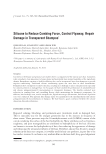
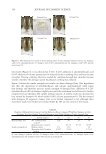
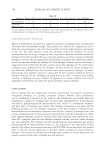
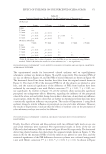
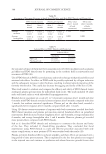
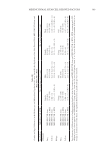
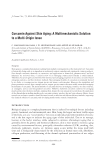
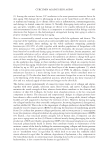
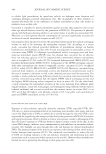
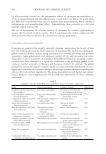
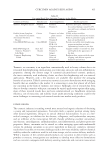
415 Curcumin Against Skin Aging Turmeric, or curcumin, is an ingredient conventionally used in beauty culture due to its renowned skin-brightening, moisturizing, scar-removing, anti-acne and anti-inflammatory properties. Among the diverse range of turmeric/curcumin-based cosmetic products, the most commonly used marketing claims are their skin-brightening and scar-removal applications. However, only a few products are available that promote the antiaging benefits of curcumin. Table II summarizes turmeric/curcumin formulations with antiaging benefits that are available in the market. It is interesting to note that almost all of them use curcumin in the form of turmeric root extract. Although a lot of research has been done to develop cosmetics with pure curcumin for topical applications against skin aging, most of these research results have not been commercialized yet. Insufficient extraction efficiency, cost of extraction, and stability issues under processing conditions could be the main challenges in converting such research results into market-ready products. CONCLUSIONS The cosmetic industry is trending toward more natural and organic solutions of obtaining a young and rejuvenated appearance. Curcumin finds a superior position among many other natural ingredients, owing to its special chemical functionalities. It acts as a free- radical scavenger an inhibitor for the elastase, collagenase, and hyaluronidase enzymes and an inhibitor of the transcription NF-κB, thereby exhibiting excellent antioxidant, anti-elastase, anticollagenase, antihyaluronidase, anti-inflammatory, and photo-protective properties. Hence, curcumin can be viewed as a skin antiaging agent with multimodal actions. In utilizing curcumin as an active ingredient in skin-care cosmetics, extensive studies have been done to overcome challenges such as low water solubility and low chemical stability under the conditions used for real-time storage, and on various delivery methods. While a majority of the commercialized products use curcumin in direct forms such as powders or extracts, investigations are underway to develop more effective formulations such as curcumin conjugates with delivery-assisting molecules and curcumin nanocarriers Table II Curcumin-Based Skin Antiaging Cosmetics in the Market Commercial Product Manufacturer Active Ingredients Marketing Claims Turmeric Enlighten Serum Andalou Naturals Turmeric Vitamin C Removes dark spots, counteracts free-radical damage caused by UV rays and boosts collagen and elastin production Double Serum Complete Age Control Concentrate Clarins Turmeric and other plant extracts Visibly reduces wrinkles Good for dullness and uneven texture Antioxidant Turmeric Booster Verso Turmeric Vitamin E Reduces premature aging and makes skin soft and hydrated CyberDERM PM Anti-Age CyberDERM Turmeric EUK-134 Gorgonian extract Provides incredible skin brightening, potent antioxidant and anti- inflammatory benefits to the skin Hello FAB Ginger &Turmeric Vitamin C Jelly Mask First Aid Beauty Turmeric Vitamin C Ginger Supplies comfort to stressed-out skin and brightens the appearance of the skin Turmeric Brightening Polish Volition Turmeric Olive oil Sandalwood Brightens skin, assists with the signs of aging, and delivers superior hydration and softness

416 JOURNAL OF COSMETIC SCIENCE for main skin-delivery approaches. The development of nanocarriers for effective skin delivery of curcumin is an emerging field with a huge potential. Hence, future research in curcumin cosmetics should be more focused on advanced extraction methods with higher yields investigating more effective delivery methods by integrating with fields such as nanotechnology improving the chemical stability of curcumin under real-time process conditions and developing cosmetic formulations with enhanced delivery efficiency for skin antiaging while understanding the biochemistry of curcumin-based skin antiaging effects at a molecular level. CONFLICTS OF INTEREST The authors state no conflicts of interest. REFERENCES (1) D. J. Tobin, Introduction to skin aging, J. Tissue Viability 26(1), 37–46 (2017). (2) A. R. Young, Acute effects of UVR on human eyes and skin, Prog. Biophys. Mol. 92(1), 80–85 (2006). (3) M. Yaar and B. A. Gilchrest, Photoageing: mechanism, prevention and therapy, Br. J. Dermatol. 157(5), 874–887 (2007). (4) D. A. Gunn, H. Rexbye, C. E. M. Griffiths, P. G. Murray, A. Fereday, S. D. Catt, Why wome women look Yyoung for their age, PLoS One. 4(12), e8021 (2009). (5) D. J. Tobin, Biochemistry of human skin—our brain on the outside, Chem. Soc. Rev. 35(1), 52–67 (2006). (6) R. Ghadially, B. E. Brown, S. M. Sequeira-Martin, K. R. Feingold, and P. M. Elias, The aged epidermal permeability barrier: Structural, functional, and lipid biochemical abnormalities in humans and a senescent murine model, J. Clin. Investig. 95(5), 2281–2290 (1995). (7) J. J. Nordlund, The lves of pigment cells, Dermatol. Clin. 4(3), 407–418 (1986). (8) G. L. Grove, Physiologic changes in older skin, Clin. Geriatr. Med. 5(1), 115–125 (1989). (9) G. J. Fisher, S. Kang, J. Varani, Z. Bata-Csorgo, Y. Wan, S. Datta, Mechanisms of photoaging and ahronological skin aging, Arch. Dermatol. 138(11), 1462–1470 (2002). (10) M. A. Farage, K. W. Miller, P. Elsner, and H. I. Maibach, Structural characteristics of the aging skin: A review, Cutan. Ocul. Toxicol. 26(4), 343–357 (2007). (11) J. L. Contet-Audonneau, C. Jeanmaire, and G. Pauly, A histological study of human wrinkle structures: Comparison between sun-exposed areas of the face, with or without wrinkles, and sun-protected areas, Br. J. Dermatol. 140(6), 1038–1047 (1999). (12) J. Uitto, Connective tissue biochemistry of the aging dermis: Age-related alterations in collagen and elastin, Dermatol. Clin. 4(3), 433–446 (1986). (13) R. Tundis, M. R. Loizzo, M. Bonesi, and F. Menichini, Potential role of natural compounds against skin aging, Curr. Med. Chem. 22(12), 1515–1538 (2015). (14) A. C. Weihermann, M. Lorencini, C. A. Brohem, and C. M. de Carvalho, Elastin structure and its involvement in skin photoageing, Int. J. Cosmet. Sci. 39(3), 241–247 (2017). (15) R. Stern and M. J. Jedrzejas, Hyaluronidases: Their genomics, structures, and mechanisms of action, Chem. Rev. 106(3), 818–839 (2006). (16) S. M. Pilkington, S. Bulfone-Paus, C. E. M. Griffiths, and R. E. B. Watson, Inflammaging and the skin, J. Invest. Dermatol. 141(4s), 1087–1095 (2021). (17) K. Obayashi, K. Kurihara, Y. Okano, H. Masaki, and D. B. Yarosh, L-Ergothioneine scavenges superoxide and singlet oxygen and suppresses TNF-α and MMP-1 expression in UV-irradiated human dermal fibroblasts, Int. J. Cosmet. Sci. 27(3), 191–192 (2005).
Purchased for the exclusive use of nofirst nolast (unknown)
From: SCC Media Library & Resource Center (library.scconline.org)