]. Cosmet. Sci., 58, 637-650 (November/December 2007) Use of quaternized cassia galactomannan for hair conditioning J. A. STAUDIGEL, K. BUNASKY, C. J. GAMSKY, M. S. WAGNER, K. J. STUMP, J.M. BAKER, R. L. MARPLE, and J. H. THOMAS, Hair Care Research and Development, The Procter & Gamble Company, 11511 Reed Hartman Highway, Cincinnati, OH 45241. Accepted for publication May 22, 2007. Synopsis There is a continuing need for hair care formulas to deliver superior conditioning benefits with highly efficient deposition of hair-enhancing components. In this paper, we describe high-charge-density (3.0 mEq/g) cassia hydroxypropyltrimonium chloride (cassia HPTC), a quaternized galactomannan from the endosperm of Cassia tora and Cassia obtusifolia. Cassia HPTC is shown to participate in the coacervate phase of conditioning shampoos, from which it is deposited onto hair to provide conditioning benefits. Cryo scanning electron microscopy and time-of-flight secondary ion mass spectrometry were used to observe and characterize the cassia HPTC deposits left on hair. The high-charge-density cassia HPTC resulted in improved deposition efficiency compared with a quaternized guar-containing formula. Cassia HPTC offers benefits as an alternative to traditional cationic polymers as conditioning agents or as an adjunct conditioner to decrease the amount of cationic polymer needed to achieve the desired conditioning performance. BACKGROUND Hair care products containing conditioning agents such as silicones, fatty esters, cationic surfactants, and cationic polymers in addition to anionic surfactants allow for convenient cleansing and conditioning from a single product. However, without effective deposition of the conditioning agents onto hair, a large proportion of the active components may be rinsed down the drain. Cationic deposition polymers resist removal from hair by water and can improve the resistance to rinsing of other ingredients (1). When concentrations in a shampoo are favorable, cationic polymers and anionic surfactants form a water-insoluble complex through charge-charge and hydrophobic interactions (2). This complex, known as a coacervate, deposits onto hair and helps to reduce the combing friction of wet hair, when hair is especially vulnerable to damage. To achieve sufficient deposition of conditioning Address all correspondence to J. A. Staudigel. 637

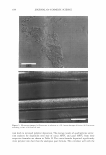
638 JOURNAL OF COSMETIC SCIENCE agents from a shampoo formula, a relatively high level of cationic polymer is often needed. However, using high levels of these ingredients increases costs and has a nega tive effect on both lather and stability. There is a continuing need for hair care formulas to deliver better conditioning benefits by incorporating ingredients that are highly efficient at depositing hair-enhancing com ponents, so as not to affect the cleaning performance and aesthetics of the formula. Research continues to improve upon the traditional choices of cationic polymers for hair care products (3,4). Guar hydroxypropyltrimonium chloride (guar HPTC) is a com monly used cationic galactomannan polymer used in commercial hair care products (5). We describe here an alternative quaternized galactomannan from the endosperm of Cassia tora and Cassia obtusifolia1 a high-charge-density (3.0 mEq/g) cassia hydroxypro pyltrimonium chloride (herein referred to as cassia HPTC). A cationic polymer's charge density is known to affect deposition (6). In this case, cassia HPTC (3.0 mEg/g) has a higher charge density than typical guar HPTC (0.7 mEq/g), and, consequently, has higher deposition efficiency. Plants belonging to the genus Cassia grow in dry soils in tropical India and have a rich history in Ayurvedic and traditional Chinese medicine. The Cassia species of plants has tonic, carminative, and stimulant benefits and is often used to treat nausea. Extracts from Cassia tora have been shown to lower cholesterol, reduce blood pressure, and relieve inflammation of the eyes (7 ,8). The seeds and leaves from Cassia tora have been used to treat skin conditions, such as itching and psoriasis. In this study, cassia HPTC was characterized according to its molecular weight and charge density. The cassia HPTC material was placed in a shampoo matrix and tested using turbidity and flow-cell differential interference contrast (DIC) microscopy mea surements for its ability to form a coacervate upon dilution. Deposition of the cassia HPTC coacervate onto hair was visualized using flow-cell DIC microscopy, cryo scanning electron microscopy (Cryo-SEM), and time-of-flight secondary ion mass spec trometry (ToF-SIMS). The efficacy of cassia HPTC in reducing wet friction was then tested using an Instron comb force measurement. METHODS AND MATERIALS TEST MATERIALS The polymers used in this work were cassia hydroxypropyltrimonium chloride (EX-906, MW= 600,000 g/mol, charge density= 3.0 mEg/g, from Lubrizol Advanced Materials, Inc., Cleveland, OH) and guar hydroxypropyltrimonium chloride (Excel guar, MW = 1,200,000 g/mol, charge density = 0.7 mEg/g, from Rhodia, Inc., Cranbury, NJ). The test shampoo formulas contained sodium laureth sulfate, sodium lauryl sulfate, and cocamidopropyl betaine, all received from the Stepan Company, Northfield, IL. The clarifying shampoo used as the control formula was Pantene Clarifying Shampoo (Procter & Gamble, Cincinnati, OH). The test formulas referred to in the text as "cassia formula" and "guar formula" contained 0.5% cationic polymer in an identical and simple sur factant matrix: 12% sodium laureth sulfate, 2% sodium lauryl sulfate, 2% cocamido propyl betaine, and water q.s.
Purchased for the exclusive use of nofirst nolast (unknown)
From: SCC Media Library & Resource Center (library.scconline.org)