]. Cosmet. Sci., 58, 621-627 (November/December 2007) High-pressure differential scanning calorimetry of colorant products J.M. MARSH, C. J. CLARKE, K. MEINERT, and R. M. DAHLGREN, Procter & Gamble Technical Centers, Rusham Park, Egham Surrey, TW20 9NW1 UK U.M.M., CJ.C.), and Wella Service GmbH, Berliner Allee 65, D-64274, Darmstadt, Germany (K.M. 1 R.M.D.). Accepted for publication July 16, 2007. Synopsis High-pressure differential scanning calorimetry (HPDSC) can be used to gain information on both the degree of crystallinity in the intermediate filaments (IFs) and the structural rigidity of the surrounding matrix or intermediate filament associated proteins (IFAP) of the hair cortex (1-3). We have used HPDSC to measure changes in the denaturation temperature (T 0 ) and enthalpy (LlH0) of the crystalline components after multiple treatments with permanent hair colorant products. We have observed that after three repeat treatments both the denaturation enthalpy and peak temperature are significantly decreased vs the untreated starting substrate. However, on dialysis of the fibers in deionized water this decrease is shown to be completely reversible, returning the enthalpy and temperature to that of the untreated hair. It is proposed that the decrease is due to the incorporation of formulation components such as the alkalizer and surfactants etc. and metal ions such as calcium and magnesium from the tap wash water. These components are predicted to have a non-permanent effect on the salt bridges and hydrogen bonds and hence the rigidity or viscosity of the matrix. We have compared the denaturation temperature with the tensile properties of the fiber after treatment both before and after removal of actives from the fiber. INTRODUCTION In a previous article (4), the authors investigated the denaturation performance of hair fibers that had been subjected to a number of treatments with bleach products. That study was conducted by applying high-pressure differential scanning calorimetry (HPDSC) for temperatures up to 180°C in excess water and under conditions of equi librium water vapor pressure. W ortmann and Deutz (5) have proposed that the dena turation enthalpy (L�H 0 ) is dependent on the structural rigidity of the ex-helical material in the intermediate filaments of the keratin fiber and that the peak temperature (T 0) is dependent on the cross-link density and viscosity of the matrix in which the interme diate filaments are embedded. Our original studies of the effect of multiple bleach treatments on these two parameters showed a decrease in both �H 0 and T 0 as the treatment number was increased. The work by the present authors confirmed the de- 621

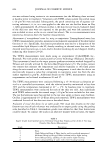
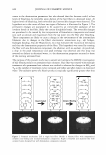
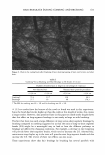
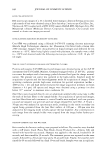
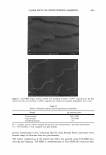
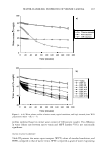
622 JOURNAL OF COSMETIC SCIENCE crease in the denaturation parameters bur also showed that this decrease could, at low levels of bleaching, be reversible upon dialysis of the hair fibers in deionized water. At higher levels of bleaching, both reversible and irreversible changes were observed. The hypothesis as to the causes of these two types of behavior is illustrated in Figure 1. The permanent changes are postulated to be caused by an irreversible oxidation of the covalent bonds in the fiber, likely the cystine disulphide bonds. The reversible changes are postulated to be caused by the incorporation of formulation components and metal ions such as calcium and magnesium from the tap water into the fiber after bleaching. These components are likely to cause a change in the environment of the intermediate filaments due to changes in the fiber's electrostatic interactions (e.g., salt bridges, hydrogen bonding, Van der Waals forces, etc.) that will alter the viscosity of the matrix and thus the denaturation properties of the fiber. This hypothesis was tested by treating the fiber with one formulation component, the alkalizer, with no oxidant. As predicted, a drop in the peak temperature and peak enthalpy was observed and this drop was reversed on dialysis in deionized water, i.e. the denaturation properties returned to those of the starting untreated hair. The purpose of this present study was to extend and compare the HPDSC investigation of hair bleach products to permanent hair colorants. Hair that was treated with multiple treatments of a permanent hair colorant was studied to observe the changes in dH0 and TO as the number of treatment cycles increased and before and after dialysis in deionized water. The oxidative power of a bleach product is typically significantly greater than that R R R R R Bleach Product Dialysis , WHhlng ➔ Figure 1. Proposed mechanism: Left is virgin hair fiber. Middle is bleached fiber with compromised covalent cross-linking and residual formulation components. Right is bleached and dialyzed fiber with covalent bonds disrupted but with formulation components removed.
Purchased for the exclusive use of nofirst nolast (unknown)
From: SCC Media Library & Resource Center (library.scconline.org)