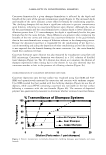
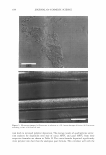
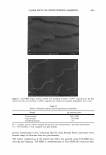
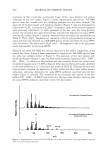
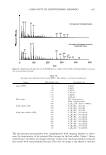
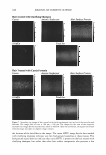
638 JOURNAL OF COSMETIC SCIENCE agents from a shampoo formula, a relatively high level of cationic polymer is often needed. However, using high levels of these ingredients increases costs and has a nega tive effect on both lather and stability. There is a continuing need for hair care formulas to deliver better conditioning benefits by incorporating ingredients that are highly efficient at depositing hair-enhancing com ponents, so as not to affect the cleaning performance and aesthetics of the formula. Research continues to improve upon the traditional choices of cationic polymers for hair care products (3,4). Guar hydroxypropyltrimonium chloride (guar HPTC) is a com monly used cationic galactomannan polymer used in commercial hair care products (5). We describe here an alternative quaternized galactomannan from the endosperm of Cassia tora and Cassia obtusifolia1 a high-charge-density (3.0 mEq/g) cassia hydroxypro pyltrimonium chloride (herein referred to as cassia HPTC). A cationic polymer's charge density is known to affect deposition (6). In this case, cassia HPTC (3.0 mEg/g) has a higher charge density than typical guar HPTC (0.7 mEq/g), and, consequently, has higher deposition efficiency. Plants belonging to the genus Cassia grow in dry soils in tropical India and have a rich history in Ayurvedic and traditional Chinese medicine. The Cassia species of plants has tonic, carminative, and stimulant benefits and is often used to treat nausea. Extracts from Cassia tora have been shown to lower cholesterol, reduce blood pressure, and relieve inflammation of the eyes (7 ,8). The seeds and leaves from Cassia tora have been used to treat skin conditions, such as itching and psoriasis. In this study, cassia HPTC was characterized according to its molecular weight and charge density. The cassia HPTC material was placed in a shampoo matrix and tested using turbidity and flow-cell differential interference contrast (DIC) microscopy mea surements for its ability to form a coacervate upon dilution. Deposition of the cassia HPTC coacervate onto hair was visualized using flow-cell DIC microscopy, cryo scanning electron microscopy (Cryo-SEM), and time-of-flight secondary ion mass spec trometry (ToF-SIMS). The efficacy of cassia HPTC in reducing wet friction was then tested using an Instron comb force measurement. METHODS AND MATERIALS TEST MATERIALS The polymers used in this work were cassia hydroxypropyltrimonium chloride (EX-906, MW= 600,000 g/mol, charge density= 3.0 mEg/g, from Lubrizol Advanced Materials, Inc., Cleveland, OH) and guar hydroxypropyltrimonium chloride (Excel guar, MW = 1,200,000 g/mol, charge density = 0.7 mEg/g, from Rhodia, Inc., Cranbury, NJ). The test shampoo formulas contained sodium laureth sulfate, sodium lauryl sulfate, and cocamidopropyl betaine, all received from the Stepan Company, Northfield, IL. The clarifying shampoo used as the control formula was Pantene Clarifying Shampoo (Procter & Gamble, Cincinnati, OH). The test formulas referred to in the text as "cassia formula" and "guar formula" contained 0.5% cationic polymer in an identical and simple sur factant matrix: 12% sodium laureth sulfate, 2% sodium lauryl sulfate, 2% cocamido propyl betaine, and water q.s.

CASSIA HPTC IN CONDITIONING SHAMPOO 639 MOLECULAR WEIGHT DETERMINATIONS The samples of cassia polymer were prepared in the following manner: 10 ml of a 1 % acetic acid solution was added to a 20-ml vial. Approximately 10 mg of polymer was added to this solution. The vial was then put on a wrist-action shaker and allowed to shake overnight. Each sample was then filtered into a 2-ml autosampler vial through a 0.45-µm syringe filter prior to analysis. The molecular weight was determined using size-exclusion chromatography with multi angle laser light scattering and refractive index detection (SEC-MALLS-RI). The chro matographic system consisted of a 2695 Alliance HPLC equipped with an autosampler (Waters, Milford, MA). The injector was fitted with a 100-µl injection loop. All sepa rations were performed on 2 PL aquagel-OH mixed-size exclusion columns in series, 8 µm, 7.5 mm x 300 mm (Polymer Laboratories, Amherst, MA), using a mobile phase of 0.1 M triethylamine, 0.1 M sodium nitrate in 1 % glacial acetic acid/0.02% sodium azide at a flow rate of 0.9 ml/min. Both the MALLS detector and RI detector (DAWN EOS and OptiLab Rex, Wyatt Technologies, Santa Barbara, CA) use a 690-nm laser. Samples were run in triplicate. PERCENT TRANSMITTANCE MEASUREMENTS The percent transmittance of the shampoo formulas was measured using a Gretag Macbeth, Model Color i 5 UV/VIS spectrophotometer (Gretag Macbeth, New Windsor, NY). A light wavelength of 600 nm was used to characterize the degree of clarity of the cosmetic compositions, using a blank of de-ionized water. TREATMENT OF HAIR SAMPLES Virgin hair (International Hair Importers, New York) was bundled into ponytails prior to treatment. The hair was wetted, lathered with treatment product or control (0.1 g product/g hair), and rinsed for 30 seconds. The lathering and rinsing process was repeated a second time. Then this entire cycle was run two additional times, with the hair dried in a hot box (150°F) between cycles. Before analysis, hair samples were allowed to equilibrate at 73°F and 45% relative humidity for a minimum of 16 hours. POLYMER ANALYSIS Treated hair was weighed into sterile polypropylene tubes. Ten milliliters of 60% v/v sulfuric acid was added, and the tubes were shaken on a wrist-action shaker. After 30 minutes, a 3.5-ml aliquot was mixed with 1.5 ml of anthrone reagent (3 mg/ml in concentrated sulfuric acid) and heated in a 95°C water bath for 15 minutes. A Model 845 3 UV spectrophotometer (Agilent, Santa Clara, CA) was used to record the absor bence of the cooled samples at 630 nm. The amount of polymer deposited onto the hair was calculated using a 30-µg/ml cassia HPTC standard prepared in 60% sulfuric acid as a single point calibration. Analyses were run in quadruplicate and results were adjusted for the response of untreated hair.
Purchased for the exclusive use of nofirst nolast (unknown)
From: SCC Media Library & Resource Center (library.scconline.org)