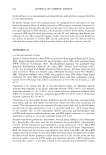
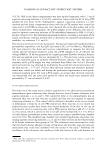
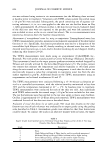
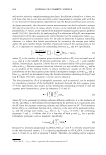
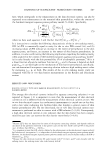
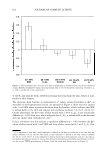
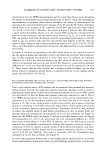
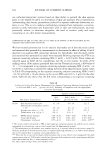
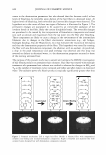
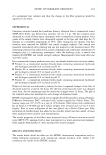
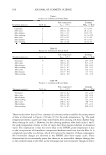
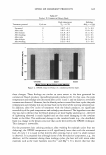
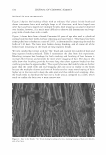
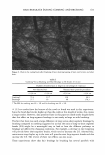
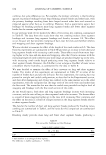
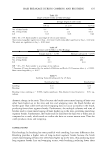
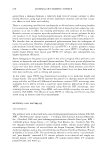
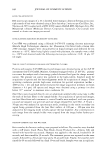
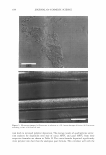
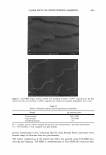
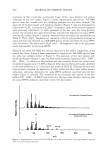
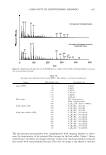
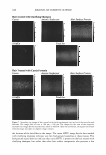
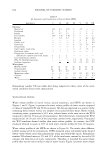
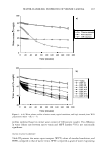
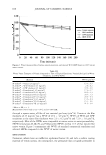
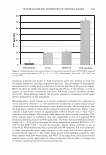
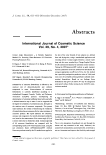
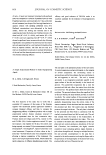
632 JOURNAL OF COSMETIC SCIENCE BRUSHING OF HAIR AND BREAKAGE Figure 2 depicts the brushing of hair with an ordinary "flat" plastic bristle brush and shows interwoven hairs with multiple loops in all directions, with hairs looped over other hairs and hairs looped over multiple bristles. End wrapping can also be observed over bristles however, it is much more difficult to observe and demonstrate end wrap ping with a brush than with a comb. Figure 3 shows hairs from a female Caucasian 66 years of age who used a cylindrical styling brush for three weeks without removing any hairs from it. These hairs have been either pulled out or broken at a ratio of 2.02/1, as determined by inspecting the ends for bulbs of 130 hairs. The hairs were broken during brushing, and of course all of the broken hairs remaining in the brush are long segment breaks. We next combed hair tresses with the "flat" brush and counted the number of short and long segment breaks produced. Table I summarizes the data from this experiment. Bleaching increases hair breakage for both combing and brushing of hair because it increases fiber friction and provides for more severe snagging of hair. The data in this table show that brushing provides for more long than short segment breaks but that combing provides the opposite effect. This is partly because the brush bristles are further apart than the comb teeth and end wrapping does not occur as readily in the brush because the multiple columns and rows of bristles tend to create more looping of hairs higher up in the tress and to keep the ends apart and thus inhibit end wrapping. Also, the brush tends to distribute the hair over a wider area as compared to a comb, which tends to confine the hairs over a more narrow area. Figure 2. Hair in the Goody "flat" brush during brushing of a tress, showing looping of hairs over bristles and other hairs.

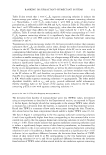
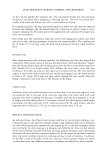
HAIR BREAKAGE DURING COMBING AND BRUSHING 633 Figure 3. Hair in the styling brush after brushing of hair, showing looping of hairs over bristles and other hairs. Combing* Brushing* Table I Combing Versus Brushing and Hair Breakage at 50 Strokes (15.2 cm) Number of broken hairs at length in cm (average of 3 replicas) Non-bleached hair 2.54 cm 72.3 37.7 2.54 cm 12.7 83 Bleached hair (peroxide-persulfate) 2.54 cm 118 49 2.54 cm 40.3 170.3 * The RH for combing was 60 ± 5% and for brushing was 50 ± 5%. A 15.2-cm stroke from the bottom of the comb or brush was used in this experiment. Since the brush has bristles higher up than the comb at this length of stroke, this creates a longer stroke. However, data presented later in this paper on comb stroke length shows that this effect on long-segment breakage is not nearly as large as with brushing. The fact that there was such a large difference in long-versus-short segment breakage by brushing compared to combing suggested to us that the ratio of long-to-short segment breaks (LIS) might be a meaningful way to look at how the different pathways to breakage are affected by changing conditions. For example, a decrease in end wrapping will provide fewer short segment breaks, which tend to decrease the LIS. Alternatively, more severe snags higher up in the tress will provide more long segment breaks and also increase the LIS. The reverse of these two effects can also occur. These experiments show that hair breakage by brushing has several parallels with
Purchased for the exclusive use of nofirst nolast (unknown)
From: SCC Media Library & Resource Center (library.scconline.org)