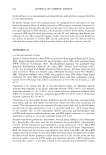
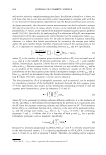
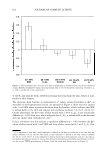
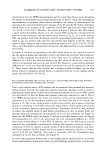
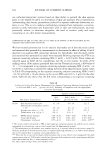
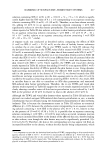
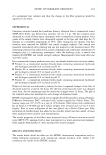
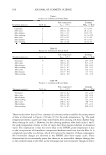
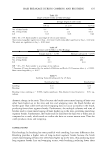
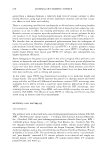
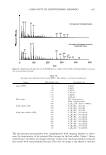
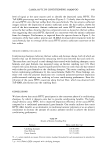
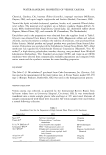
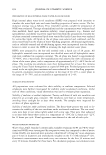
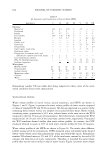
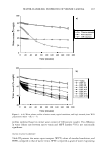
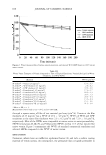
642 JOURNAL OF COSMETIC SCIENCE LH o�O� HO ) :z l • Figure 1. Reaction scheme and structure of cassia HPTC. Table I Molecular Weight and Polydispersity Determined for Four Samples of Cassia HPTC Cassia samples 2 3 4 Molecular weight 0.9014 X 10 6 (3%) 0.3054 X 10 6 (3%) 0.8890 X 10 6 (3%) 0.6357 X 10 6 (4%) Polydispersity 1.506 (4%) 2.117 (5%) 1.729 (4%) 1.970 (5%) N = 3 values reported are means. Percent relative standard deviation for each measurement is provided in parentheses. of measuring the conditioning contribution of deposition polymers in clear shampoo systems. A percent transmittance curve was generated over dilutions from 1: 1 to 20: 1 water:shampoo, encompassing the key regions of coacervate insolubility that quickly occur in the real-life shampooing process.

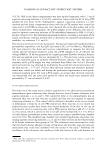
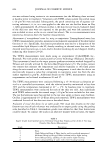
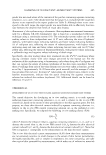
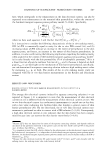
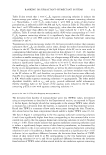
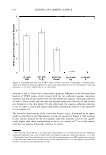
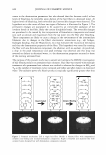
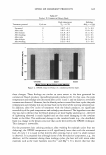
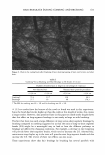
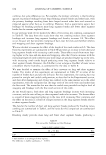
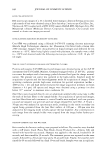
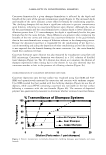
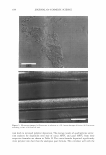
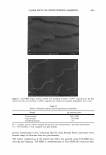
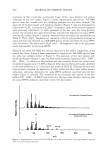
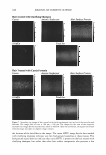
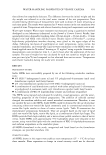
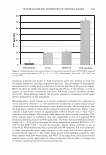
CASSIA HPTC IN CONDITIONING SHAMPOO 643 Coacervate formation for a given shampoo formulation is reflected by the depth and breadth of the curve of the percent transmittance graph (Figure 2). The increased depth and breadth of the curve indicates a more effective formula for conditioning purposes. The clarifying shampoo did not show a significant reduction in percent transmittance upon dilution, indicating no coacervate formation upon dilution. Although the curves for the guar formula and the cassia formula have a similar depth at lower dilutions, at dilutions greater than 2.5: 1 water:shampoo, the depth is significantly less for the guar formula than for the cassia formula. These differences are apparent when comparing the breadths of the two curves and indicate less coacervate formation in the guar formula than in the cassia formula over a range of dilutions relevant to the shampooing process. Because the deposited coacervate is responsible for the conditioning of wet hair (i.e., cuticle smoothing and aiding the deposition of other conditioning actives like silicones), it was expected that the formula forming the most coacervate (i.e., the cassia formula) would best condition wet hair. Coacervate formation upon dilution was also measured by visualization using flow-cell DIC microscopy. Coacervate formation was observed in a 10:1 solution of distilled water:shampoo (Figure 3a). The 10: 1 dilution was chosen as it simulates the dilution of shampoo experienced when rinsing hair in the shower. It was also observed that the coacervate attaches to hair in the presence of a flowing solution (Figure 36). CHARACTERIZATION OF COACERVATE DEPOSITION ONTO HAIR Coacervate deposition onto the hair surface was visualized using Cryo-SEM and ToF SIMS and quantitiatvely measured by extraction and reaction with anthrone reagent. Cryo-SEM revealed that hair washed with the clarifying shampoo (Figure 4a) was free of deposits, while cassia HPTC-containing coacervate was noticeable on the hair surface following a treatment with the test formula (Figure 46). The amount of deposited polymer was quantitatively measured to determine whether increased coacervate forma- 8 C ca ·e Cl) C ca ... � 0 % Transmittance of Shampoo 100 jiaiiiii-----liiiiiiiilll�iiiiiiiiiill----------.--.......-.. -Systems * * 80 � - _ .. * 60 � 40 I No Polymer Shampoo ' ' --- Guar Shampoo 20 - - _ .&. - + - Cassia Shampoo 0 0 5 10 15 20 Dilution (Parts water: 1 part shampoo) Figure 2. Percent transmittance vs formula dilution for clarifying shampoo, guar formula, and cassia formula.
Purchased for the exclusive use of nofirst nolast (unknown)
From: SCC Media Library & Resource Center (library.scconline.org)