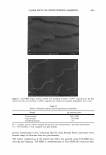
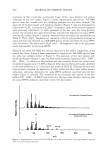
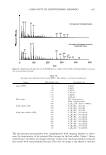
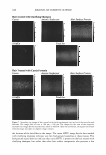
666 JOURNAL OF COSMETIC SCIENCE been determined by using atomic force microscopy (AFM) and the results compared with analogous data produced from the same scale edges using the 3D image analysis technique. The data obtained indicate that a relatively quick, accurate and viable method to determine scale height in keratin fibres has been established. A further 3D-SEM analysis method has been developed which allows individual scales to be monitored and for the cuticular scale height to be quantified after repeated 'smoothing' treatments. Function Of Surfactants In Hair Dyeing By Oxidation Dyes 2. Effect On Formation Of Oxidation Dyes By P Aminophenol And 5-Amino-O-Cresol In Dye Bath H. Yasu y ga*, Y. Ishii*, T. Komoda*, T. Shinkawa*, K. Kajiwara and H. Urakawa* *Department of Chemistry and Materials Technology, Kyoto Institute of Technology, Kyoto Sakyo-k 't Matugasaki, Gosyokaido-tyo, 606-8585, Japan and Otuma Women's University, Faculty of Home Economics, Tokyo Tiyoda-ku, Sanban-tyo 12, 102-8357, Japan Department of Chemistry and Materials Technology, Kyoto Institute of Technology, Kyoto Sakyo-ku, Matugasaki, Gosyokaido-tyo, 606-8585 Japan. 'Part of this study was presented at the 8th Eurasia Conference on Chemical Sciences, 21-24 October 2003 at Hanoi, Viet Nam and 3rd International Conference on Advanced Fiberffextile Materials 2005 in Ueda, 25--27 August 2005 at Ueda, Japan. The effect of surfactants on an oxidation-hair-dye formation reaction in a dye bath was studied in order to learn the mechanism of the effect of surfactants on the dyeability of hair by the oxidation dye. The dye-fonnation behaviours for the p-aminophenol and 5-amino-o-cresol system with the surfactants, of which the hydrophilic parts have different charges, were compared changing the concentration of surfactants. It was found that the same dyes are produced, regardless of the charge of surfactants added, and the rate of dye produced in the dyebath is increased in the presence of surfactants. The order of the production rate is, with an anionic surfactant with non ionic surfactant with cationic surfactant without surfactant. The relation between the dyeability of hair and the rate of dye produced in the dyebath in the presence of surfactants is not found. The major factor governing the dyeability of hair is different from the mechanism of the increased dye in the solution. It was also found that the dye-formation rate is increased by immersing hair into the reaction solution, and hair works as an accelerator for the dye-fonnation reaction.

]. Cosmet. Sci., 58, 667-668 (November/December 2007) Abstracts Journal of the Polish Society of Cosmetic Science, "Wiadomosci PTK" Vol. 10, No 2, 2007* The Herbal Materials Used In The Dietry Supplement Industry And Their Use In Skin Care Anthony C. Dweck Dweck Data The personal care market is becoming obsessed with a number of concepts which seem to have become the norm for most marketers. There is a growing use of endorsements for ethical issues, sustainable crops, environmentally conscious materials, organic ingredients and products that have been fair traded. There is an increasing use of organization badges, so that a product label can now resemble the arm of a well-qualified boy scout. Products now seem to require certification from self appointed bodies or experts who can now make a comfortable living out of these non- legal requirements. The influence of the dietary supplement industry, and the exotic foods now available to us, is certainly starting to reflect in the additives we are using topically. In many cases the waste parts of the food industry like the skins, pips, peels and leaves are the starting points for many of the cosmetic industry's new raw materials. Originally presented at the CHI Personal Care & Homecare Ingredients Exhibition & Conference 2006, Warsaw- Poland, October 25-26, 2006 Vitamin A Stability In Cosmetic Preparations Joanna Gl6wczyk-Zubek Faculty of Chemistry Warsaw University Of Technology, Poland Academy of Cosmetics and Health Care, Warsaw, Poland The term "vitamin A" includes a group of close chemical compounds which have almost the same biological activity. Retinol - alcohol occurring in food and animal tissues usually in the form of esters with fatty acids is the main compound named vitamin A 1. 3,4-Didehydroretinol (vitamin A2) found in the liver of fresh water fishes has very close chemical structure. Provitamins A- carotenoids occurs in plants. Chemical structures and trivial names some of them are listed. The tem1 retinoids was introduced in order to determine the large group of compounds of natural or synthetic origin differing from retinol in details of the structure in the ring or side chain. The name vitamin A often refers to all retinoids showing a similar qualitative biological activity as retinol. Retinal and all-trans-retinoic acid - the products of retinal oxidation - are the two most important his metabolites. Provitamins A occurring in plants are converted to retinal in the animal organisms. Retinal as a prosthetic group is contained in rhodopsin * These abstracts appear as they were originally published. They have not been edited by the Journal of Cosmetic Science. 667
Purchased for the exclusive use of nofirst nolast (unknown)
From: SCC Media Library & Resource Center (library.scconline.org)