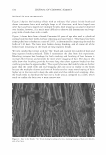
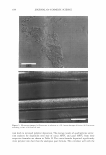
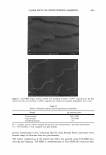
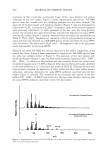
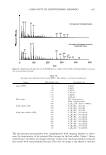
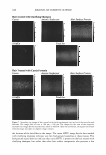
640 JOURNAL OF COSMETIC SCIENCE FLOW-CELL MICROSCOPY DIC microscopy images of a 10: 1 distilled water:shampoo dilution flowing across mul tiple strands of hair were obtained using a Zeiss Axioskop 2 microscope (Carl Zeiss, Inc., Thornwood, NY) coupled with a MTI 3CCD camera (DAGE-MTI, Michigan City, IN). Metamorph software (Molecular Devices Corporation, Sunnyvale, CA) journals were created to obtain one image per second. CR YO-SCANNING ELECTRON MICROSCOPY (CRYO-SEM) Cryo-SEM was performed using a Hitachi S-4700 FE scanning electron microscope (Hitachi High Technologies America, Inc. Pleasanton, CA) fitted with a Gatan Alto 2500 cryostage. Samples were cryo-preserved in liquid nitrogen and defrosted for ten minutes at -95°C. After being lightly coated with platinum, the samples were cooled to -150°C and observed under the following microscope conditions: 2 kV, 10 µA, 10° tilt angle. TIME-OF-FLIGHT SECONDARY ION MASS SPECTROMETRY (ToF-SIMS) Positive and negative ToF-SIMS spectra and images were obtained using an Ion-ToF IV instrument (Ion-ToF GmbH, Munster, Germany) equipped with a 25 keV Bi 3 + primary ion source for analysis and a low-energy pulsed electron flood gun for charge neutral ization. The primary ion source was operated in the high-current, bunched mode for acquisition of spectra and the burst-alignment mode for acquisition of images. These operating conditions provide high mass resolution for spectral acquisition (m/ Lim 4000 at m/z = 41) and high lateral resolution for image acquisition (primary ion beam diameter ::::: 0.3 µm). All spectra and images were obtained using a primary ion dose below 10 12 ions/cm2 to maintain static conditions (9). Hair fibers were mounted directly onto an aluminum sample holder using tape to affix the ends of the hair fibers to the sample holder. For acquisition of spectra and images, ten hair fibers from each treatment or control bundle were analyzed, with one positive ion and one negative ion spectrum and one image obtained for each fiber. A 50-µm x 50-µm area was analyzed in spectroscopy mode, resulting in the entire secondary ion signal being generated from the hair fiber surface. A 100-µm x 100-µm area was analyzed in the imaging mode to fully capture the hair diameter. Any contributions in each image from the sample holder were cropped from the image before further pro cessing. INSTRON COMBING TEST FOR WET HAIR Hair swatches for Instron combing were prepared as follows: Dry swatches were brushed with a stiff plastic brush (Purse Flare Brush, Goody Products Inc., Atlanta, GA) and wetted with water for ten seconds. Shampoo was applied to the swatch, brushed for 30 seconds, and then rinsed for 30 seconds. The treatment process was repeated on the same swatch, followed by a 60-second rinse and a 30-second brush. Finally, the swatches were rinsed for 60 seconds followed by a final 30-second brush. Samples were run in triplicate.

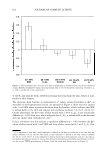
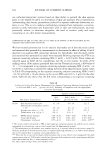
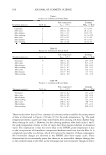
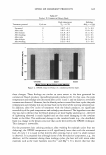
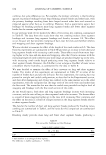
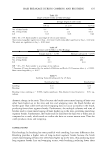
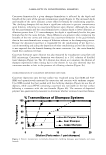
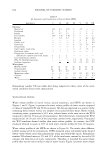
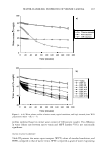
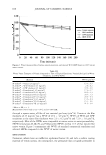
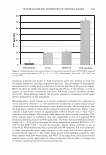
CASSIA HPTC IN CONDITIONING SHAMPOO 641 The hair swatches were combed in a 73°F/45% relative humidity-controlled environ ment, using an Instron Model 5 542 single-column frame with Instron Merlin/Series IX software, an Instron 2530-437 50N tension/compression load cell, and Instron 1701- 004 screw action grips (Instron, Norwood, MA). Formulas were ranked for wet condi tioning properties by mean comb force. RES UL TS AND DISCUSSION CASSIA CHARACTERIZATION Cassia is typically selected from Cassia tora, Cassia obtusifolia! or a combination thereof. In nature, Cassia tora and Cassia obtusifolia coexist in the same field and are typically co-harvested. In order to obtain the desired highly purified form of cassia, the endosperm of cassia seeds is soaked in water and solvent and minced in order to remove undesired components such as sennosides, anthraquinone derivatives, and fibrous materials. This is followed by separation and final wash steps to yield the desired galactomannan. For ease of handling, the galactomannan is often dried and ground into a fine powder. To promote resistance to rinsing from hair or other surfaces, cassia galactomannan is modified with co-reactive quaternary ammonium compounds containing an epoxy group specifically, this is glycidyltrimethylammonium chloride in an aqueous alkaline solution to yield 2-hydroxy-3-(trimethylammonium)propyl cassia (INCI: cassia hydroxypro pyltrimonium chloride). The reaction is schematically represented in Figure 1 (10). Charge density of a cationic polymer affects coacervate formation (11), and both charge density and molecular weight are known to impact the deposition of cationic polymers on hair (1). Cassia HPTC (3.0 mEq/g) was found to have a higher charge density than the quaternized guar (0.7 mEq/g) comparator. The molecular weight of the cassia polymers was between 300,000 D and 900,000 D. Table I lists the molecular weights and polydispersity for four samples of cassia HPTC, as determined by SEC-MALLS-RI. These polymers are of similar polydispersity to traditional cationic polymers (e.g. polyquaternium-10, quaternized guar) used in hair care products. Polydispersity is a measure of the distribution of molecular weights in a given polymer sample and is defined as the weight average molecular weight divided by the number average mo lecular weight. It is an important consideration, as it factors into polymer adsorption equilibrium (12). The lower-molecular-weight polymers have higher diffusion coeffi cients than higher-molecular-weight polymers and are first to adsorb onto hair. FORMULA CHARACTERIZATION TO PREDICT CONDITIONING PERFORMANCE Conditioning shampoos are designed to clean the hair and improve its appearance by providing conditioning appropriate to the hair type and desired end look. Fragrances and conditioning agents, such as deposition polymers and silicones, contribute most to the cost of a shampoo formulation. These ingredients must therefore be used judiciously to maximize benefits to hair while avoiding prohibitive costs. Upon shampoo dilution during rinsing, cationic polymers interact with anionic surfactants to form the coacer vate, which deposits on the hair. Since the water-insoluble coacervate affects the tur bidity of the diluted shampoo solution, percent transmittance is an appropriate means
Purchased for the exclusive use of nofirst nolast (unknown)
From: SCC Media Library & Resource Center (library.scconline.org)