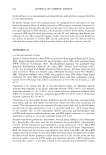
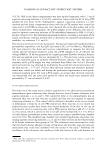
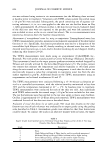
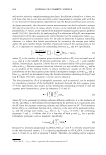
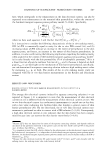
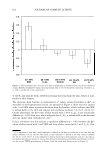
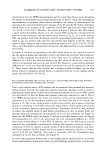
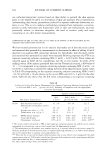
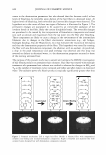
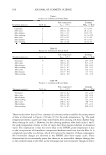
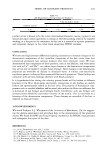
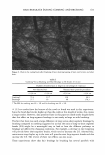
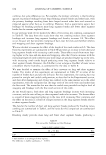
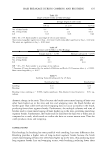
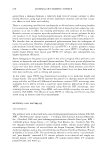
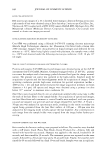
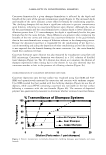
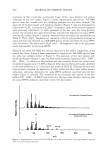
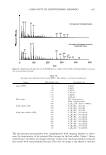
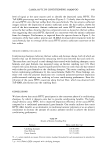
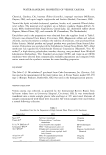
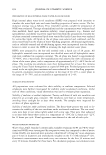
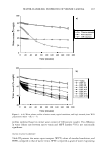
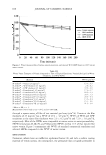
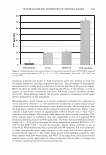
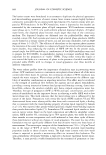
646 JOURNAL OF COSMETIC SCIENCE surements m that it provides a molecular image of the cassia polymer and anionic surfactant on the hair surface. Figure 5 shows representative positive-ion ToF-SIMS spectra from hair treated with the clarifying shampoo and the cassia formula. The spectrum of the hair treated with clarifying shampoo (Figure 5, top) was dominated by hydrocarbon (CxH y + ) and protein (CxH y Nz+) fragments many of the protein fragments were previously identified ( 13 ). After treatment of the hair with the cassia formula, several new secondary ions were observed that indicated the deposition of cassia HPTC onto the hair surface (Figure 5, bottom). Several of these secondary ions are identified in Table II. The CxH y Oz+ fragments are consistent with the polysaccharide structure of cassia and were also observed in a ToF-SIMS spectra of spin-cast films of cassia HPTC (data not shown). The additional C 3 H8N + (m/z = 58) fragment is due to the quaternary amine functionality in the cassia HPTC. Negative-ion-mode ToF-SIMS was used to characterize the surface composition of the treated hair fibers. Figure 6 shows representative negative-ion ToF-SIMS spectra from the same hair samples shown in Figure 5. The spectrum of the hair treated with clarifying shampoo (Figure 6, top) was dominated by protein fragments (CN-, CNO-, S0 3 - , HS0 4 -) in addition to alkyl sulfates and the covalently bound hair surface lipid 18-methyleicosanoic acid (18-MEA). Many of these ions have been previously identified in the work of Harvey et al. (14) and are also shown in Table III. Washing the hair with cassia formula increased the deposition of alkyl sulfate and alkyl ether sulfate anionic surfactants, indicating deposition of a cassia HPTC-surfactant coacervate onto the hair surface (Figure 6, bottom). The intensities of the secondary ions related to the hair surface (CN-, CNO-, 18-MEA) were reduced in this spectrum, further indicating that the cassia HPTC-surfactant coacervate covered the hair surface. 58 0 50 100 m/z 150 Hair treated with Clarifying Shampoo Hair treated with Shampoo containing Quaternized Cassia 200 250 Figure 5. Representative positive-ion ToF-SIMS spectra of hair treated with clarifying shampoo (top) and with the cassia formula (bottom).

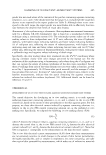
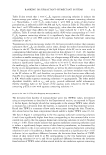
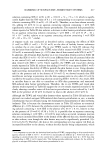
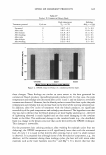
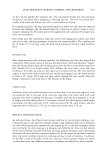
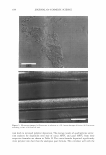
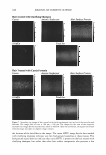
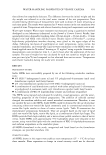
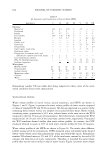
CASSIA HPTC IN CONDITIONING SHAMPOO 647 80 97 0 100 200 265 293 321 341 300 m/z Hair treated with Clarifying Shampoo Hair treated with Shampoo containing Quaternized Cassia 381 425 400 500 Figure 6. Representative negative-ion ToF-SIMS spectra of hair treated with clarifying shampoo (top) and the cassia formula (bottom). Table III Secondary Ions Identified from Cassia HPTC, Hair Surface, and Anionic Surfactants Source Cassia HPTC Hair surface Alkyl sulfates (AS) Alkyl ether sulfates (AES) Mass/charge ratio 45 58 100 102 132 134 26 42 341 265 293 321 309 337 353 365 381 397 409 425 Secondary ions C4H50 + C3H8N+ CsHsO2 + CsH 1 oO2 + CsHsO4 + CsH10O4+ CN- (from protein) CNO- (from protein) C20H4 1Cos- (from 18-MEA) C12H25SO4- (Cl2AS) C 14 H29SO4- (C14AS) C l( ,H33SO4- (C16AS) C 14 H29SO5- (C12AE1S) C 1 6H33SO5- (C14AE1S) C 1 6H35SO6- (C12AE2S) C 18 H37SO5 - (C16AE1S) C 18 R37SO6- (C14AE2S) C18H37SO7 (Cl2AE3S) C20H41SO6- (Cl6AE2S) C20H41 SO7 - (Cl4AE3S) The spectroscopy measurements were complemented with imaging analyses to deter mine the homogeneity of the polymer film coverage on the hair surface. Figure 7 shows representative secondary-ion images from hair treated with clarifying shampoo (top) and hair treated with cassia formula (bottom). The total-ion image is also shown to indicate
Purchased for the exclusive use of nofirst nolast (unknown)
From: SCC Media Library & Resource Center (library.scconline.org)