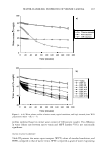
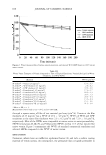
654 JOURNAL OF COSMETIC SCIENCE PREPARATION OF HIGH INTERNAL PHASE WATER-IN-OIL EMULSIONS High internal phase water-in-oil emulsions (HIPE) were prepared with intention to simulate the water/lipid ratio and water-handling properties of native vernix. The for mulation strategy was as follows. First, emulsifier systems suitable for preparation of HIPE were evaluated. The type of emulsifier(s) and the concentration were evaluated and then modified, based upon emulsion stability, visual appearance (e.g., fineness and spreadability), and ability to prevent rapid water loss from the preparations. Initially the oil phase contained conventional lipids (non vernix-like lipids). Later these were replaced by vernix-like lipids. All lipids in the oil phase were selected and combined, and the ratios varied based on the results of water-handling properties. Additional ingredient(s), such as colloidal oatmeal and oil-thickening agents, were incorporated into the formu lations in order to assist the HIPE in retaining the high internal water phase. HIPEs were prepared by the hot-cold method with a batch size of 20 grams. All hydrophilic materials were incorporated into distilled water and all hydrophobic mate rials were combined in a separate container. The oil phase was heated to approximately 75°-80°C over a water bath. Pre-emulsification was achieved by slow continuous ad dition of the water phase, with a temperature of approximately of 35°-40°C for the oil phase. The resulting pre-emulsions were then homogenized for at least five minutes using the Tissue Tearor homogenizer at a speed of 5000 rpm. Finished preparations were stored in the air-tight glass containers and were evaluated for water-handling properties. In general, emulsions contained an oil phase in the range of 19--43 % , a water phase in the range of 53-78%, and an emulsifier at approximately of 2-4%. STABILITY MEASUREMENT All preparations were evaluated for their stability at ambient temperature. Selected emulsions were further investigated for stability under accelerated conditions. Under each of these conditions, visual observation was used to evaluate phase separation. Stability of emulsions at ambient temperature. Twenty milliliters of each test emulsion was placed in an air-tight glass container. The emulsions were kept at room temperature, avoiding direct sunlight for at least three months. The samples were inspected for evidence of phase separation. Stability of emulsions under accelerated conditions. The freeze-thaw process was used to de termine the stability of the test emulsions under accelerated conditions. The test emul sions were kept in test tubes tightly sealed with screw caps. They were then subjected to at least three freeze-thaw cycles at a temperature of -20°C for 12 hours and +22°C for 12 hours per cycle. Visual appearance was observed at the end of each cycle. WATER-HANDLING PROPERTIES Water release profile. Standard commercially available emulsions (0/W and W/0 emul sions) and HIPEs were investigated for evaporative water loss compared to that of native vernix. Briefly, test materials were spread as a thin film of 3.28 mg/cm2 on an aluminum pan (14 mm in diameter) and immediately weighed on the C-31 Microbalance® (23). Gravimetric measurements were made every two minutes for the first 30 minutes and every 30 minutes thereafter for three hours. For calculation purposes, test emulsions were

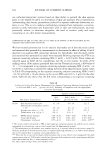
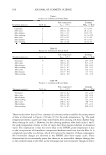
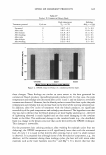
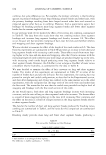
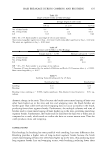
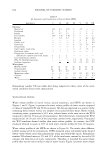
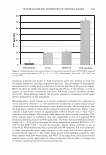
WATER-HANDLING PROPERTIES OF VERNIX CASEOSA 655 then allowed to completely desiccate. The difference between the initial weight and the dry weight was referred to as the total water content of the test preparations. Data recorded during three hours of measurement were used to obtain % water remaining at each time point. The results were expressed as % water content in the test emulsions over a period of time. Temperature and relative humidity during each experiment were noted. Water vapor transport. Water vapor transport was measured using a quantitative method developed in our laboratory (submitted to the Journal of Cosmetic Science). Briefly, hex agonal polystyrene disposable weighing dishes (20 mm length x 20 mm width x 10 mm height) were half filled with distilled water. Double layers of N-terface®, a porous high-density polyethylene interface dressing, were glued to the upper edges of the dishes. Following two hours of equilibration at room temperature, native vernix, the standard emulsions, and vernix-like lipid-in-water emulsions or the HIPEs were uni formly applied onto the N-terface® dressing at 25 mg/cm2 using a spatula. Gravimetric measurements were recorded at time 0, 2, and 4 hours after the application of the test samples. The rate of weight loss was calculated for each test system as weight per unit area per time (g/m2/h) and compared to that obtained from native vernix. Temperature and relative humidity during the study were recorded. RESULTS PREPARATION OF HIPEs Stable HIPEs were successfully prepared by use of the following emulsifier combina tions: • 4% PEG-7 hydrogenated castor oil and 5 % polyglyceryl-4-isostearate (and) cetyl dimethicone copolyol (and) hexyl laurate • 2% cetyl dimethicone copolyol and 0.8% PEG-7 hydrogenated castor oil • A combination of cetyl dimethicone copolyol with either polyglyceryl-3-diisostearate or polyglyceryl-4-isostearate (and) cetyl dimethicone copolyol (and) hexyl laurate • A combination of PEG-30 dipolyhydroxy stearate and sorbitan sesquioleate The HIPEs were prepared and evaluated for stability, visual appearance, and the water handling properties of the finished preparations. The addition of colloidal oatmeal changed the emulsion stability and caused microbial contamination. Therefore, it was not suitable for use in the HIPEs. Stable HIPEs could be obtained by the use of oil phase containing either non-vernix-like lipids commonly used in conventional emulsions or vernix-like lipids similar to those of native vernix lipids. Table II summarizes the representative preparations formulated. They are grouped based on the type of lipid used: non-vernix-like lipids, vernix-like lipids, or a combination of both lipid types. The HIPEs provided both high stability and a water release profile similar to that of native vernix. Stable HIPEs with approximately 78% hydrophilic phase were obtained in the system, using vernix-like lipids with the combination of PEG-30 dipolyhydroxystearate and sorbitan sesquioleate as the emulsifier phase. All HIPEs formulated in the study, categorized and listed based on the formulation strategies, are provided elsewhere (24). ST ABILITY OF HIPEs All HIPEs shown in this report were stable at room temperature (25° ± 3°C) for at least three months. Phase separation or change in visual viscosity could not be detected.
Purchased for the exclusive use of nofirst nolast (unknown)
From: SCC Media Library & Resource Center (library.scconline.org)