NON-FLORAL PERFUMES By E. S. MAURER, F.C.S., M.R.I.* THIS IS not an original :theme. Many writers have touched on it before. x As far back as January 1939 an anonymous article appeared under the same title, • the follovdng intro- ductory paragraph from which epito- mises the subject:"It is often asserted that, in spite of the enormous num- ber of synthetic chemicals now used in perfumery, the art has its basis in flowers and their fragrance. Historically, however, it may be questioned whether .this assertion is correct. The ancients made their perfumed oils mainly with the aid of spices and aromatic woods and resins and, although the popularity of floral perfumes is impressive, there is, nevertheless, a big and increasing production of perfumes in which the predominant note is not a floral one." It is interesting, however, to observe that the above-mentioned article is sub-titled, "a catalogue of a few materials with which the perfumer can reconstruct the odours of leathers, precious woods, balsams, spices, etc.", and most of the items quoted are proprietaries of well- known English and Continental firms, many of which have earned the esteem of perfumers during the * Chief Chemist, Messrs. A. G. Hersom, IKingston-upon-I hames, Surrey. 188 past decade. The author rightly emphasises the difficulty of attempt- ing to classify odours of a non- floral type and proceeds to give a brief dissertation upon some of the groupings as outlined by ½erbelaud in his Formulaire de Parfumerie. 3 Those who are familiar with this classification of odours Of the same and neighbouring tonality will per- haps recollect that the osmical panorama extends to no less than 45 groups but, broadly speaking, it is seen that this scheme lends itself to a division showing the "pure floral" or blbssom elements as one third ß the second portion of similar. magnitude being devoted to the "pharmaceutical" essential oils ofl ß perfumery usage while the remain- ing third embraces transitional :.[ groups and the folial, animal, fruity:! and other ancillaries. These auxiliaries, as is well known,'?! have become of increasing import-:i! I ance in modern perfumery composi•:?} tion and in almost every case they.li represeni a "quality" rather than specific odour and may perhaps termed the perfumery "adjectives,i'..11!i•i i or more succinctly expressed "adjuvants." The dictionary affords a particU2::ii!i larly apt deftnition of an adjuvan?•

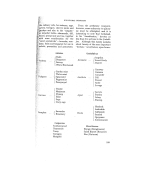
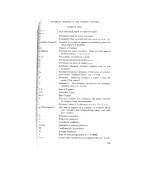
NON-FLORAL PERFUMES .•?'•as "something added to a prescrip- i}!ftion to aid the operation of the i!:,'•pnncipal ingredient,' and I think :limit well worth while to observe, in the fi•fundamental non-floral character of •/these adjuvants, the function of the :i!!:¾1hrge range of pharmaceutical essen- •!*.!i::'i:•ifial oils, gums, balsams and resins, i•f•,?iand to reallee just how closely '• •iiilPerfumery is still allied to the "art •?•?of the Apothecary." •?•:•:. Although it is perhaps due to the ?•: odour classi[cation of Rimmel (18•5) }•}•:{hat the position and importance of ??he adjuvants became apparent, it is •?•'ønly when some attempt is made at ?•?):OSegregation that a pattern begins to •.•}:?merge from which the transition •)•mechanism 0f one group to another :?:begins to be obvious.' The utility '•}::•of this can also be perceived when •t hybrid effects are considered, for :• :::.instance, in either allocating a niche •: :: to synthetics of unusual od0ur, or •:.:':: producing according to inclination, ?./::e.g., oenanthic-verdure or balsamic- honey notes. •):::' ' The following order is suggested as •:: a cyclic pro•ession, as it will be :•' noted from this sequence that the /•'•' basic odour tone of any one group is not only largely dependent on, but is :•:::linked with that of the preceding group as well as the following. THE ADJUVANT CYCLE 1. Folial-nutty 8. Woody 2. Verdure •. Smoky 3. Oakmoss-hchen 10. Leather 4. Fern 11. Animal 5. Earthy 12. Resinous •. Fungal 13. Spicy-nutty 7. Rooty 14. Balsamic 15. Herbaceous 10. Citrus 1•. Amber 20. Fruity 17. Honey 21 Oenanthic 18. Aldehydic 1. Folial~nutty Although each of the above groups will allow for some subdivision, it will be found that there are several sections which require more elaborate and detailed treatment, these are: (a) the folial nutty verdure, (b) her- baceous and (c) fruity groups. THE FOLIAL-VERDURE GROUP' The green or folial note is perhaps best represented by the aroma of violet leaves absolute, and usually in conjunction with such alkyne esters as methyl-heptine and methyl- octine carbonates, but there are, however, auxiliaries of a green character which have comparatively recently come into prominence, such as nonadienol and its aldehyde and "leaf alcohol" ([•-hexenol and its- homologues) as well as hexyl-heptyl esters and ethers. Upon these items many green-leaf coronal bases may be formulated, which when incor- porated with due restraint in com- positions, confer desirable light and subtle touches of greenery and fresh- ness, free from the blatant and heady tendency of the alkynes. Another group of verdure toners which can also be used with very pleasing and natural effects are combinations of the various acetale of phenylacetic, hydratropic, heptyl and methyl-heptylacetic aldehydes, especially in conjunction with the formic, acetic and propionic esters 189
Purchased for the exclusive use of nofirst nolast (unknown)
From: SCC Media Library & Resource Center (library.scconline.org)