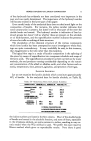
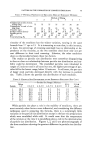
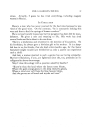
NEWER CONCEPTS OF LANOLIN COMPOSITION 17 that the iodine number of the second is lower than that of the first by what we consider to be a significant amount. This suggests the presence in the original material of beta hydroxyacids which were converted by the more drastic conditions to unsaturated acids. Also note that the second sample has significantly higher acid and hydroxyl numbers than the first, suggest- ing that milder conditions have resulted in less polyester and/or cyclic ester formation from alpha hydroxyacids. It shoul&-be made clear again that although an acid and an alcohol are generally required for esterification--in this instance we have only acids. The ambidextrous •ydroxyacid molecule contains both an alcoholic and an acidic group, and these groups are capable of reacting either with each other or with other acids. Thus, esters can be formed from acids alone. The ester number of our acids is probably due to esters formed in this manner. Assuming this to be the case, we can calculate the acid and hy- droxyl numbers of a lanolin fatty acid mixture in which these esters have been split back into hydroxyacids. If we correct the values for the mildly treated sample on the bottom row of the table in this manner, we obtain the following results the acid number increases to 178, the saponification number remains unchanged at 178, the ester number drops to 0, the cal- culated mean molecular weight as now corrected is 315, while the hydroxyl number rises to 87.3, and per cent hydroxyacids to 49. We have since been able to carry these experiments further by means of an extremely mild catalytic method which resulted in a product with acid and hydroxyl num- bers very close to these calculated values. In turning from the analytical data to the composition of the fatty acids we can use the outstanding work done by Weitkamp (2) in 1945 as a guide. Weitkamp formed the methyl esters of lanolin fatty acids, fractionated them by vacuum distillation, and succeeded in identifying a total of 32 acids. Table V summarizes his data and illustrates the four types of acids TABLE V--CoMPOSITION OF LANOLIN FA'r'r¾ AcIDs (fROM WEITKAMP) NUMBER OF ACIDS SERIES S1'ItUCTIIKiU. FORHULA PERCENT PRESENT c,r½,%.-c00,0=.,.,= c,,-c00,(..*.,) 08 CH• CH• DISTI•ATION LOSS -- 6.0 RESIDUE • 13.0 IO ISO II ANTEISO

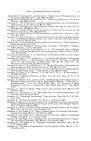
18 JOURNAL OF THE SOCIETY OF COSMETIC CHEMISTS he found in wool fat. Note particularly that he isolated and identified only two hydroxyacids which constituted 4.2% of his original acids. Weitkamp himself recognized that the great deficiency of the distillation method was the thermal instability of the methyl esters of hydroxyacids, and attributed a 6% loss during distillation to decomposition of these acids, If we add this 6% to the 4.2% found, the total, or 10.2%, is the content of. hydroxy acids we can deduce from his data. This is far below the percentage we obtained from extensive analysis of lanolin acids. The lack of hydroxyl number de- terminations in Weitkamp's data is indeed regrettable. Had he made this determination the degree of acid degradation would have been.:apparent. Turning again to the analytical data for fatty acids in Table IV, it should be pointed out that numerous analyses similar to those detailed on the two bottom rows of the table resulted in a 30 to 40 range for per cent hydroxy- acids. When corrected by the method previously described, which takes into account that acid esters were formed from hydroxyacids, this range be- comes 40 to 50% of the acids. Bertram's (1) extensive analytical data contains high values for hydroxyl number. The fatty acids derived from the American wool fat are pa,ticu- larly high in this respect. Calculating from his data it appears that 98.5% of the acids in the American and 60% of the acids in the Australian samples were hydroxyacids. The latter is fairly close to our corrected values. It is difficult, however, to evaluate Bertram's data completely because of his omission of saponification, ester, and iodine numbers. In 1953 Horn, Hougen, and yon Rudloff (14) actually isolated and identi- fied nearly 30% of hydroxyacids from the acidic fraction of lanolin. These authors used two different separation procedures including the Craig solvent distribution method which would not be expected to degrade hydroxyacids. The acids they identified were the normal hydroxy derivatives of lauric, myristic, palmitic, and stearic acids. FRV. E LANOLIN' ALCOHOLS Turning now to the free alcohols of lanolin, you will note that the bar graph (Fig. 1) represented the alcohols as a fairly small fraction of lanolin. The substantial hydroxyl number of lanolin has led many investigators to erroneous conclusions as to the pekcent of free alcohols present. Some ap- parently considered the hydroxyl number of lanolin to be due to the pres- ence of free alcohols. Even in 1947 Warth (6) in his book "The Chemistry and Technology of Waxes" listed 25% free alcohols as being present in neu- tral anhydrous wool fat. Since this is about the figure one would obtain after dividing the hydroxyl number of lanolin by the hydroxyl number of lanolin alcohols, it is possible that Warth used this line of reasoning. Deuel's (15) excellent book "Lipids, Volume I," published in 1951, also used the 25% figure acknowledging Warth as the source of his data.
Purchased for the exclusive use of nofirst nolast (unknown)
From: SCC Media Library & Resource Center (library.scconline.org)