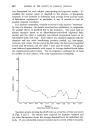
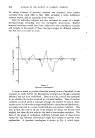
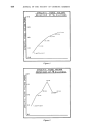
606 JOURNAL OF THE SOCIETY OF COSMETIC CHEMISTS DR. H. G. TROTH: Yes, you are right. You referred to a paper by Her- man where the fibres are stained with iodine, and where the penetration of reducing agents, in particular thioglycollic acid, is observed. I was very interested in this and had a look at it. By observing the ends of cut fibres, I found that they penetrate much faster along the length of the fibre than from the surface of the fibre through the fibre. Does this not indicate that there was a diffusion barrier, which had been removed by cutting it off at the end ? THE LECTURER: It might also indicate that the fibre is anisotropic, and since we know it is anisotropic, this is hardly surprising. A membrane is not the only explanation for this phenomenon. DR. J. BLAKE: I take it there is no direct experimental evidence, for example by low angle X-ray scattering, for the pore sizes postulated for dry and swollen hair ? THE LECTURER: Correct. DR. J. BLAKE: For what dye species were the data in Fig. 1 obtained ? Were they the same for Fig. 2 ? THE LECTURER: Fig. 1 was Crank's, who did not obtain any data at all-- he just worked it out mathematically. DR. J. BLAKE: Then you do not know if that equation is generally applicable for describing diffusion processes in hair and in wool. He did this for cellulose, did he not? THE LECTURER: No, he did not do it for anything. He just took a cylinder and said "this molecule is going to diffuse in, it is going to undergo rapid irreversible reaction, but otherwise it would undergo Fickian diffusion." What mathematical formulae fit this situation ? The one which I have quoted in the paper. Then he computed values for DT of varying reactivity ratios. a2 DR. J. BLAKE: I think your paper indicates that there is no effect of temperature on swelling and dyeing rates for hair and wool, and it is all activation energy. Is that right ? THE LECTURER: NO. I suggest that swelling is unimportant up to 60 ø, mainly because swelling does not occur. In fact it decreases at first and then increases slightly. This cannot therefore be the explanation of increased dyeing at 60 ø, as compared with 20 ø. There must be some other ,explanation, and I suggest that the activation energy of diffusion is such that it could provide some explanation of increased dyeing. MR. R. L. DAVIES: Have you been able to show any correlation between the size of holes found, and what I would call the condition of hair. Does

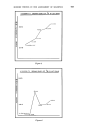
DIFFUSION PROCESSES IN HUMAN HAIR 607 hair which readily takes up dye and is readily permed, have holes of different size from hair resistant in these respects ? THE LECTURER: I have a little evidence on the behaviour of permanently waved hair compared with ordinary hair, which may partly answer your question. We have Fig. 2 showing against the radius of the dye, with Italian hair. If we permanently wave this hair, we have a little data indicating a line with a steeper gradient but intercepting at about the same place. This means that the radius of the hole in permanently waved hair is not significantly different, but that the number of the holes is higher. DR. J. F. CORBETT .' In the experiments relating to the rate of uptake of dye, was there any significant difference between the graphs obtained for amount taken up against time for the three small dyes, C, D and E, com- pared with the much larger dyes A and B of presumably much higher affinity for the fibre ? I cannot help feeling that A and B will be rapidly absorbed on to the surface, and being much larger molecules, will link not only by salt links, but by Van der Wals forces, providing themselves by surface absorp- tion a barrier to further absorption of the dyes. Do the rate uptake curves indicate anything like this ? THE LECTURER: The rate of uptake curves show slower uptake with the: larger molecules. DR. J. F. CORBETT ' Is there a break in them ? THE LECTURER .' In general, they were smooth curves not showing any great discontinuity. You must remember that we washed quickly in order to get rid of anything that was loosely adhering to the outside, because we were not interested in material which is just absorbed on the surface. DR. J. F. CORBETT: I asked this question because you stated in your preamble that you were trying to determine whether hole size had any effect or not. I cannot help feeling that the affinity of the dyestuffs, differing so very widely, particularly in respect of molecular size, may be responsible for the different rates of diffusion rather than the radius of any holes. I feel that one might get nearer to ideal conditions by using a series of sulphonic acids with no other substituents rather than the dyestuffs that you used. THE LECTURER: I have used these particular dyestuffs because the, organic chemists in my laboratory have not managed to make the molecules which I want, and I wanted to determine if the general idea was correct while they were making them. We want spherical molecules, or as near spherical as possible, all with the same reactive group, which gradually gets bigger. When thinking about this, you find it is almost impossible. While I agree
Purchased for the exclusive use of nofirst nolast (unknown)
From: SCC Media Library & Resource Center (library.scconline.org)