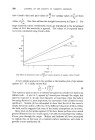
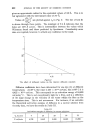
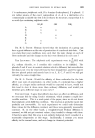
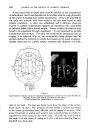
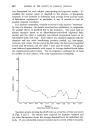
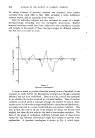
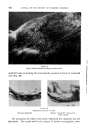
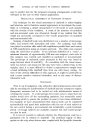
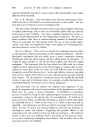
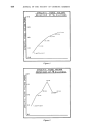
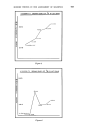
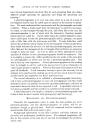
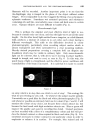
614 JOURNAL OF THE SOCIETY OF COSMETIC CHEMISTS No strong evidence of seasonal variation was obtained these studies extended from April 1962 to May 1963, including a rather indifferent summer season, and an unusually severe winter. Data for individual subjects was also examined by means of a simple moving-average extending over five fortnightly observations. Marked seasonal variations would have been reflected in the coincidence of peaks and troughs in the graphs of these moving-averages for different subjects but this was not found to occur. • L •G -I0 Figur• • Specimen correlogram. To learn as much as possible about the normal course of dandruff, it was necessary to study further the fluctuations recorded even though a seasonal influence had not been established. Data as in Figs. 2 and $ was examined to see whether fluctuation occurred in a random fashion. Thus, if random variation occurred about a constant average, the number of runs of obser- vations above or below the average would follow a characteristic distribution too many long runs in a series would indicate non-random variation. This was, in fact, the case in 15 out of 22 subjects for whom the records were studied, but these did not indicate the kind of non-random variation. The form of the graph of correlation coefficient between pairs of observations versus the 'lag' between observations might have helped to provide some explanation. A specimen correlogram is shown in Fig. $, which repre-

THE INVESTIGATION OF DANDRUFF 615 sents data giving rise to non-periodic oscillation. There was a suggestion that dandruff might be subject to sudden exacerbations following undefined stimuli arising at random time-intervals. Qualitative observations also suggested, for example, that isolated spells of exceptional stress, either psychological, such as the sitting of examinations, or physical, e.g. acute respiratory infection, would result in sharp changes in the dandruff level. PATTERN OF CLINICAL OBSERVATIONS Our studies did not show that dandruff was seasonal, but whereas we hoped to express the level for an individual over a long time-interval in terms of the average, fluctuations about this average were not wholly random. The index of dandruff that we recorded was not entirely a measure of the rate of scale-formation there must have been an inter- relation between the generation of scales and their dispersal. Thus, for example, increased cementation of horny material would probably have tended to augment the score, as would any tendency to increased cellular activity. Another limitation was the frequency with which it was con- venient to record observations the true periodicity of changes in dandruff level may have been shorter than 6 weeks, but fluctuations of such frequency would have been lost completely with fortnightly examinations. It was, however, frequently noticeable that dandruff could increase sharply from a low level to a high level between two successive observations when this occurred, return to "normal" could be equally rapid or else spread over many weeks or months. This could imply that there were differences in the ceinentation of the scales or that an enhanced rate of generating scales might continue for variable lengths of time. General impressions arising from our investigation were that a high proportion of the population studied by us exhibited measurable levels of dandruff at all times and that, in the course of many hundreds of observations on numerous panels of subjects, no cases of long-lasting "spontaneous re- mission" were seen. MICROBIOLOGY OF DANDRUFF The observed course of dandruff might be explicable in terms of a microbial infection of low virulence. This could be due to the production of a toxic effect by a predominantly saprophytic organism if the host resistance is low. Alternatively, the organism may stimulate a delayed allergic reaction in the scalp tissues. Since a distinctive feature of the scalp is its abundant sebaceous activity, it has been tempting to consider a lipophilic organism as the possible causative agent. Among the in- habitants readily isolated from the human scalp is the yeast, Pityrosporum ovale. This micro-organism originally described by Rivolta (2) and more
Purchased for the exclusive use of nofirst nolast (unknown)
From: SCC Media Library & Resource Center (library.scconline.org)