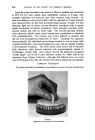
626 JOURNAL OF THE SOCIETY OF COSMETIC CHEMISTS easy to predict how far the proposed screening arrangements would have relevance in the case of other topical applications. HISTOLOGICAL ASSESSMENT OF DANDRUFF SEVERITY Our technique for the visual assessment of dandruff is rather lengthy and laborious and it therefore seemed appropriate to investigate the possi- bility of correlating a simple measurement of cell nuclei in scale samples with the severity of the condition. A count of the numbers of nucleated and non-nucleated scales was attempted, though it was realized that this would not necessarily correspond to the overall proportions of nucleated and non-nucleated cells. Samples of dandruff scale were distributed over a number of microscope slides, and stained with haemalum and eosin. For counting, each slide was placed on another slide ruled with equidistant parallel lines and viewed at X50 magnification using an eyepiece graticule. The slides were scanned using the ruled lines as guides. As an arbitrary definition of a "scale", a minimum diameter of approximately 0.25 mm was assigned each scale in this category was counted and classified as nucleated or non-nucleated. The percentage of nucleated scales measured in this way was found to range between about 15 and 90%. No correlation with the visual assess- ment was found one reason for this may have been a distinct bias in the samples, since it is more difficult to obtain a representative sample from a head exhibiting little dandruff than from one with heavy scaling. In view of the obvious difficulties in this approach, it might be preferable to seek a more sensitive chemical estimation, such as the assay of desoxy- ribonucleic acid. DISCUSSION Prior to our investigation, only subjective clinical impressions were avail- able for recording the manifestations of dandruff and any attempt to explore therapeutic measures had to be carried out with indeterminate means of verifying the results. It would perhaps have been naive to hope that our studies would solve all the outstanding questions, but reasonably sound lines along which to pursue the problem do seem to have been established. For example, we have demonstrated that clinical study can be conducted systematically and panel tests undertaken with the use of each subject as his own control during a pre-treatment and incidentally, a post-treatment period if enough subjects are available, separate test and control groups can also be used. It is not yet possible to indicate whether the Pityrosporum ovale has a pathogenic role in relation to dandruff. The abundant supply of fatty matter on the scalp where lesions arise, coupled with the lipophilic character

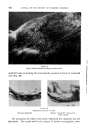
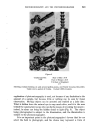
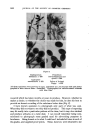
THE INVESTIGATION OF DANDRUFF 627 of the organism and the demonstration that a simple fatty ester will produce dandruff-like lesions on a laboratory animal, all tend to keep alive the concept of a microbial causation. On the other hand, parakeratosis is a relatively non-specific response to irritation and it is too early to form any firm conclusions. We have been impressed by the parallel work on Tinea Versicolor (14) which might implicate Pityrosporum orbiculare formation of antibodies to the antigen produced by this organism has been demon- strated by immunofluorescence studies. This suggests the need to consider a possible allergic type of mechanism in dandruff and, in the present state of knowledge on this subject, it would be unwise to rule out any route for further study. ACKNOWLEDGEMENTS The collaboration of numerous colleagues has made possible the publication of this investigation and acknowledgement is due especially to P. H. Cryer, H. Dixon, B. G. Overell, J. K. Herd and Miss M. Uttley. The histological work was carried out by D. B. Jones, and the photography by H. Ashmore. (Received: 31st January 1964.) (1) (2) (3) (4) (5) (6) (7) (8) (9) (lO) (11) (12) (13) (14) REFERENCES W. S. Torgerson "Theory and Methods of Scaling" 149 (!958) (Chapman & Hall Ltd., London). S. Rivolta "Parasiti Vegetali" (1873) Abst. ex R. W. Benham "Biology of Patho- genic Fungi" 63 (1947) (Chronic Botanica Co.). R. Malassez Arch. Physiol. Serie 2,1: 451 (1874) Abst. ex R. W, Benham ibid. I. Martin-Scott Brit. f. Derrnatol. 64 257 (1952). M. A. Gordon ]kIycologia 43 az4 (lUal). M. A. Gordon J. Invest. Derrnatol. 17 267 (1951). A. Tickher Brit. J. Derrnatol. ?$ 88 (1961). E. O. Butcher J. Invest. Derrnatol. 16 696 (1951). P. Flesch and S. B. Goldstone J. Inwst. Derrnatol. 18 267 (1952). D. J. Lawrence and H. A. Bern J. Invest. Derrnatol. $1 313 (1958). E. H. Mercer Keratin and Keratinization (1961) (Pergamon Press Ltd., London). P. Flesch Proc. Sci. Sect. Toilet Goods Assoc. $? 15 (1962). A. Jarrett and R. I. Spearman Brit. J. Derrnatol. 71 268 (1959). T. H. Sternberg and F. M. Keddie A.M.A. Arch. Derrnatol. 84 999 (1961). Introduction by the lecturer It is rather surprising to find so little definite information on the causation of a universal and seemingly innocent condition such as dandruff, but chronic skin disorders in general are difficult to fathom. I hope that the paper has given some hints on the directions along which the answers may be found, and I would like to show a series of slides to supplement the informa- tion given in the paper. Several of these slides represent examples of U.V.
Purchased for the exclusive use of nofirst nolast (unknown)
From: SCC Media Library & Resource Center (library.scconline.org)