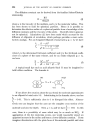
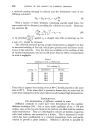
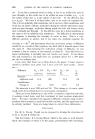
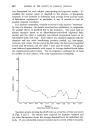
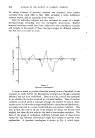
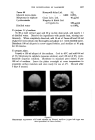
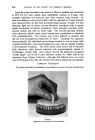
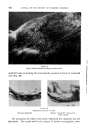
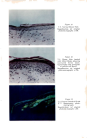
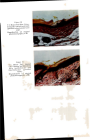
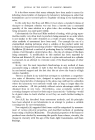
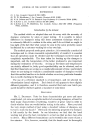
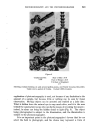
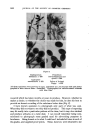
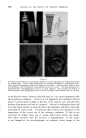
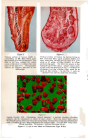
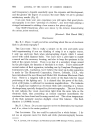
624 JOURNAL OF THE SOCIETY OF COSMETIC CHEMISTS • , • .. ::%,•"•?.•.- i "' ""•" '-:"?-•-• -%'-,-*. :•'•--: '.'-,•. .. • . - • ..• , ..... l: .:- '• • '.'•*' ' • ' • .. . • . . .. ,,. •.•-..- ß ** ß •' . , .- -., .½,.-f- ..- , / •'..•"-[/g."? :½'-'"''-' '.Z-z, . '[ •'u-- '• . '• %:•c :..-',, •.-. •i..:(::-•.•. •?•:.•,..':•...-•..-..:•:• ..•' ' '"'• ." •-" "?:'•-"•":""'" '::•' •:':• .............. •z• z: / . .' ' - -:'-' -7Z , ,' Figure 9 Ethyl oleate-induced scSirig on mouse skin. dandruff scales in showing the characteristic presence of layers of nucleated cells (Fig. 10). Figure 10 Human dandruff. Transverse sections of scale. Mouse "dandruff" induced by ethyl oleate. The mechanism by which ethyl oleate influenced the epidermis was not elucidated. This could well be the subject of further investigation, since

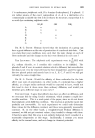
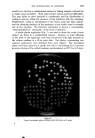
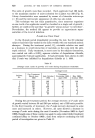
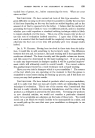
THE INVESTIGATION OF DANDRUFF 625 the presence of unsaturated compounds in sebum lipids might be involved in the causation of dandruff this association might help to explain the limitation of dandruff to areas of the skin where the pilosebaceous apparatus is most fully developed. It is hard to believe that normal sebum has a pathological effect on the epidermis and it seems likely that another factor must be involved for example, this might be the route through which a microbiological influence is exerted. The ability to produce epidermal scales on mouse-skin shows promise that further light could be shed on the nature and treatment of dandruff. Since ethyl oleate must be applied continuously to yield the desired response however, medicated shampoos could not be studied in this manner as the irritant would be washed away. An associated effect of continued application of ethyl oleate was hair loss. This is known to occur with numerous unsaturated compounds, such as chloroprene dimers, allyl esters, squalene and vitamin A (9). It was found that, in large doses applied topically to mouse-skin, vitamin A caused scaling similar to that produced by ethyl oleate, suggesting that its epidermal effects were not specifically related to its "nutritional" functions. On the other hand, in small dosage of less than 100 I.U. per day, Lawrence and Bern (10) reported that vitamin A still increased epidermal thickness. It has been postulated (11) that the effect of vitamin A on the maturation of epidermal cells is that, instead of hard keratin, either soft keratin or mucin is formed, depending on the concentration of vitamin A. This is possibly due to a diversion of sulphur metabolism from cystine synthesis to the manufacture of sulphated polysaccharides (12). In our studies, the effect of vitamin A on a harder type of keratin than is found in hairy skin was demonstrated by using mousetail as the experimental tissue. In cross- section mousetail could be seen to have scales of 'hard' keratinizing epidermis, but no granular layer. Between these scales were areas of 'soft' keratinizing epidermis with a recognizable granular layer and con- taining hair follicles. Jarrett and Spearman (13) showed that topical application of vitamin A to the rodent tail led to granular layer forma- tion and epidermal thickening in the interfollicular region and they utilized this finding in the development of a treatment for psoriasis (where the granular layer is lacking). Used concurrently with the corticosteroid triamcinolone to control epidermal hypertrophy, the topical application of vitamin A led to remission of the lesions. Vitamin A does not suggest itself as a suitable agent for dandruff therapy, as large dosage might result in alopecia, but the screening of anti-dandruff agents by looking for inter- follicular granular layer formation in the mousetail might prove fruitful. Since the effects of vitamin A have been shown to depend partly on the natural tendency of a skin region to form 'hard' or 'soft' keratin, it is not
Purchased for the exclusive use of nofirst nolast (unknown)
From: SCC Media Library & Resource Center (library.scconline.org)