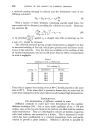
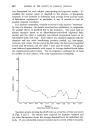
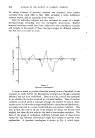
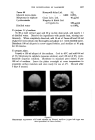
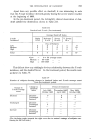
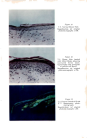
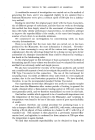
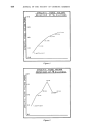
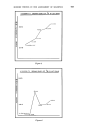
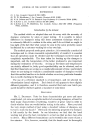
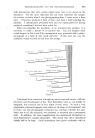
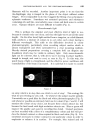
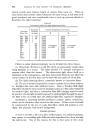
PHOTOMICROGRAPHY AND THE PHOTOMICROGRAPHER •3z15 with instructions that only certain ringed areas were to be shown in the brochures. Yet the areas indicated did not truly represent the sample. On another occasion when I was photographing flour, I came across a flour mite. I therefore produced a field of flour, and then a field including the intruder. I subsequently presented both and was reprimanded for having produced something I had not been asked for. When investigating the possibility of an intramuscular product, it is necessary to make a picture of its particle size. Can you imagine what would happen in this event if the management were presented with a photo- micrograph of a field of only small particles? If this were the case the antibiotic would not find an exit from the syringe. ?HOTOY. I CROGRAPH?R P-•CTER! OLO•'V DEVELO ?L'ENT S Cf_LE PILOT PLANT •CALE CHE?,!ICAL PILOT PLANT P•ODUCTION RFSEARCH (Tableting, orsl, intramu.•cu!ar) CLIYI CAL TR I.•J•S __ PLANT PRODUCTION [__ END PRODUCT Figure 4 I am proud to be connected, through my microscope and camera, with the discovery and development of the "New Penicillins" and, as can readily be imagined, this research has in fact taken several years. In such a vast programme, photomicrographs were taken at all stages of development, and in every case the photographic technique was constant, whether the anti- biotic was in oil, dry mounted, wet mounted, or mounted into a permanent slide. In addition, the same magnification was maintained throughout as each department's samples demanded. This meant that strict operational details had to be kept. Could automation have given continuity with at

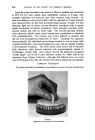
646 JOURNAL OF THE SOCIETY OF COSMETIC CHEMISTS least sixteen departments involved (Fig. •t), each preparing their own slides, different people operating the apparatus and doing the processing and printing ? A photomicrographer is of very real value when he is one of a team of investigators and he may be called upon to operate in the factory or labora- tory. He must understand his instruments and the photographic materials available. When a studio apart from the laboratory is used it is necessary, of course, to send samples through the post, and when this is the case the photomicrographer is out of touch with the laboratory, therefore implicit instructions are called for. On the other hand, the chemist himself is some- times called upon to take the photomicrographs and he, perhaps, can spend only a little time with the microscope and film. If some industries could foresee the problems which emerge in the development of their productions, they would welcome the services of a full-time photomicrographer, but more often than not the management do not imagine their problems are numerous enough to keep one busy. As I see it, there are three alternatives to this question of whether or not a photomicrographer should be employed. One is, to employ a person who, whilst qualified in the art, works at the same time as a photographer, in which case one has a photomicrographer plus. This was in fact my own experience. At first photomicrographers in the making have to struggle to survive, and in the process have to prove themselves in order to gain proper recognition. Where he has been tried and proved he has paid off dividends. I well remember having to prove the necessity for an enlarger to be purchased by making use of my private one at home for many months before my employers saw that I must have one. The second alternative is to establish a photomicrographic laboratory, and to hire a photomicrographer to carry out investigations, but this would perhaps be more of a gamble, because the specialist called upon could not be expected to know the story he was expected to tell. A specialist, however, is not always available and this would be no solution for the project in hand. A third alternative is to employ a chemist to cover photomicrography, but if this is done he has to master both photography and microscopy. MANAGEMENT AND PHOTOMICROGRAPHER Naturally the organisation wants to make the best possible use of its photomicrographer, and the photomicrographer, of course, will be en- thusiastic enough to give his best. Both the employed and the employer should realise that both have much to give. Background information on the firm's product and their ultimate ap- plication and performance should be given. The research programme will also be the concern of the man who is selected to investigate the problems which exist.
Purchased for the exclusive use of nofirst nolast (unknown)
From: SCC Media Library & Resource Center (library.scconline.org)