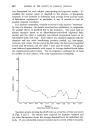
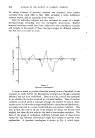
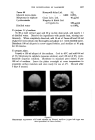
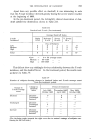
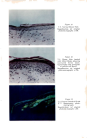
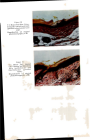
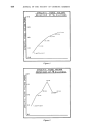
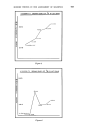
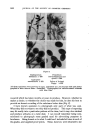
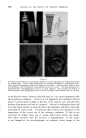
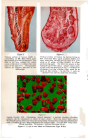
654 JOURNAL OF THE SOCIETY OF COSMETIC CHEMISTS and transparency depends essentially upon the exposure and development, and the greater the degree of accuracy the more likely we are to produce satisfactory results (Fig. 2). I am sure from your own experience you will agree that good photo- micrography is no mere "pressing of a button", any more than playing a stringed instrument is rubbing a bow across a few pieces of gut. Some 80-90 Ektachrome slides were shown by the lecturer, demonstrating the various points mentioned. (Received: 23rd March 1964.) DISCUSSION MR. B. C. PRICE: Could you tell us something about the use of electronic flash in photomicrography ? TI•E LECTURER: This is really a subject on its own and needs some bold experimenting if you are thinking of using it as a regular source. I only use electronic flash when photographing objects which I cannot arrest with coiled filament bulbs. One must have a pilot light to enable a search and the necessary focusing, and also to keep the specimen in the field of the camera format. There is no fear of a secondary image caused by the pilot light, the duration of the flash is so short. I have mentioned* several makes of flash apparatus, including one by Langham Photographic Instruments Ltd., Carshalton, but I believe the most up-to-date apparatus is made by The Honeywell Corporation, Denver, Colorado, U.S.A., who have introduced the new Honeywell Model 52A Strobonar Electronic Flash Unit. There is a tungsten bulb in the centre of the flash tube for visual positioning of the lighting unit. It is claimed that the power of the flash, rated at 90 Joules, is sufficient for maximum magnifications. The Gakushu Co. of Japan has marketed an electronic flash unit consisting of a Xenon discharge lamp, specially designed for photomicrography. The new Evatron K unit radiates the visual observation light from the same tube as the electronic flash, thus permitting an instant exposure immediately the specimen has been found and focusing carried out. The colour temperature of the flash naturally matches daylight colour film balance. The flash duration is 1/1000th second. MR. B. C. PRICE: Do you use exposure meters to determine your exposure and, if so, where is the meter position ? TI-I• LECTURER: This too could be material for a whole lecture. I do not use an exposure meter for black and white photomicrography because * D. F. Lawson, The Technique of Photomicrography 1960 (George Newnes, London).

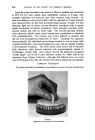
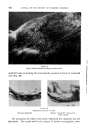
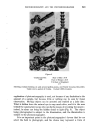
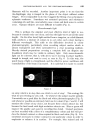
PHOTOMICROGRAPHY AND THE PHOTOMICROGRAPHER 655 I have learned to read the image intensity on the ground glass of my camera. Opaque subjects are a little more difficult to estimate, due perhaps to the lack of reflection of light from the subject. I do, however, occasionally use an exposure meter for colour photomicrography. I made my own exposure meter which has a photocell attached to the base of the instru- ment. The photocell is placed over the top lens of the eyepiece in use. However, this method is not so accurate as those which make a reading just below the ground glass screen. The choice of the method used depends mainly upon how frequently objectives, eyepieces and bellows extensions are changed. I feel that one cannot change from meter to meter but it is better to use just one and get to know what it is trying to express. Ernst Leitz Wetzlar have produced a new model of the Microsix-L which has a light-sensing probe replacing the eyepiece, and it is joined electrically to the body of the meter. The makers claim that it covers the whole range of lighting met with in photomicrography, including low to high power and in particular readings from low-level fluorescence. MR. S. J. BUSH: Could you please give us further details of the technique described as "grazed illumination" ? THE LECTURF. R: I showed you photomicrographs of opaque subjects which I said were illuminated by grazed illumination. I use the term "grazed" because the pencil beam of light illuminating the subject is almost parallel with the microscope slide (Fig. 5) grazing the subject and creating a three dimensional effect. Top oblique lighting creates a flat uninteresting image due to the lack of shadows. Grazed illumination often needs a reflector to bounce back some light into the dark shadows. Grazed illum- ination is a means of creating modelling, a method of painting with light and shadow. If you do use this method it is advisable to place the shadows on the lower side of the photomicrograph. If wrongly mounted, the subject is viewed under complete reversal conditions, known as pseudo-stereoscopic shadows become "embankments" and vice versa. MR. N.J. VAN ABBE: Would you like to offer any suggestions for dealing with the problem of vibration in photomicrographic work ? THE LECTURER: A major problem in photomicrography is the elimination of vibration in the apparatus, or in the building housing the apparatus. This problem becomes acute whenever exposures of a 1/10th of a second or longer are given, or high magnifications are made. Photomicrography in many laboratories has become relatively difficult because the framework structure contains vacuum pumps, compressors and shakers, which may be operated throughout the day. In addition to this, heavy traffic and trains cause the very foundations to vibrate. The course open is a limited one.
Purchased for the exclusive use of nofirst nolast (unknown)
From: SCC Media Library & Resource Center (library.scconline.org)