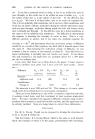
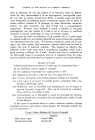
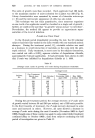
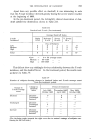
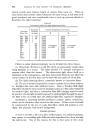
652 JOURNAL OF THE SOCIETY OF COSMETIC CHEMISTS optical system used, bellows length of camera, filter used, etc. When at some future date another subject demands the same set-up, it will then be of great assistance and save considerable time to look up previous details to determine the right treatment. Table II Conversion table for light balancing filters Exposure Colour temperature of source Wratten Increase Filter No. in stops øK øK 82C 82C 1 1/2 2,490 2,610 82C 82B 1 1/2 2,570 2,700 82C 82A 1 2,650 2,780 82C 82 1 2,720 2,870 82C 2/3 2,800 2,950 82B 2/3 2,900 Converted 3,060 Converted 82A 1/3 3,000 to 3,200 3,180 to 3,400 82 1/3 3,100 3,290 81 1/3 3,300 3,510 81A 1/3 3,400 3,630 8lB 1/3 3,500 3,740 81C 1/3 3,600 3,850 81EF 2]3 3,850 4,140 Filters in colour photomicrography can be divided into three classes. (1) Ultraviolet, Wratten 1A and 2B which are particularly useful when using daylight as a source. The latter absorbs UV strongly and gives a warmer effect than the former. The ultra-violet light shows itself as a bluishness in the transparency, and since ultra-violet filters do not affect the colour balance of the film they can be used with any make of colour film. (2) The light balancing filters, commonly known as correction filters. (3) The use of material exposed to a source contrary to its colour balance, i.e. daylight film used with artificial source. Here a Wratten 80B (light blue) filter should be used, except by daylight source on a film colour balanced for artificial light, and then a conversion filter 85B (orange) must be used. In practice, the daylight material exposed to artificial light through the use of the filter is less successful than the artificial light film, exposed to daylight. Sometimes a mounting medium produces a yellow, amber, overall hue, which can be obtrusive when viewed on the screen. If this occurs it should be counteracted by the use of a pale blue filter, which will produce a very slight, but pleasant, blue-tinted background. Stained specimen A stain in a bottle, a blot on a piece of filter paper, or a stained specimen, may appear as something quite different when reproduced in colour through the microscope. One of the reasons for this is that some of the colour

PHOTOMICROGRAPHY AND THE PHOTOMICROGRAPHER 653 saturation is lost in the specimen, this being much more evident in some subjects and with certain particular stains. The fact that the specimen is subject to intense transmitted light has a bearing on the loss of colour, and also in addition, the magnification. I mention the latter particularly because the higher the magnification the less saturated the colour becomes. It is always advisable to stain minute subjects heavily, such as bacteria. If this is not done the image will not be seen at X 2000. A few weeks ago I received through the post, from a stranger, two prepared slides of bacteria, and I was asked to reproduce them in colour. When I held the slides toward the sky and viewed them through my eyeglass I could see they were almost colourless. You will therefore appreciate that I was unable to comply with this request. However, there is the danger that an overall colour cast may appear in heavily stained subjects and this can extend to adjacent details which have a different colour. Any colour can give a cast to an intrinsically neutral, white, background. This gives the appearance that the specimen was not washed after staining. Unevenly stained, unevenly cut, and un- evenly mounted specimens, are not the best of subjects to photograph, either in colour, or in black and white. In some cases pigmentary colours are the general rule. Many butterflies and moths owe their colours to the physical structure of their wing scales, but often when these are viewed by transmitted light they are entirely colourless. Unfortunately some subjects exhibit colours only at low magnifications. The shimmering colours seen in the shells of lobsters and other similar surfaces are another example of beautiful colours, physical in origin, which are difficult to arrest through the microscope. Negative materials The selective use of the correct photographic materials deserves careful attention. The photomicrographer is expected to have the various materials ready to hand whereas the chemist or casual operator cannot be expected to have the same knowledge of the many emulsions and what each will produce. A wide range of orthochromatic material can be drawn upon in the same way that a joiner uses the right saw for a particular job. It is impossible to photograph a wide range of subjects and to get the same high quality in each on the same coating of material. Processing Photographic materials are sometimes subject to a surprising degree of carelessness in development. Plates, films or paper are often exposed to "cold" and "hot" perhaps by someone trying to do more than one job at once, as a result of which no job in hand is done properly. Absolute accuracy is essential when processing colour materials. The quahty of the negative
Purchased for the exclusive use of nofirst nolast (unknown)
From: SCC Media Library & Resource Center (library.scconline.org)