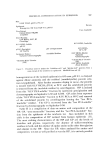
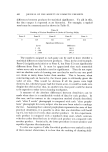
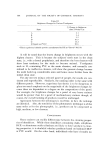
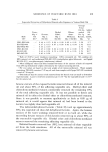
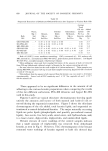
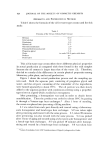
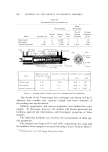
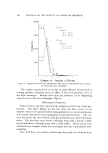
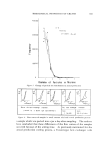
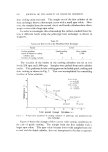
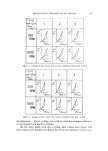
TOOTHPASTES--CLEANING AND ABRASION 597 when the individual brushes his teeth. Abraded debris from the tooth surface passes into suspension where it can be monitored by any one of the standard radiochemical counting techniques. In the normal course of events, two teeth seldom, if ever, have ex- actly identical levels of abrasion because they will vary in size, shape, and hardness. This makes it difficult to compare toothpastes which have been used on different teeth. To overcome this, a standard toothpaste or abrasive is used and all products are compared with this standard which is arbitrarily given a value of 100. Provided the standard remains un- changed over the years, data can be compared even when the experi- •nents are carried out several years apart. The experimental design is to abrade four teeth using a slurry of the standard paste, then to follow this with slurries of the test paste. Each slurry is monitored for radioactivity (i.e., number of counts per second). The ratio of the counts for the test and standard pastes is called the abrasion value, which, when •nultiplied by 100, gives a scale on which the standard has the value of 100. Some typical values for enamel and dentine abrasion may be seen in Table I. Table I Enamel and Dentine Abrasion of Various Toothpastes Enamel Dentine Code Toothpaste Abrasion Abrasion A Experimental anhydrous DCP paste 208 4- 35 135 4- 14.3 B Commercial chalk-based paste 150 4- 29 118 q- 13.3 C Reference paste (40% coarse chalk) 100 100 D Commercial chalk-based paste 73 4- 20 100 4- 12.2 E Commercial Urlium • paste 45 4- 17 105 q- 12.6 F Commercial chalk/DCP2H20 b 31 q- 15 58 q- 9.7 G Commercial chalk/DCP2H20 20 q- 14 41 q- 8.7 • "Urlium" is a trade mark of Unilever Ltd., used in this context to identify an aluminum oxide trihydrate. The registered mark is not applicable in the USA at the time of publication. b Dicalcium phosphate dihydrate. The data were analyzed using a standard statistical analysis of variance to derive the confidence limits. In the preceding table, these values are seen to vary with the size of the mean because of the conversion of the scale used,to assign the arbitrary value of 100 to the reference standard paste. In such an example, the limits are for the 95% confidence level. The table clearly demonstrates the large differences in abrasion ca- pacities of various toothpastes with different abrasive contents. Though

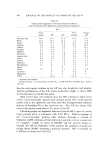
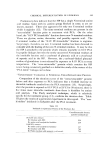
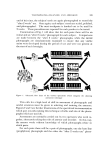
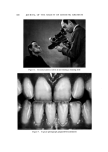
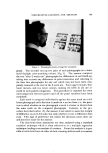
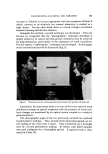
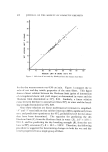
598 JOURNAL OF THE SOCIETY OF COSMETIC CHEMISTS selected from the U K market, these pastes are typical and, as seen from Muhler's data for USA pastes (3), the same range of differences occurs there. Normally, such a ranking order can be used to predict the likely cleaning abilities. With the exception of the Urlium paste this is true because, as viii be seen in the cleaning section, the ranking order given in cleaning assessment is normally the same as that for enamel abrasion or dentine abrasion. CLEANING ASSESSMENT The measurement of cleaning is much more difficult. One of the reasons is because interpersonal environmental influences are very large and also there are problems of biological variations which are met in such fields, coupled with a real difficulty in recording. Different workers have overcome these problems in different ways. For example, Lo- berie (5) was able to differentiate between cleaning capacities by care- fully selecting a panel of individuals, each of whom had visible stain on his teeth, and getting a dental hygienist to clean their teeth for them with a particular paste and an electric toothbrush. Plaque disclosing solutions were used to show the different levels of stain. We preferred to have each individual to use each and every tooth- paste, thereby allowing intercomparisons between pastes on each indi- vidual (2). This minimizes the interpersonal differences. Such a pro- cedure however made it necessary to have permanent photographic rec- ords of the individuals' teeth after the use of a paste. The difficulty in standardizing photograph to photograph to permit them to be judged by assessors requires precise photographic procedures. The Lobene type of test measures the extent of removal of stained material from the teeth and contrasts to the method we have adopted which measures the extent of build-up over a 2-week period. It has been found that the ranking of products is the same for both techniques. An essential feature of the test described here is that the panelists should be heavy stainers. Such individuals are drawn from the general population, having been selected in a preliminary trial in which they had used a low-cleaning toothpaste for 2 weeks. Photographs of their upper and lower anterior teeth must show the obvious presence of stained soil. Once selected, their teeth are scaled and polished and a photograph is taken to record the initial "clean" state. Sufficient supplies of the tooth- paste are handed out with instructions that panelists should use it in their normal manner, usually once morning and night, for 2 weeks. At the
Purchased for the exclusive use of nofirst nolast (unknown)
From: SCC Media Library & Resource Center (library.scconline.org)