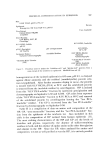
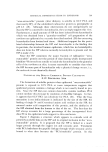
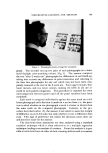
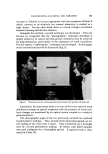
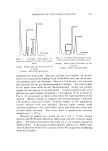
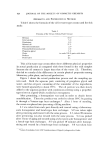
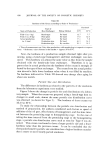
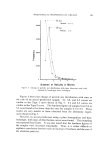
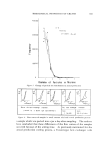
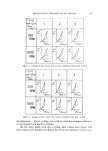
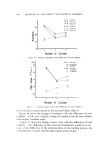
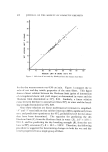
RHEOLOGICAL PROPERTIES OF CREAMS 633 40000 30000, 20000 S-6 Hardness all sample 45--54 10000 0 1 2 3 4 5 Diameter of Particles in Microns Figure 5. Change of particle size distribution in actual production 2 2 I 2 2' 2' sec "1 sec -1 I $ec -I sec -1 sec l I I ] 1 1 o o.5 i o o 5 ] o o]5 i o o's 1 o 05 X 104dy n•cm 2 x 10⁴dyn e/cm 21 xlO4dyn½cm 2 x ]•dyn•2 xlO4dvne cm 2 Before the heat-exchanger treatment. The heat exchang• tzeatment (treated by a Bench type heat-exchanger} from from 1 cylinder 2.3,4 cylinder Figure 6. Flow curves of samples in small amount trial and atlual production process a sample which was packed into a jar a day alter sampling. The authors have concluded that these differences of the flow curves of the samples occurred because of the setting time. As previously mentioned for the actual production cooling process, a Votator-type heat exchanger with

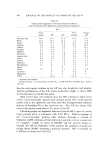
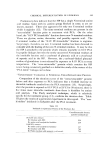
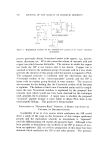
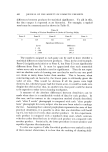
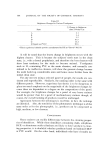
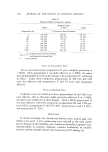
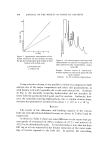
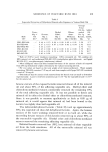
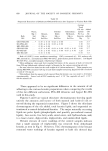
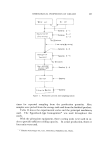
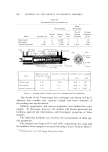
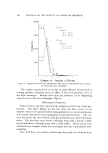
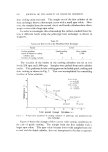
631 JOURNAL OF THE SOCIETY OF COSMETIC CHEMISTS [our cooling units was used. The sample out of the first cylinder of the heat exchanger shows a thixotropic curve with a small spur value. How- ever, the samples from the second, third, and fourth cylinders show thixo- tropic curves with a large spur value. In order to investigate this relationship the authors studied three fac- lors at different levels using the pilot-type heat exchanger as shown in Table IV. Table IV Factors and their Levels in the Pilot-Plant Heat Exchanger Factor Level Cooling' gradient Quick cooling Slow cooling Speed of blades in cooling 250 1,000 cylinder, rpm Number of cooling cylinder 1 2 3 The rotation of the blades in the cooling cylinders was set at two levels, 250 rpm and 1,000 rpm. Samples were picked from each cylinder outlet. The gradients for the cooling process included quick cooling and slow cooling as shown in Fig. 7. This was accomplished by controlling the flow of brine solution. 90. • 30 Oreck cooling ß , = 25orpm -' -' •ooo•pm 1st Cylinder Slow cooling %•% / O- - 0 250 rpm •- --• '• • Actual Product •on 3rd Cylinder 4th Cyhnder o •o • 3b Time passed through Cylinders I,¾g'ttrc 7. T{,mp•ra•ure gTadients of cooling cylinders in pilot-type and production-type heat exchanger Figure 8 shows the change of flow curves with various conditions in the case of quick cooling. The sample from the first cylinder had a larger spur value. The spur value became lower with samples from the second and the third cylinder this was interpreted to be due to greater
Purchased for the exclusive use of nofirst nolast (unknown)
From: SCC Media Library & Resource Center (library.scconline.org)