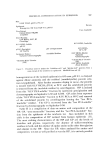
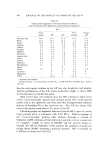
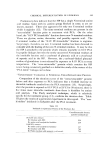
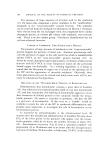
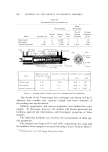
J. Soc. Cosmet. Chem., 21,607-611 (August 19. 1970) Solar Simulator Sunscreen Evaluations in Guinea Pigs S. L. YANKELL, Ph.D.,* G. N. MARTIN,* H. PIECHUTA, D.V.M.,* W. A. HOCKETT, M.B.A.,* and M. M. DOLAN, A.B.* Synopsis-Using a SOLAR SIMULATOR to produce erythema, eight comnmrcial and experi- mental sunscreen preparations were evaluated on GUINEA PIGS both with and without washing after application. On the nonwashed sites, most of the SUNSCREENS tested pro- tected from irradiation ranging from 1 MED to 3 MED's. When sunscreen sites were rinsed with water, only three of the eight preparations tested showed greater than 50% protection at 1 MED two of these preparations showed some protection from higher exposures. INTRODUCTION The importance of realistic criteria for testing sunscreen formula- tions in humans was stressed by Willis and Kligman (1) who found that performance of marketed products depended upon use conditions. They also found that the ultraviolet light produced by a solar simulator (2, 3) mimics the spectrum of natural sunlight better than light from mercury vapor lamps. In essence, the apparatus is composed of a 150-watt xenon lamp, collecting optics, spectral shaping components, and a refocussing lens. In tests in animals described in this paper, an attempt was made to set realistic criteria so as to develop a system for preliminary screening' before human trials. * Menley & James Laboratories and Sea & Ski Corp., Philadelphia, Pa. * Smith Kline and French Ltd., Montreal, Canada. 607

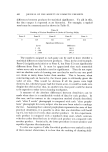
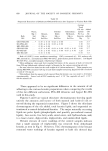
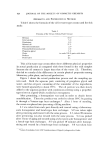
608 JOURNAL OF THE SOCIETY OF COSMETIC CHEMISTS MATERIALS AND METHODS Animals Commercially available male albino guinea pigs weighing 200-300 g were used in all studies. Animals were housed individually and were fed commercial guinea pig diet and water ad libitum throughout the assays. The diet was supplemented daily with fresh greens, according to ac- cepted standards. Animals were held for at least 48 hours before testing. Test Materials The commercial products and experimental preparations prepared in these laboratories are listed in Table I. Table I Composition of Sunscreen Formulations Prepara- Concentra- tion No. Active Agent tion, % Vehicle Type Ia Isoamylp-N-N-dimethyl amino- 2.5 Water repellent creme base benzoate with opaque constituents II Isoamyl p-N-N-dimethyl amino- 2 75% Ethyl alcohol benzoate IIIa Isoamylp-N-N-dimethyl amino- 2.5 Hydroalcoholic lotion with benzoate emollients IV• Isoamyl p-N-N-dimethyl amino- 1.1 Oils benzoate V • Glycerylp-aminobenzoate 2.0 Lotion VI• Homomenthyl salicylate 7.7 Lotion VII• 2-OH-4-methoxybenzophenone 3 and 3 Lotion and 2,3 'diOH 4-methoxybenzophenone VIII p-Aminobenzoic acid 5 75% Ethyl alcohol Marketed product. Experimental Procedure Animals were shaved and depilated 24 to 26 hours before testing. Preparations were assayed by applying 0.1 ml over a 2 X 7-cm area on four sites on each side of dorsal surfaces. Two different preparations were tested in at least four animals. Irradiated areas measured 1 cm in diameter. Both nonwashed and washed trial procedures were used in order to simulate in-use conditions (swimming and sweating). In the nonwashed test, one hour after application the treated areas were exposed
Purchased for the exclusive use of nofirst nolast (unknown)
From: SCC Media Library & Resource Center (library.scconline.org)