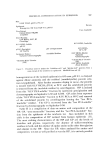
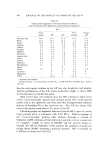
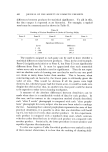
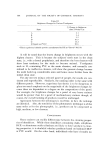
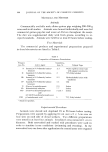
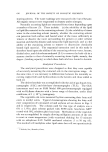
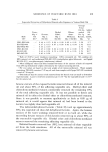
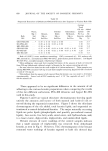
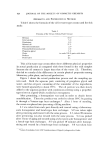
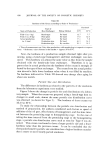
ADHERENCE OF VEGETABLE BATH OILS 619 Table I Sequential Extraction of Dehydrated Keratin after Exposure to Various Bath Oils Water, Diethyl Chloro- Mg q- Hexane, Ether, form: Bath Std Mg q- Mg q- Methanol, Oila De,d' Std Dev Std Dev Mg q- Std Dev Average Total Oil Ab- Added sorbed Oil Per 1 g Ad- Keratin, sorbed, Mg %• CSO-PEG-400 SO-PEG-400 MO-PEG-400 CSO-RC-520 SO-RC-520 MO-RC-520 0.64 4- 0.13 0.04 q- 0.00 0.02 q- 0.01 3.50 9.7 0.67 4- 0.13 0.07 q- 0.00 0.05 4- 0.04 3.95 11.0 0.55 q- 0.19 ...... 2.75 7.6 0.69 q- 0.40 0.04 q- 0.00 0.01 q- 0.00 3.70 10.1 0.63 4- 0.35 0.13 q- 0.20 0.03 4- 0.05 3.95 10.7 0.60 4- 0.50 ...... 3.00 8.2 a Bath oil (0.02%)-water emulsions containing: CSO, cottonseed oil SO, soybean oil MO, mineral oil and surfactants PEG-400 (10%), polyethylene glycol dilaurate and Igepal RC-520 (8 %), nonylphenoxypoly (ethyleneoxy) ethanol. 0 Mean milligram values and their standard deviation of the amount of bath oil removed from 200 mg (dehydrated weight) of keratin by the various extracting solvents. c Per cent values are based on the total weight of oil (minus surfactant). Those samples containing PEG-400 contained 7.20 mg oil and those samples with Igepal RC-520 contained a total of 7.36 mg oil. a Dots indicate that the amount of oil removed from the keratin was too small to determine experimentally. Lower level of GLC sensitivity was 1 X 10 -8 for the vegetable oil and 1 X 10 -7 for the mineral oil. hexane extracts of the exposed keratin removed almost all of the mineral oil and about 90% of the adhering vegetable oils. Diethyl ether and chloroform:methanol extracts consistently removed the remaining 10% of the total adhering vegetable oils. It was not possible to detect any mineral oil in either the diethyl ether or chloroform:methanol extracts. Since it was possible to measure qualitatively as little as 0.05 •tg of mineral oil, it would appear that mineral oil had been bound to the keratin less tightly than had vegetable oil. The defatted-dehydrated keratin (Table II) took up approximately 70% less vegetable oil than did dehydrated keratin. Again, the hexane extracts of the water washings removed little or no bath oil, while the succeeding hexane extracts of this keratin removed up to about 90% of the extractable vegetable oils. Diethyl ether and chloroform:methanol extracts removed the remaining adhering vegetable oils. De[atted keratin removed less (50% less) mineral oil than vegetable oil from the bath emulsions. All of the extractable mineral oil was removed by hexane extractions.

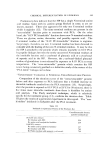
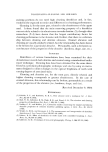
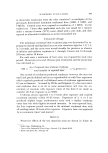
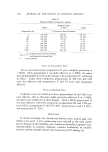
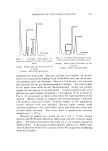
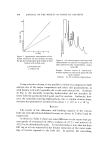
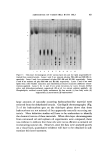
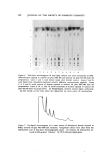
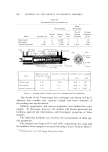
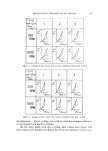
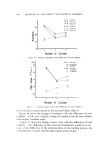
620 JOURNAL OF THE SOCIETY OF COSMETIC CHEMISTS Table II Sequential Extraction of I)ehydrated-I)efatted Keratin after Exposure to Various Bath Oils Water, Mg -b Hexane. Bath Std Mg 4- Oil s Dev • Std Dev Diethyl Chloroform: Ether, Methanol, Mg 4- Mg 4- Std Dev Std Dev Average Total Oil Ab- Added sorbed Oil Per 1 g Ad- Keratin, sorbed, Mg %6 CSO-PEG-400 SO-PEG-400 MO-PEG-400 CSO-RC-520 SO-RC-520 MO-RC-520 0.19 + 0 0.20 -4- 0 0.104- 0 0.17 4-0 0.16 4-0 0.11 4- 0 10 0.02 4- 0.00 ... 1.05 2.9 14 0.02 4- 0.00 ... 1.10 3.0 00 ...... 0.50 1.4 05 0.01 4- 0.00 0.02 4- 0.01 1.00 2.7 06 0.02 4- 0.00 0.07 4- 0.01 1.25 3.4 02 ...... 0.55 1.5 • Bath oil (0.02%)-water emulsions containing: CSO, cottonseed oil SO, soybean oil MO, mineral oil and surfactants PEG-400 (10%), polyethylene glycol dilaurate and Igepal RC-520 (8 %), nonylphenoxypoly (ethyleneoxy) ethanol. b Mean milligram values and their standard deviation of the amount of bath oil removed from 200 mg (dehydrated, defatted weight) of keratin by the various extracting solvents. * Per cent values are based on the total weight of oil (minus surfactant). Those samples con- taining PEG-400 contained 7.20 mg oil and those samples containing Igepal RC-520 contained a total of 7.36 mg oil. a Dots indicate that the amount of oil removed from the keratin was too small to determine experimentally. Lower level of GLC sensitivity was 1 X 10 -8 for vegetable oil and 1 X 10 -7 for the mineral oil. There appeared to be no significant difference in the amount of oil adhering to the various keratin preparations when comparing the results of the two different surfactants, PEG-400 dilaurate and Igepal RC-520, used in this study. Figures 5 and 6 are typical thin-layer chromato•ams showing quali- tatively the amounts and nature of both natural and bath-oil oils re- moved during the sequential extractions. Figure 5 shows the thin-layer chromatogram of the oils added, total keratin lipids, and sequential ex- traction of a control dehydrated keratin. The major naturally occurring lipids are polar lipids (phospholipids and possibly peroxidated neutral lipids), free sterols, free fatty acids, sterol esters, and hydrocarbons, and, to a lesser extent, diglycerides, triglycerides, and unidentified lipids. Hexane extracts of water washings of the control samples indicate that a small amount of triglycerides was removed from dehydrated keratin, as seen in Fig. 6. However, TLC chromatograms of the hexane extracted water washings of keratin exposed to bath oils showed that
Purchased for the exclusive use of nofirst nolast (unknown)
From: SCC Media Library & Resource Center (library.scconline.org)