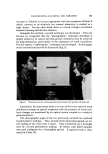
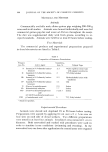
SUNSCREEN EVALUATIONS 609 to ultraviolet irradiation from the solar simulator* at multiples of the previously determined minimum erythemal dose (MED, 2 MED, and 3 MED). Control areas were exposed to irradiation of 1 MED. In the washed test, 1 hour after application each site was rinsed for 1 minute under a stream of warm (35øC) water, dried with a soft cloth, and then exposed to ultraviolet irradiation as in the nonwashed test. Ultraviolet Dosage The minimum erythemal dose in guinea pigs was determined by ex- posing the shaved and depilated areas to solar simulator light for 1, 2, 3, 4, or 5 seconds, and the areas were scored visually for presence or absence of definite and uniform erythema at 1 through 4 hours and 16 through 24 hours, and at 48 hours. For each assay a minimum of four areas was exposed for each time period. Reactions were read 18 hours post irradiation and the protection was calculated as: no. of exposed sites without erythema 100 X ..... = % protection total number ot• exposed sites One second of irradiation produced erythema however, the area was small and poorly defined and not so reproducible as with 2-sec exposures which regularly produced well-defined areas of erythema approximately 0.5 cm in diameter. As stated by Willis and Kligman (1), the exact mini- real erythema dose is an all or none measurement, and thus the un- certainty of reactions with exposure times of less than 2 sec made us consider the 2-sec exposure as an MED. Erythema always appeared g to 4 hours after exposure and reached maximum intensity within 16-24 hours. Exposures of 3, 4, or 5 sec produced slightly larger erythematous areas with a similar erythema onset time but with slightly increased intensity. In tests reported here, the 2-sec exposure period was used as the minimal erythemal dose with all readings taken I8 hours after exposure. Exposure time was regulated by an automatic timer* and shutter. ++ RESULTS Protective effects of the test materials used are shown in Table II. * Solar Corp., Philadelphia, Pa. * Time-o-Lite, Industrial Timer Corp., Newark, N.J., Model M-59. • Burke and James Inc., Chicago, Ill.

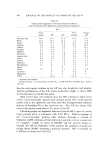
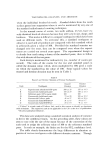
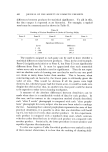
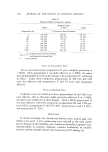
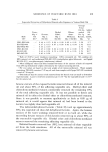
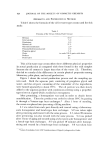
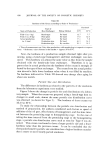
610 JOURNAL OF THE SOCIETY OF COSMETIC CHEMISTS Table II Protective Effects of Sunscreen Agents Exposure Time 1 Med 2 Med 3 Med Preparation No. % Protection from Erythema a I 100 (38) b 100 (0)b 100 (0)• II 100 (87) 100 (38) 50 (13) III 100 (62) 87 (0) 63 (0) iv 50 (25) 0 (0) 0 (0) v 100 (50) 62 (0) 25 (0) vi 100 (38) 100 (0) 38 (0) vii 100 (50) 75 (0) 50 (0) VIII 100 (62) 100 (50) 87 (13) no. of exposed sites without erythema alO0 X total number of exposed sites • ( ) = after washing. Tests on Unwashed Sites All test materials except preparation IV gave complete protection at 1 MED. Only preparation I was fully effective at 3 MED all others showed diminished activity at this dosage, with preparation IV exhibiting no effect. Under these conditions, preparations II, III, VII, and VIII were less effective and preparations V and VI were only marginally effective. Tests on Washed Sites Erythema scores on rinsed sites show preparations II and VIII were most effective, that is, they gave slight protective effects at 2 or 3 MED all others were ineffective at these dosages. With 1 MED, preparation II was most effective with 87% protection preparations III and VIII pro- tected 62% preparations V and VII, 50% preparations I and VI, 38% and preparation IV, 25%. DISCUSSION In initial screening, rats, haired and hairless mice, guinea pigs, and rabbits were used. Later, guinea pigs were selected as the most useful species because of the handling ease, numbers of possible exposure sites, reproducibility of scorable erythema, constant availability of suitable animals, and the animals' history of previous use in UV testing (4).
Purchased for the exclusive use of nofirst nolast (unknown)
From: SCC Media Library & Resource Center (library.scconline.org)