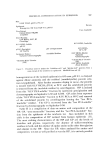
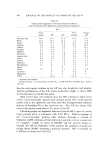
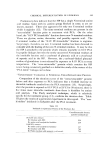
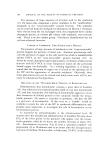
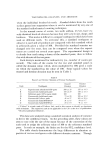
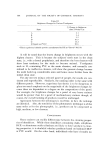
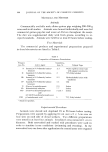
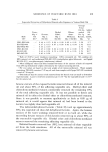
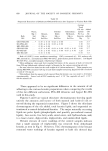
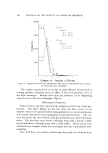
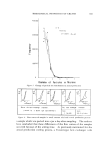
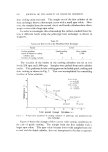
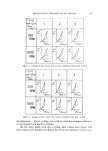
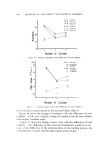
SUNSCREEN EVALUATIONS 611 When preparations were not rinsed off, the complete protection ob- served for preparation I at all MED's tested probably indicates the additional protective role of opaque constituents in the preparation. Also, the importance of a sunscreen's concentration was reaffirmed in this assay since preparation IV, with the lowest concentration of sun- screen, also gave least protection. As expected, in experiments in which preparations were applied and then rinsed with water before irradiation to simulate in-use conditions, all preparations were less protective. No protection was observed above the minimum erythemal doses except with preparations II and VIII. It should be noted that these two sunscreens were prepared in 75% ethyl alcohol. Preparation I, which contained both a chemical and physical barrier, and preparation VI were rinsed away so that only little protective effect remained at 1 MED. Three preparations (II, III, and VIII) yielded more than 50% protection at 1 MED however, only one of these, preparation III, was cosmetically acceptable because of added emollients. Although it is obvious that these data are only preliminary and must be confirmed by more extensive animal work and human trials, it appears that they support data from Willis and Kligman (1) that is, sunscreen formulation efficacy is affected by different "in-use" conditions (sweat- ing, bathing, etc.). ACKNOWLEDGMENT The authors wish to thank Dr. O. M. Moreno, Bio/dynamics, Inc., East Millstone, N.J., for his assistance with this work, and Dr. L. Kennon for his constructive advice. (Received December 17, 1969) REFERENCES (1) Willis, I., and Kligman, A.M. Evaluation of sunscreens by human assay, J. Soc. Cosmet. Chem., 20, 639-51 (1969). (2) Urbach, F., Solar Simulator /or Phototoxicity o/ Human Skin, in Urbach, F., The Bio- logic Effects o/ Ultraviolet Radiation, Pergamon Press Ltd., Oxford, 1969, pp. 107-14. (3) Berger, D. S., Specification and design ooe solar ultraviolet simulators, J. Invest. Dermatol., 53, 192-9 (1969). (4) Harber, L. C., Use o/ Guinea Pigs in Photobiologic Studies, in Urbach, F., The Biologic Effects o/ Ultraviolet Radiation, Pergamon Press Ltd., Oxford, 1969, pp. 291-4.

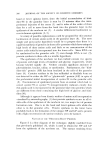
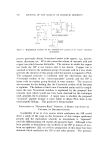
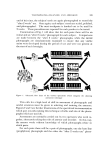
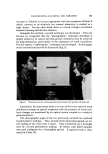
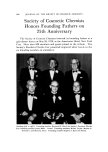
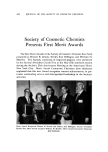
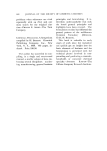
612 JOURN&L OF THE SOCIETY OF COSMETIC CHEMISTS Society of Cosmetic Chemists Presents First Merit Awards The first Merit Awards of the Society of Cosmetic Chemists have been presented to Warren B. Dennis, Shirley Ann DeRagon, and William H. Mueller. The Awards, consisting of engraved plaques, were presented by the Society's President Charles Fox at the May 27th luncheon session during the Society's 25th Anniversary Meeting at the Americana Hotel, New York City. Merit Award Committee Chairman Jesse Starkman explained that this new Award recognizes current achievements, in par- ticular outstanding service and distinguished leadership in the Society's activities. ... :a. . • . ': . 2 • •,,• Merit Award Recipients Warren B. Dennis and Shirley Ann DeRagon, Society's President Charles Fox, Merit Award recipient William H. Mueller, Merit Award Commi.ttee Chairman Jesse Starkman.
Purchased for the exclusive use of nofirst nolast (unknown)
From: SCC Media Library & Resource Center (library.scconline.org)