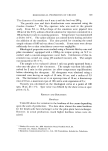
RHEOLOGICAL PROPERTIES OF CREAMS 629 The dia•neter of its needle was 8 mm 4• and the load was 200 g. The particle sizes and their distributions were measured using the Coulter Counter.* The 50-t• aperture tube was used in the present study. From 2.0- to 10.0-$d drops of the emulsion were pipeted into 100-ml of the 0.9% sodium chloride solution for injection contained in a 100-ml beaker ready in counting position. Temperature was maintained at 25.0__+ 0.5øC. The saline solution was stirred slowly during and after the addition of the emulsion. The time period for counting the usual sample volume of 0.05 ml was about 5 seconds. Count rates were always sufficiently low so that coincidence errors were negligible. Rheological properties were studied using a Ferranti-Shirley cone and plate viscometer? equipped with a 1200-g cm torque spring, an X-Y re- corder,* and a constant-temperature water bath. Calibration of this in- strument was carried out using JIS standard viscosity oils. The sample was measured at 25ñ 1 øC. The sample to be evaluated (about 1 ml) was gently squeezed from a lube onto the plate of the viscometer. The sample was then left undis- turbed for 2 min in this position (to allow temperature equilibration) before obtaining the rheogram. All rheograms were obtained nsing a truncated cone having an angle of 19 min, 58 sec, and a radius of 3.5 cm. The instrument was set at an upsweep time of 10 sec, a downsweep time of 10 sec, a maximum rpm of 100, and a scale expansion of 5). Viscosity was calculated on the rheological curve at a point of 100 rpm, 10 sec, 25ñ1øC. Spur value was defined by the shear stress at spur points (4, 5). RESULTS AND DISCUSSION Hardness Table III shows the variation in the hardness of the cream depending upon the scale of production. The data show almost the same hardness for the bench-scale heat exchanger as for the pilot-plant heat exchanger. However, in actual production, much higher hardness values were ob- tained. * Coulter Electronics Inc., 2601 Mannheim Road, Franklin Park, Ill. ? Ferranti Ltd., Maston, Manchester 10. • Matsushita Commnnication Ind. Co., Ltd., 880 Tsunashima, Kohoku-ku, Yokohama.

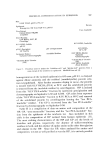
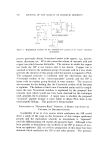
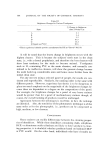
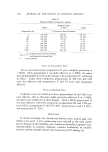
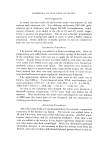
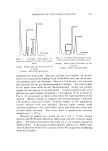
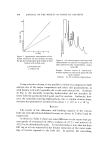
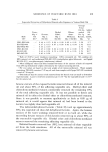
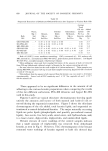
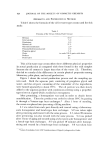
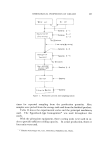
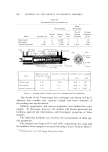
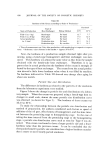
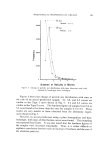
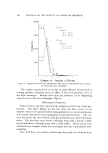
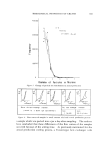
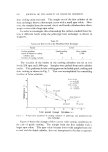
630 JOURNAL OF THE SOCIETY OF COSMETIC CHEMISTS Table III Hardness of the Cream according to Scale of Production • Scale of Production Hardness • Type of Heat Exchanger Filling Method 25'øC 30øC Trial-1 (ca. 1 kg) Bench-type By hand 12.7 7.7 Trial-2 (ca. 20 kg) Pilot-plant By hand 17.0 12.0 Actual production Bench-type By hand 17.0 7.8 (ca. 5 tons) Production-type By hand 46.5 16.3 Production-type By machine 30.3 14.3 Time of measurement was 1 day after production, with samples kept at respective tempera- tures. b Reference: value of butter on the market -- approx. 20 at 25 øC. Next, the hardness of a production sample obtained right after pre- •nixing, using a bench-type homogenizer and heat exchanger, was mea- sured. This hardness was almost the same value as that [rmn the sample obtained with the bench-scale heat exchanger. Therefore, it is ap- parent that in actual production the hardness of the cream is strongly af- fected by the type of heat exchanger. The cream from the actual produc- tion showed a little lower hardness value when it was filled by machine. No hardness indicated in Table III showed any change after aging for about one month. Particle Size and Distribution The differences in hardness as related to the particles of the e•nulsions from the laboratory experiment were studied. Figure 3 shows the change in particle size and distribution of a labora- tory sample. When the cream was prepared using a bench-type heat ex- changer in small scale, almost the same particle size distribution curve was obtained (as shown for Type 1). The hardness of these creams was 12-13 at 25øC. To study the relationship between the particle size distribution and method of preparation, the authors considered such factors as speed of addition of the oil part, effectiveness of homogenizer, and the time inter- val between the premixing stage to homogenizing stage. In the case of taking the time interval from the premixing stage to the homogenizing stage, a particle size distribution curve such as seen for Type 2 was ob- tained. This cream was found to have a larger particle size and a lower hardness value than the previous cream. It can be concluded that the close-packed smaller particle size emulsion has a higher hardness number than a coarse or more loosely packed emulsion.
Purchased for the exclusive use of nofirst nolast (unknown)
From: SCC Media Library & Resource Center (library.scconline.org)