]. 5oc. Cosmet. Chem., 21,613-623 (August 19, 1970) Adherence of Vegetable Bath Oils to Keratin* JAMES N. BOLLINGER, Ph.D.,* and LEONARD L. SEELIG, JR., M.S.* Synopsis--The adherence of two vegetable oils and mineral oil to keratin was studied at a bath oil preparation concentration of 0.02%. Results indicated that, at this concentration, l0 to 20% more vegetable oil adhered to keratin than mineral oil. The reason for this observation appears to be that mineral oil adheres only weakly to the surface of the keratin. The vegetable oils, on the other hand, not only adhered to the surface, but also a substantial amount (roughly 10% of the total amount of oil associated with the keratin) appeared to bind more tightly to the keratin. INTRODUCTION Efforts to treat dry skin clinically are often based on the concept that a surface oil or lipid film on the skin retards water losses through evaporation. Although the method of bath oil treatment, which has existed [or a great number of years, is far from being clinically and aes- thetically ideal, it is still an effective means of treatment. As a result, a number of investigations (1-4) have been performed with the purpose of determining factors which will influence the adherence of bath oil to keratin as well as determining their relative lubricating effectiveness. At high bath oil concentrations (0.05%), it has been shown that more mineral oil adheres to keratin than does vegetable oil however, at lower concentrations (0.05%), this difference was considerably less pro- nounced (3). * Investigation sponsored by the Texas Pharmacal Co., San Antonio, Tex., affiliate of Warner-Lambert. ? Southwest Research Institute, San Antonio, Tex. 78228. • University of Texas Medical School at San Antonio, San Antonio, Tex. 78229. 613

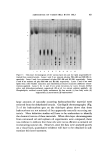
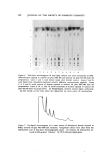
614 JOURNAL OF THE SOCIETY OF COSMETIC CHEMISTS This study was undertaken to compare the level and nature of ad- herence of mineral and vegetable oil preparations to keratin when used at a more commonly employed bath level of 0.02%. EXPERIMENTAL Six bath oil and two keratin preparations were studied in this in- vestigation. The bath oils were based on soybean oil,* cottonseed oil,* or mineral oil.* Each oil was tested in the presence of two different sur- factants and with both a dehydrated and a defatted keratin preparation. The two surfactants were Igepal RC-520 ©* and PEG-400 ©õ dilaurate. Four samples were run for each of the 12 test mixtures, yielding a total of 48 test samples to be analyzed for oil retention. Keratin The human keratin used was in the form of human callus. This ma- terial was placed in small quantities (approximately 5 g at a time) in liquid nitrogen and shattered to a fine powder. Approximately 40 g of material which passed through 20-mesh sieve but was retained by 80- mesh sieve was obtained using this method. Part of the pulverized kera- tin was then placed in a vacuum desiccator over silica gel and evacuated to a constant weight which represented a loss of 16.3%. This keratin is referred to as dehydrated keratin. The defatted keratin was prepared by placing approximately 15 g of the pulverized hydrated keratin in a Soxhlet apparatus and extracting the keratin for 48 hours with diethyl ether reflux. There was a 21.9 loss in weight of this keratin after refluxing. This loss can be attributed to the loss of fat as well as dehydration and the loss of various water-soluble carbohydrates, polypeptides, and amino acids. A thorough extraction of the keratin with a 2:1 chlorofonn:tnethanol mixture showed that the callus keratin used in these experiments con- tained 3.34% total lipids. These total lipids, as determined by thin- layer chromatography, were represented by free steroIs, free fatty acids, sterol esters, hydrocarbons, and, to a lesser degree, triglycerides, di- glycerides, and polar lipid •naterials, probably phospholipids. Swift's Imperial Wintcrizcd, Chicago. Carnation White, Light Liquid Petroleum, $onneborn, Division of 1Vhitco, New York. General Aniline & Film Corp., New York. Emery Industries, Cincinnati, Ohio.
Purchased for the exclusive use of nofirst nolast (unknown)
From: SCC Media Library & Resource Center (library.scconline.org)