J. Soc. Cosmet. Chem., 21,625-637 (August 19, 1970) Rheological Properties of Creams upon Production Scale-Up YOSHIO FUJIYAMA, B.S., SADAAKI TAHARA, B.S., and YOSHIMARU KUMANO, B.S.* Presented December 2, 1969, New York City Synopsis--The influence of PRODUCTION SCALE-UP upon the quality of a CREAM was studied. Investigations were carried out to determine what changes occurred in the HARD- NESS, PARTICLE SIZE DISTRIBUTION, and RHEOLOGICAL PROPERTIES of a cream in the transition to production quantities when a Votator-type HEAT EXCHANGER was used. It was found that by setting up the proper cooling conditions in a pilot-type heat exchanger, it is feasible to estimate to some extent the quality of a cream upon production scale-up. INTRODUCTION It is generally known how important the influence of scale-up in the production of cosmetics, especially cream emulsions, is in changing physical properties of the emulsions and thereby affecting the quality of the product (1). There are many factors which will influence the quality of the finished product (2). However, the authors here investigated only the changes which took place in the properties of the cream using the Votator-type heat exchanger in the manufacturing process. * Shiseido Laboratory, 13-7 Karoira 3 Chome, Kita-ku, Tokyo, Japan. 625

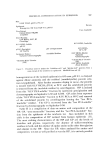
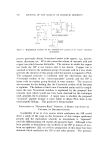
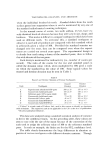
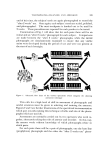
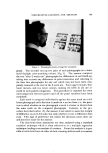
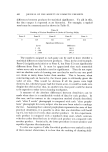
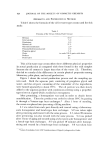
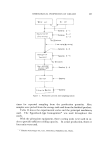
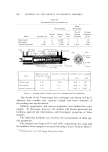
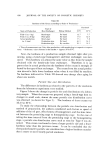
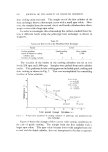
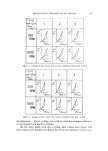
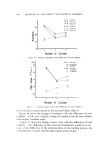
626 JOURNAL OF THE SOCIETY OF COSMETIC CHEMISTS APPARATUS AND EXPERIMENTAL METHOD Table I shows the formula of the oil-in-water type cream used for this study. Table I Formula of the Cream (Oil-in-Water Cream) Beeswax 10.0 Cetyl alcohol 5.0 Petrolatum 8.0 Mineral oil 37.5 Glycerylmonostearate 2.0 Polyoxyethylenemonolaurate 2.0 Propylene glycol 5.0 Water to make 100.0 parts with above Perfume q.s. Preservative q.s. This oil-in-water type cream often shows different physical properties in actual production as compared with those found in the trial samples because the oil content is larger than that of the water (3). Therefore, this led to a study of the differences in certain physical properties among laboratory, pilot plant, and actual production. Figure 1 shows the actual production process and the sampling sys- tem used. Both the aqueous part, consisting of propylene glycol and water, and the oil part, consisting of the remainder of the ingredients, were heated separately to about 70øC. The oil portion was then slowly added to the aqueous portion with continuous stirring using a propeller- type stirrer at a speed which avoided air entrapment. After premixing, a homogenizer was used in order to obtain better emulsification. Then the product was cooled to about 30øC by passing it through a Votator-type heat exchanger. * After 1 hour of standing, the cream was placed into jars using a filling machine. S-1 was taken from each part directly and treated using a laboratory- scale homogenizer and bench-type heat exchanger. S-2 was taken right after premixing and treated with the same process. S-3, taken 20 minutes after premixing, was also treated with the same process. S-4 was picked after 1 hour of aging and treated using a laboratory-scale homogenizer and a bench-type heat exchanger. S-5 was picked 10 minutes after homoge- nizing and treated by a bench-type heat exchanger. S-6 was taken four * Sakura Seisakusho, Ltd., 2-26 Nonaka-minami, Higashi-yodogawa-ku, Osaka.
Purchased for the exclusive use of nofirst nolast (unknown)
From: SCC Media Library & Resource Center (library.scconline.org)