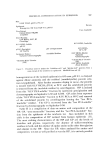
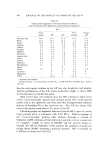
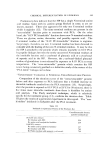
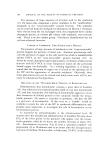
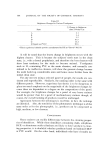
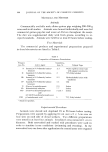
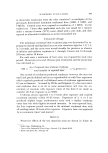
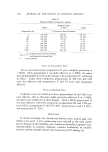
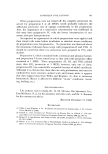
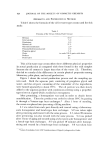
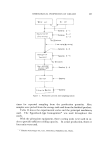
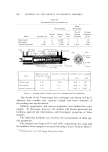
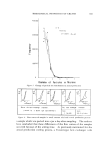
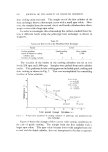
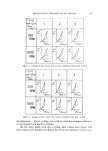
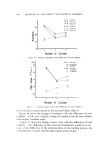
RHEOLOGICAL PROPERTIES OF CREAMS 637 In conclusion, it was found that the sample from the [irst cyli•Mcr of the pilot-scale heat exchanger in quick cooling showed theological prop- erties, such as hardness and spur value, most similar to those •ff tl•c actual production scale sample. SUMMARY When the production of a cosmetic emulsion is scaled Ul• t'ro•n about I kg to about 5 tons, there are many problems relating •{• II•c hardiness, particle size distribution, and theological properties which must be solved. Regarding the variation in manufacturing conditions connected with scale-up, it is very difficult to predict what changes may occur bccat•se •)l: the complicated factors involved. However, the principal [actors seem to be: (a) different quality of raw materials, (b) size of productiou batc'l•, and (c) kind of machinery used and its efficiency. Of these lieres, (b) and (c) are considered to be the major ones. Therefore, when scaling up for production, it is important to solve the problems whict• may resttit these factors. The authors were able to clarify various questions to a cer- tain extent'by establishing a simulation test with a pilot-plant size heat exchanger. ACKNOXVLEDGMENT The authors wish to express their thanks to Yooichi M iya, Director, Shiseido Laboratory, for many suggestions offered during tl•c course o[ this work. (Received December 12, 1969) REFERENCES (1) Lin, T. J., Process engineering for cosmetic emulsions, Part I, Appli{alion of engineering fundamentals, Amer. Per/urn. Costnet., 79• 40 (1964): Part II, Model study scale-up con- siderations, Ibid., 80, 39 (1965) Part III, Semi-cold processing of emulsions, Ibid., 80, 35 (1965). (2) Iino, S., and Yamaguchi, M., Hand Book Drug 6 • Cosmetic MaleriaLs, Nikko Chemical Co., Ltd., Tokyo, Japan, 1966. (3) Quarterly Report o/Shiseido Laboratory (unpublished), Shiscido (,o., lad., 'l'okyo, Japan, 1969. (4) Boylan, J. c., Rheological estimation of the spreading chara{leristics of pharmaceutical semisolids, J. Pharm. Sci., 56, 1164-69 (1967). (5) Boylan, J. C., Rheological study of selected pharmaceutical semisolids, Ibid., 55, 710-5 (1966).

638 JOURNAl, OF THE SOCIETY OF COSMETIC CHEMISTS Society of Cosmetic Chemists Announces 1970 Scholarship Grants The Board of Directors of the Society of Cosmetic Chemists has ap- proved 1970 scholarship grants totalling $4,300. The Society's Scholar- ship Chairman, Dr. Winthrop E. Lange, has announced allocation to six universities: Purdue I lnivcrsity School of Pharmacy, Lafayette, Ind., Professor Glen J. Sperandio continuation grant of $1,000 to support the under- graduate program in cosmetics. 1Vest Virginia University School of Pharmacy, Morgantown, W. Va., Professor Paul Zanowiak continuation grant of $500 to support under•aduate seminars in cosmetics. Roosevelt University Department of Chemistry, Chicago, Ill., Professor Walter S. ( uthmann continuation grant of $500 for teaching equip- ment. Columbia [Jniw:rsity College of Pharmaceutical Sciences, New York, N. Y., Dean Joseph L. Kanig continuation grant of $500 for lab- oratory equipment. Northeastern University College of Pharmacy, Boston, Mass., Professor Frederick J. Pruyn new •ant of $500 for graduate student assis- tance. 11uiversity of Cincinnati College of Pharmacy, Cincinnati, Ohio, Pro- fessor W. A. Ritschel new grant of $800 for partial support of a graduate student. l niversity of Cincinnati College of Pharmacy, Cincinnati, Ohio, Pro- ressor J. Leon Lichten new grant of $500 to support the under- graduate program in cosmetics. Additional funds are available for allocation during 1970. Interested faculty members should contact Dr. Lange.
Purchased for the exclusive use of nofirst nolast (unknown)
From: SCC Media Library & Resource Center (library.scconline.org)