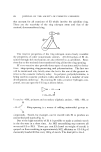
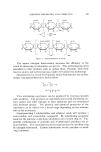
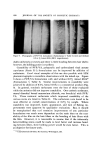
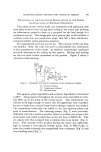
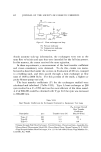
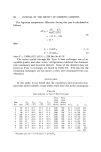
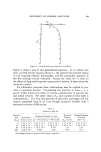
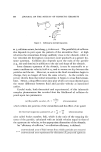
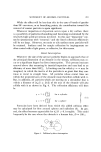
594 JOURNAL OF THE SOCIETY OF COSMETIC CHEMISTS that account for all reactions of E1 which involve the aziridine ring. These are the reactivity of the ring nitrogen atom and that of the strained, three-membered ring. OH2 The reactive properties of the ring nitrogen atom closely resemble the properties of other nonaromatic amines. All derivatives o[ EI ob- tained through this mechanism are also referred to as aziridines. Reac- tions due to the strained three.-membered ring all involve ring opening. EI's two reactive sites provide three types of reactions and/or deriva- tives: ring-opening, ring-preserving, and polymerization. The first two will be mentioned only briefly since the last is the one of the greatest in- terest to the cosmetic industry to.day. Its p.olymer, polyethylenimine, is being used in cosmetic products today and there are a number of new developments underway. By reacting El with a reactive hydrogen corn~ pound, one can open the El ring as shown below. ..,NH + HY H I Y-CH2 -CHz-NH Y may be --OH, prixnary and secondary aliphatic amines, --OR, --SR, or' 0 --O--C// Ring-opening is a means of adding aminoethyl groups to R compounds. Starch, for example, can be reacted with EI to produce an aminoethylated starch (Fig. 1). Due to the high reactivity of EI it is possible to make a cationic starch in the dry state in a short time. An HC1 neutralizing step converts all irareacted EI t,o PEI. Three per cent EI (based on weight of starch) is sprayed on flour resulting in approximately 50% efficiency or 1.2-1.8 g of chemically bonded EI for every 100 g of starch. The final pH is 4 to 5.

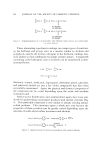
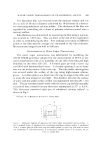
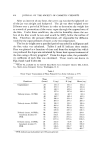
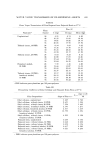
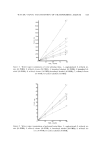
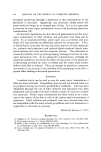
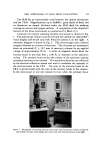
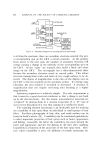
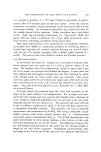
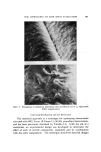
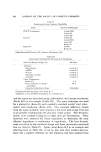
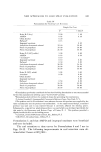
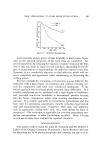
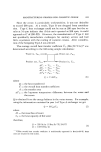
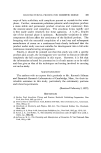
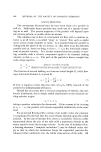
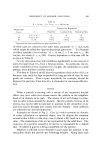
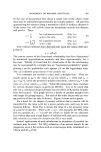
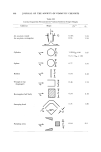
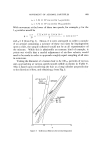
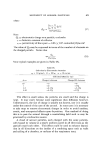
AZIRIDINE CHEMISTRY AND COSMETICS 595 CH:,OH { CH:,OH CH:,OH H H H H H I I H OHL__ HO.-' ' --] •00'•'"ø/ø t• •H • 100o C + HN H20 Figure 1. Aminoethylation o[ starch The amino nitrogen functionality increases the efficiency ot • the starch by enhancing its substantive properties. This technology has been extended to other products such as carbon black. Proteins, with their reactive amines and carboxyl groups, might well utilize this technology. Oxamination is a recent development which demonstrates yet another unique ring-opened derivative shown below. .o4-%:-•-c-•-o0-. R' R R" " True alternating copolymers can be produced by reacting epoxides with aziridines. The products are essentially linear with alternating ter- tiary amines and ether linkages in their backbone and are terminated with hydroxyl groups. The physical and chemical properties ot• the copolymer can be varied over a broad range depending on the substitu- ents ,on the monomers. Copolymerizing 1-ethylaziridine and ethylene oxide will produce a water-soluble and oil-insoluble compound. By substituting propylene oxide for the ethylene oxide these solubilities are reversed (Fig. 2). The possible combinations ot• epoxides and N-substituted aziridines are al- most limitless. The oxamination process requires that the aziridine ring be nitrogen-substituted. Carbon substitution on the aziridine or oxide ring is optional.
Purchased for the exclusive use of nofirst nolast (unknown)
From: SCC Media Library & Resource Center (library.scconline.org)