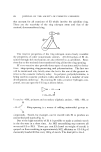
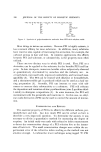
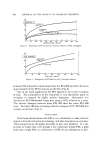
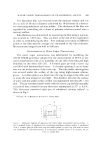
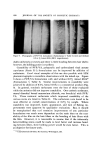
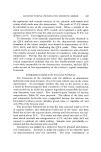
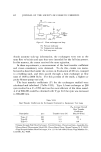
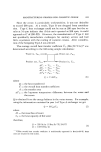
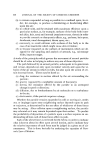
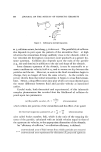
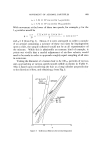
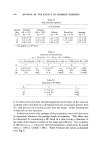
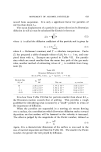
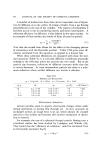
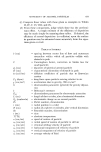
596 JOURNAL OF THE SOCIETY OF COSMETIC CHEMISTS N-C-C + •o • HO•C-C--N--C--C--O-)--H I n C H20 SOLUBLE OIL INSOLUBLE C •N-C7C +"1•0 ---• HO-(--C--C-iN--C--•-O-)-E-. H C C H:,O INSOLUBLE OiL SOLUBLE Fig•tre 2. Copolymerization of l-ethylaziri(line with ethylene oxide (al)o•e) an(l with propyl- e'•c oxide (beh•w) These alternating copolymers undergo two major types of reactions: (a) the hydroxyl end groups react in a manner similar to alcohols and polyglycols, and (b) the tertiary nitrogens in the backbone tindergo reac- tions similar to those undergone by simple tertiary amines. Compounds containing active hydrogens, such as alcohols, can be oxaminated as dem- onstrated below. R-OH + •N-R' + •0 • R-O-•- C--C-N-C--C--O r4• H Methanol, octanol, dodecanol, isopropanol, diethylene glycol, glycerine, and polyvinyl alcohol are jus,t a few of the compounds that have been successfully oxaminated. Again, the physical and chemical properties of the compound can be varied depending tipon the oxide and aziridine toohomers used. Surface-active disinfectants and antimicrobial agents have been pro- duced by quaternizing oxaminated products with methyl chloride (Fig. 24). This particular compound is very similar to already existing antimi- crobial products. This chemistry opens a whole new area because the properties of these products can be greatly varied depending tipon the selection of oxide and aziridine monomers and alcohols. (C"3)•C-CHz(CH•)zC-'• OH + PhCHzCHzN•] +•__•0• CHiCle_ • CH2CH2Ph I + - (CH3)3C-CH•(CH3)•C-'•/ •Nk• -- O--CH2CHzN -CH2CH20H cm Figure 3. Quatcrnization of oxaminalcd products with methyl chloride

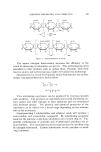
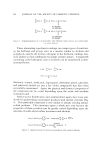
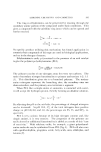
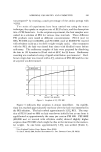
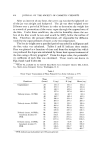
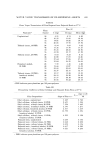
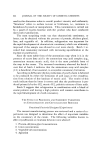
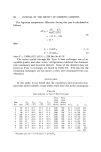
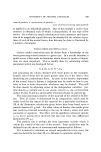
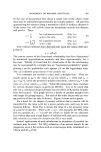
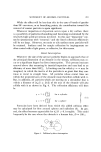
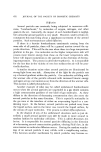
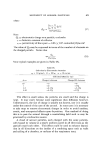
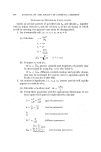
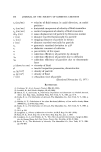
AZIRIDINE CHEMISTRY AND COSMETICS 597 The ring in ethylenimine can be preserved by reacting through the secondary amine portion o[ the compound under basic conditions. This gives a compound with the aziridine ring intact which can be opened and further reacted. o NH + R-•-X + BASE - R-C-N•] + BASE ß HX No specific product utilizing this mechanism has found application in cosmetics but compounds o[ this type are used in biological applications, such as in the therapy o[ tumors. Ethylenimine is easily Fo'.ymerized in the presence o[ an acid catalyst to give the polymer polyethylenimine (PEI). •NH ACID • _½CH2 CH2 N•)•:. CATALYST The polymer consists of one nitrogen atom for every two carbons. The ratio of secondary nitrogen functionality to primary and tertiary is 2: 1: 1 (1). This distribution gives rise to a branched polymer. The tertiary amino nitrogens represent the branching sites, the secondary ones are chain extenders, and the primary ones terminate a seg•nent. When PEI, like a simple amine or ammonia, is contacted with water, it will accept the hydrogen proton, thereby forming an alkaline solution. H •NH + HzO • IiN © H + OH By adjusting the pH to the acid side, the percentage of charged nitrogens can be increased. At pH 10.5, 4% of the total nitrogens have positive charge at pH 8.0, 6.0, and 4.0, the percentages are 25, 33, and 50%, re- spectively. PEI is very cationic because of its high nitrogen content and, like simple amines, it is very rea,ctive. The properties of the polymer are easily altered or additional functionality is added as a result of this "ease of reactivity." With ethylene oxide, for example, a giant polyethanol- amine molecule can be synthesized from PEI (Fig. 4). PEI will also react with epichlorohydrin, propylene oxide, fatty acids, urea, aldehydes, and ketones (2).
Purchased for the exclusive use of nofirst nolast (unknown)
From: SCC Media Library & Resource Center (library.scconline.org)