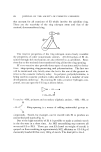
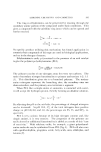
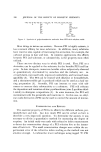
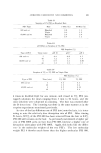
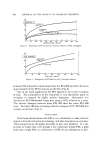
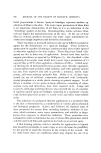
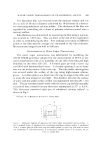
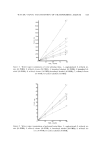
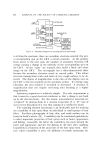
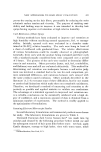
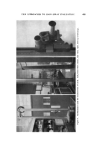
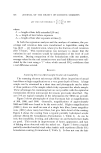
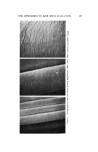
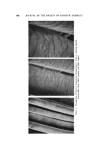
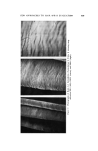
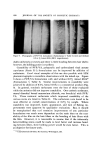
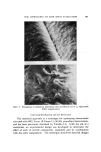
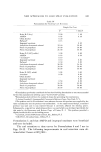
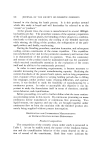
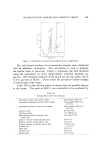
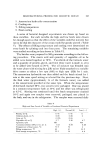
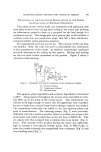
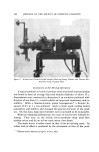
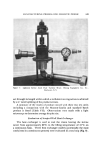
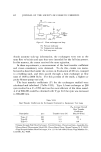
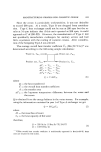
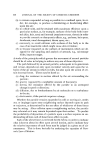
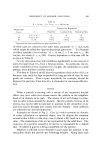
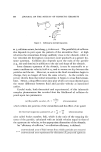
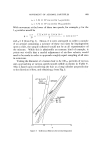
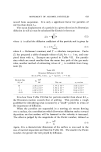
620 JOURNAL OF THE SOCIETY OF COSMETIC CHEMISTS •CO. LENS • CONDENSER I m i i LENS '-'""-' I .-,-.,-,I MAGNIFICATION SUPPLY I .' •,•/'//xm i •//x• UNIT • I LEN ...F--• I v'wl CO•LS / I SCANNING I " • •1 CIRCUITS ELECTRON- I •.•5•.•.. ' ' I I COLLECT•O, SYSTEM '""'T•--'• I,ECORD U,IT j • '•1 • ' s••l VACUUM SYSTEM / / I AMPL,F,ERS I is striking the specimen, there are secondary electrons emitted that give a corresponding spot on the CRT a certain intensity. As the primary beam moves to the next spot, the number of secondary electrons will change causing a change in the intensity of the corresponding spot on the CRT. As the "spots" are scanned, they build a black and white image on the CRT. The micrograph has a three-dimensional effect because the secondary electrons travel in curved paths. This allows electrons coming from cracks and holes of very rough surfaces to be de- tected. The degree of magnification is the ratio of the display area on the CRT to the area scanned on the specimen surface. To change mag- nification, the area scanned is increased or decreased. A decrease in magnification does not require refocusing after focusing at a higher magnification. Specimen preparation is relatively simple. The only requirement is that it must be a good electrical conductor so that a charge is not built up by the electron beam. For this reason, nonconductive materials are "prepared" hy placing them in a vacuum evaporator (3 •( l0 a mm of mercury) for deposition of a very thin coating of a conductive metal. The scanning electron microscope is an invaluable tool for studying the coatability of hair spray films on individual or small groups of hair fibers. Excellent photographs of hair, skin, and tooth surfaces can be found in Swift's article (12). Coatability can be correlated qualitatively to other important properties of hair sprays such as luster, appearance, and flaking. Generally, the better the coatability, the more natural the luster and appearance and the less flaking in the hair after combing. Coatability is a function of the properties of the hair spray resin. How- ever, where coatability is poor, the addition of certain surfactants im-

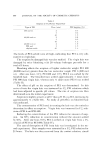
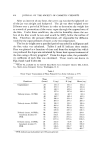
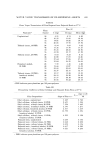
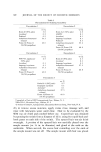
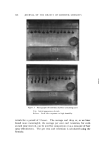
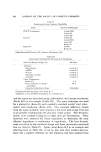
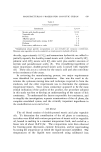
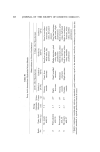
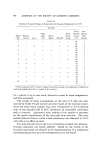
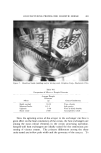
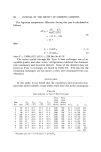
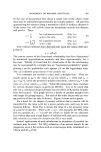
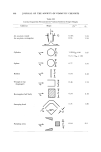
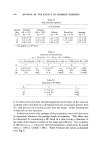
NEW APPROACHES TO HAIR SPRAY EVALUATION 621 proves the coating on the hair fibers, presumably by reducing the resin solution's surface tension and viscosity. The purpose of studying coat- ability and finding ways to improve it was intended to develop hair sprays having superior curl retention at high relative humidity. Curl Retention o[ Hair Sprays Various methods have been evaluated to improve curl retention at high humidity without sacrificing natural appeaarnce, feel, or manage- ability. Initially, sprayed curls were evaluated in a chamber main- tained at 95-98% relative humidity. The curls were hung in front of a sheet of cardboard with graduated lines. The relative effectiveness of various formulations could be visually observed or photographed. Generally, three curls with the product being evaluated and three curls with a standard (usually considered best) were compared over a period of 3 hours. The pictures of the curls were studied to determine differ- ences in curl retention. Other pror•erties (luster, tack, feel, combability, and flakiness) were and still are evaluated subiectively. This method for determining curl retention was inadecluate because a sub'ective judg- ment was involved, a standard had to be run for each comparison, pic- tures minimized differences, and variations between curls st)rayed with the same product caused confusion. Other methods described in the literature (4, 7, 9) overcame some of these difficulties, but for one reason or another had limitations which made them not completely satisfactory. Therefore, we developed a method of measuring curl retention as ob- jectively as possible and applied statistics to validate our conclusions. The advantages of a statistical approach to improved curl retention are: it is reliable, conclusions can be statistically validated with a high de- gree of confidence, and a maximum amount of data is obtained from a •ninimum number of experiments. The method is readily applied to the optimization of formulations. Scanning Electron Microscope Studies Several laboratory formulations and commercial products were chosen for study. The laboratory formulations are given in Table I. Untreated European dark brown human hair* was made into 3-g switches and cleaned by the following procedure before initial use and for subsequent removal of hair spray films before reuse: wet hair, apply Castile shampoo, massage to high lather, rinse with warm water, towel • DeMeo Brothers, New York, N. Y.
Purchased for the exclusive use of nofirst nolast (unknown)
From: SCC Media Library & Resource Center (library.scconline.org)