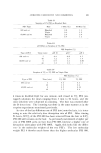
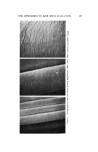
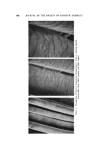
618 JOURNAL OF THE SOCIETY OF COSMETIC CHEMISTS Root (1) and Shansky (2) both have described the historical develop- ment of resins used in hair sprays. A number of people have described various methods for evaluating the many different properties which affect a hair spray's performance and appearance (3-8). Of all the prop- erties (curl retention, luster, flaking, moisture permeability, tackiness, drying time, film hardness, coatability, combability, shampooability, dry- hess, build-up, feel), holding power or curl retention, along with those factors affecting it, has been the most extensively studied. The results of a series of Freon©* Products Division's consumer surveys on hair sprays also indicated the importance to the consumer of curl retention at high humidity without sacrificing natural appearance, feel, or manage- ability. The development of hair sprays having superior curl retention at high humidity, while maintaining other desirable qualities, was first ap- proached by studying the coatability and leveling of various hair spray films on individual or small groups ot5 hair fibers with a scanning electron microscope. The use of this instrument is described. The improve- ment of coatability and other properties by addition of certain surfac- tatits to hair spray formulations is discussed. Several techniques for measuring and evaluating curl retention have been described (4, 7, 9). These and methods previously used by us were inadequate for meaningful quantitative comparisons. A reliable, sta- tistical approach was developed to permit formulation optimization. The method is described and discussed. EXPERIMENTAL Apparatus and Methods The Scanning Electron Microscope The scanning electron microscope (SEM) has been commercially available since 1965. A number of articles have been written describ- ing the instruments on the market and their many applications including those in toiletries research (10-13). A brief description of the scanning electron microscope and its relationship to optical and transmission elec- tron microscopes (TEM) will be helpful for understanding the use and the advantages of the instrument for studying coatability of hair spray films. * Registered trademark of E. I. du Pont de Nemours & Co., Wilmington, Del. 19898.

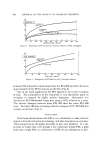
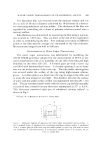
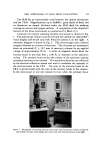
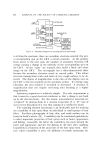
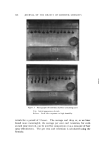
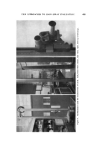
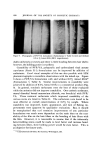
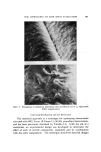
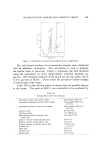
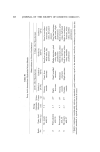
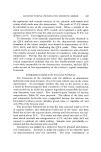
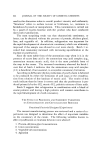
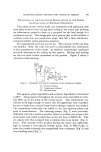
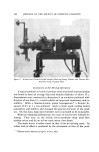
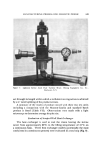
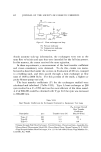
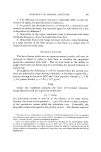
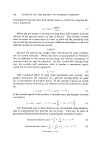
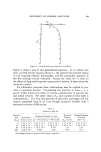
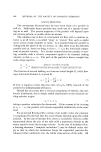
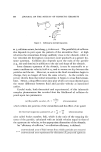
NEW APPROACHES '!'O HAIR SPRAY EVALUATION 619 The SEM fits an intermediate need between the optical microscope and the TEM. Magnifications up to 50,000X, gTeat depth of field, and no limitation on sample thickness make the SEM ideal for studying coatings on uneven and opaque surfaces. A comparison of the important features of the three instruments is summarized by Black (11). A picture of a typical scanning electron microscope is shown in Fig. I. The microscope column is on the left and the cathode ray tube (CRT) visual display and record unit with Polaroid camera is on the right. A schematic diagTam is shown in Fig. 2. The electron gun uses a heated tungsten filament as a source of electrons. The electrons are accelerated down an evacuated (2 X 10 -• mm of mercury) column by an applied voltage of approximately 25 kv. A series of magnetic lenses focus the electron beam to less than 0.01 t• (100 3,) in diameter at the specimen surface. The primary beam excites the surface of the specimen causing secondary electrons to be emitted. The secondary electrons are collected by the electron collection system and used to modulate the intensity of the electron beam in the CRT. The scan of the electron beam in the CRT is synchronized with the scan of the primary beam in the column. In the microscope at any one instant in time when the primary beam I Figure 1. Photograph of scareting electron microscope with microscope column on the left and cathode ray tube visual display and record unit with Polaroid camera on the right
Purchased for the exclusive use of nofirst nolast (unknown)
From: SCC Media Library & Resource Center (library.scconline.org)