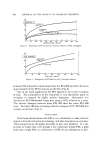
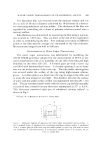
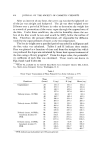
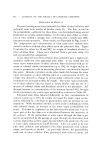
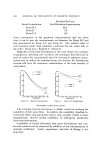
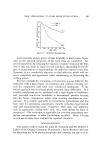
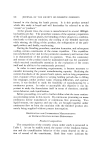
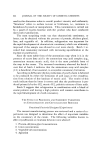
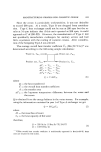
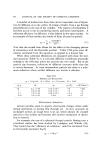
644 JOURNAL OF THE SOCIETY OF COSMETIC CHEMISTS used in this discussion refers to overall product viscosity and uniformity. "Structure" refers to surface texture or brittleness, i.e., resistance to breakdown by touch or manipulation. This examination is carried out by a panel of experts familiar with the product who have conducted many such examinations. The most surprising result was that characteristic consistency, or better, can be obtained without the presence of protein, alkylene glycol, lime, and vegetable oil. In addition, refrigeration was important for the rapid development of characteristic consistency which was ultimately improved if the sample was allowed to cool more slowly. Batch 1 re- vealed that consistency increased with increasing saponification at the expense of pearlescence. Since the most stable form of the ammonium soap when it is in the presence of excess fatty acid is the ammonium soap:acid complex (e.g., ammonium stearate:stearic acid), this is the most probable form of the soap in the cream. The increased consistency observed for batch 1 over that of batch 4 indicates that the ammonium soap:acid complex (1:1) is beneficial, if not essential, to acceptable consistency formation. According to deNavarre (6) the production of pearly sheen is believed to be produced by either the formation of acid soaps or the crystalliza- tion from solution of fine laminae of stearic acid. The results of this study indicate that the latter is correct and that the pearlescence is pro- duced primariiy by the 45% stearic-55% palmitic mixture of fatty acids. Batch 2 suggests that refrigeration in combination with a blend of stearic-palmitic acid having a high palmitic acid content contributes to the rapid development of a hard consistency. THE EFFECT OF PROCESSING AND INGREDIENT VARIATIONS ON EMULSIFICATION AND CRYSTALLIZATION BEHAVIOR Fractional Factorial Designed Experiment The current manufacturing process was reviewed and a series of ex- periments was designed to determine the effect of important variables on the consistency of the cream. The following variables known to affect crystallization or emulsion behavior were selected: 1. Protein-alkylene glycol concentration 2. Lime concentration 3. Vegetable oil concentration 4. Agitation

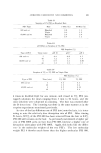
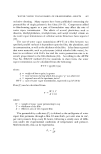
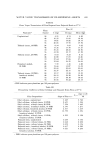
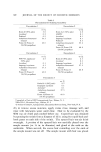
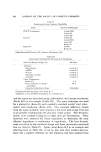
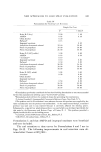
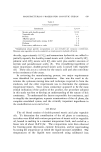
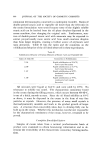
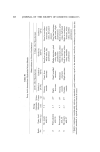
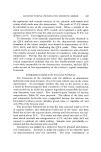
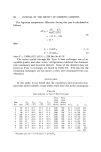
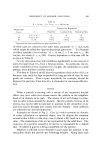
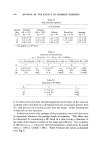
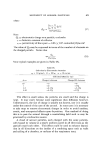
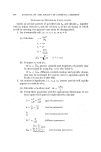
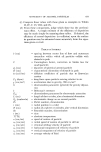
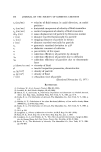
MANUFACTURING PROCESS FOR COSMETIC CREAM 645 5. Ammonium hydroxide concentration 6. Cooling rate 7. Filling temperature 8. Final cooling A series of factorial designed experiments was drawn up based on these variables. For each variable the high and low levels were chosen far enough apart so that the effect of the variable could be noticed, but not so far that the character of the cream would be greatly altered (Table V). The effects of filling temperature and cooling were determined on every batch by splitting each into four parts. The remaining variables were studied according to data shown in Table VI. The batches were prepared in 500-g amounts according to the follow- ing procedure. The stearic acid and quantity of vegetable oil to be added were heated together to 70øC. Two-thirds of the formula water and a quantity of protein, glycol, and lime (lime water is made in situ) to be added were heated to 70øC. The oil mixture was blended into the water phase with stirring by a Jiffy mixer blade attached to a variable drive motor at either a low rpm (460) or high rpm (920) for 1 min. The ammonium hydroxide was then added and the batch stirred for 1 rain at the same speed setting as selected for the previous step. Next, the final water (approximately ¬ of the formula water) was added at the temperature specified at the same rpm. When the temperature of the batch reached 40øC, two samples were packaged. One was placed in a constant temperature bath at 34øC and the other was refrigerated at 4.5øC. Stirring was continued until the batch temperature reached 34øC and again two samples were removed, packaged, one placed in the bath, and one in the refrigerator. The samples were removed daily Table V High and Low Levels of Variable m Fractional Factorial Experiments High (-[-) Normal (0) Low (--) Protein, wt % 0.45 Alkylene glycol, wt ½/c 0.80 Lime, wt % 0. 096 Vegetable oil, wt % 5.7 Agitation, rpm 920 Ammonia solution (28% w/w), wt • 1.02 Temperature of final water, øC 73.9 Filling temperature, øC 40 Final storage temperature, øC 33.9 0.45 0 0.80 0 0.06 ... 5.20 4.7 ... 460 0.85 0.68 70 0 41 33.9 10 4.4
Purchased for the exclusive use of nofirst nolast (unknown)
From: SCC Media Library & Resource Center (library.scconline.org)