642 JOURNAL OF THE SOCIETY OF COSMETIC CHEMISTS

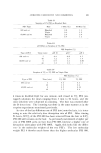
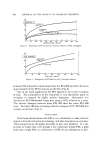
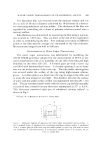
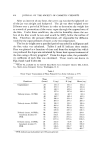
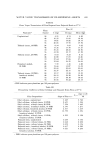
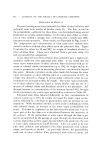
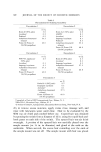
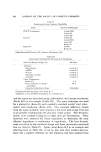
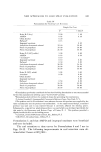
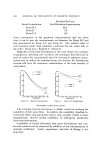
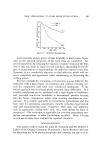
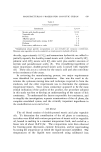
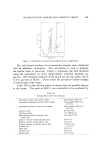
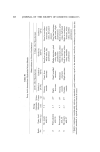
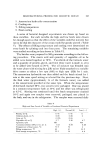
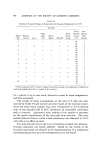
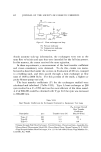
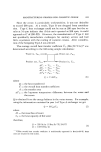
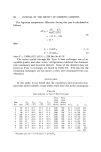
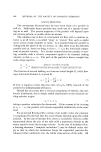
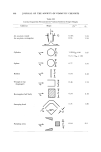
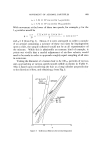
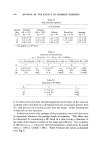
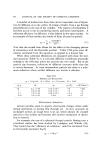
MANUFACTURING PROCESS FOR COSMETIC CREAM 643 the equimolar and eutectic mixture of the palmitic acid-stearic acid system which melts near this temperature. The peaks at 37.4øC cannot be identified as any of the components listed. When a sample of the cream was reheated to about 70øC, cooled, and examined, a peak again appeared at about 56øC, but the peak previously occurring at 37.4øC was shifted to 33 øC. This suggests a polymorphic crystal form. To determine if the materials represented by the peaks obtained in the QTA analysis were responsible for the characteristic consistency formation of the cream, samples were heated to temperatures of 34øC, 38øC, 46øC, and 56øC, bracketing the QTA peaks. They were then cooled slowly to room temperature and the consistencies were checked. The samples showed a gradual decrease of consistency with increasing temperature. The fact that the consistency appeared to diminish grad- ually over a range of temperatures rather than significantly at a single critical temperature indicates that the free double-pressed stearic acid is not solely responsible for the characteristic consistency, and the QTA peaks are not in fact representative of the product's typical consistency formation. Components Critical to the Emulsion Formation The formation of the emulsion with the addition of ammonium hydroxide is the most dramatic, if not the most critical, step in the cream manufacture. To investigate whether .this step in the process is also a factor in determining the final consistency of the cream, experiments were carried out in which the primary ingredients responsible for emul- sion formation were varied. Five hundred-gram batches of various compositions (Table IV) were prepared. The effects of the fatty acid and ammonium hydroxide were exaggerated because the mixture was formulated without protein, alkylene glycol, lime, or vegetable oil, and only 70% of the formula water. The procedure followed was to heat the fatty acid and water to 71øC in separate beakers, add ammonium hydroxide to the water, and then blend the oil into the aqueous phase, stirring until the mixture was uni- form and at about 55øC. The cream was then placed into jars at 55øC, after•'•hich one-half was refrigerated at 4.4øC and the other half was exposed to ambient air while cooling. Samples were periodically ex- amined and the observations were recorded. Consistency was judged on a subjective basis by physical and destruc- tive examination. Attempts to judge the 'product on an objective basis via instrumentation were not successful. The term "consistency" as
Purchased for the exclusive use of nofirst nolast (unknown)
From: SCC Media Library & Resource Center (library.scconline.org)