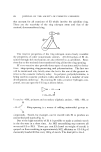
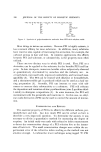
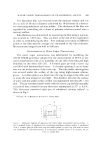
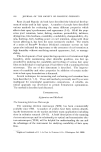
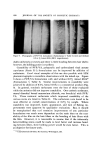
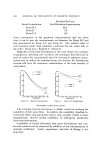
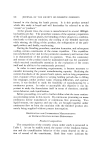
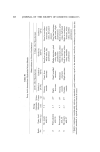
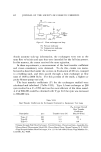
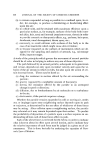
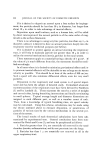
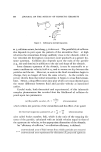
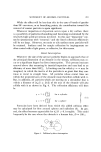
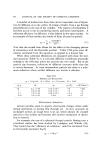
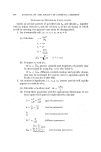
598 JOURNAL OF THE SOCIETY OF COSMETIC CHEMISTS Figure 4. Synthesis of pol)•ethanolamine molecule from PEI with ethylene oxide Most things in nature are anionic. Because PEI is highly cationic, it has a natural affinity for most substrates. In addition, many substrates have reactive sites capable of increasing this attraction, for example, the carboxyl groups in hair and skin. In cosmetic applications this affinity between PEI and substrate, or substantivity, is the property most often utilized. There are two distinct ways in which PEI is used. First, PEI or a derivative can be applied to the substrate for the benefits PEI itself im- parts. In hair shampoos, numerous benefits either subjectively observed or quantitatively determined by ourselves and the industry are: in- creased sheen, increased body, improved combability, and increased man- ageability (3). The PEI can be reacted with diketene or formaldehyde, and a thermoreversible gel is produced which can be used as a hair set- ting preparation (4). Secondly, PEI can interact or react with sub- stances to increase their substantivity to a substrate. PEI will enhance the deposition and retention of zinc pyridinethione (zinc 2-pyridine-thiol- 1-oxide) in detergent compositions (5). In some instances, the PEI will overinteract with the germicide and inactivate it. In this case, an ethyl- ene oxide derivative of PEI can be used to control the amount of interac- tion. EXPERIMENTAL AND R•St•LTS The essential property of PEI is its affinity for different surfaces, par- ticularly hair and skin. Just how much PEI can be sotbed on hair is therefore a very important question. To determine the answer, it was necessary 'to devise a quantitative method for measuring the degree of sotpriori. An initial study was made with refractive index measurement to detect the concentration change of a PEI solution due to the immer- sion of hair in it. The small concentration changes were within the ex- perimental error of the refractive index reading so the method was not sensitive enough. A radioactive tracer technique using tagged $4C PEI

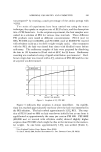
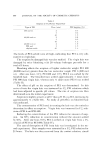
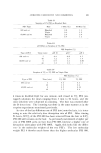
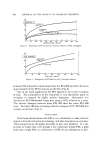
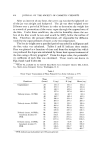
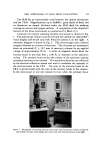
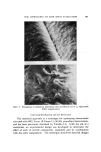
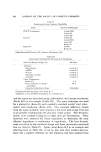
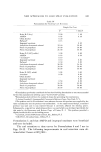
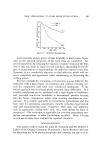
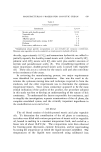
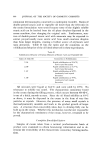
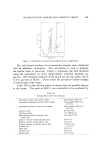
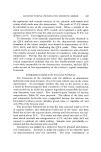
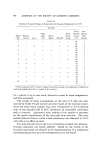
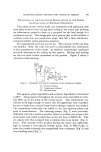
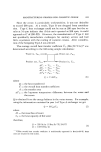
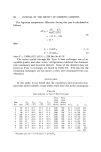
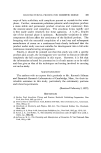
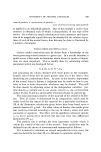
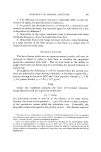
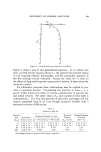
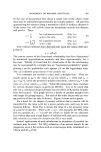
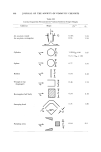
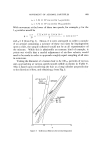
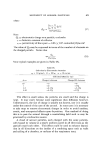
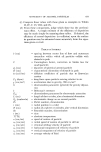
AZIRIDINE CHEMISTRY AND COSMETICS 599 was prepared * by reacting a small percentage of the amino groups with •4CH.qI. Two series of experiments have been cart'led out using the tracer technique, the uptake or sorption rate of PEI by hair, and the desorption rate of PEI from hair. In the sorption experiment, the hair samples were soaked in a solution of PEI for various time intervals. Three different PEI products were tested at different concentrations: PEI 6 (tool wt 600), PEI 600 (mol wt 60,000), and PEI 600E (mol wt 60,000 PEI reacted with ethylene oxide at a 1 to 0.75 weight-weight ratio). After treatment with the PEI, the hair was rinsed four times with distilled water before radioassay. The radioassay samples of hair were prepared by dissolving the hair in lag hyamine in 20-ml vials at 60øC for 24 hours. Radioassay counting was conducted using a liquid scintillation spectrometer.* Dark brown virgin hair was treated with a 5% solution of PEI 600 and the rate of sorption was determined. 0 10 20 30 40 50 60 70 80 CONTACT TIME, MINUTES oeigt•r½ 5. $orption of 5% PE! 600 Figure 5 indicates that sorptio,n is almost immediate. An equilib- rium was reached approxima. tely one hour after the hair was immersed in the PEI solution. The hair sorbed approximately 1.2% PEI. The sorp- tion of PEI 6 (mol wt 600) on hair was slower initially but at one hour it equilibrated at approximately the same per cent as PEI 600. PEI 600E (600,000 mol wt reacted with ethylene oxide) showed slightly higher sorption than PEI 600 which might be due to the increase in the molecu- lar weight. At one hour, approxima'tely 1.6% was sorbed (Table I). * New England Nuclear Corp., Boston, Mass. 02118. ? Tri-Carb, Model 3380, Packard Instrument Co., Inc., Downers Grove, Ill. 60515.
Purchased for the exclusive use of nofirst nolast (unknown)
From: SCC Media Library & Resource Center (library.scconline.org)