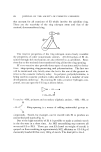
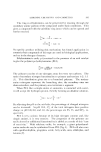
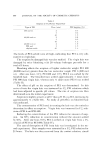
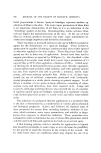
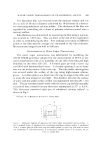
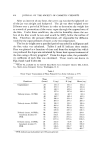
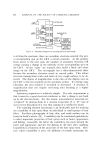
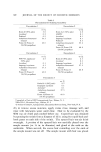
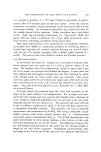
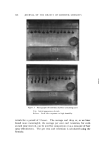
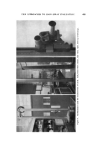
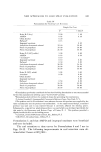
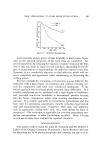
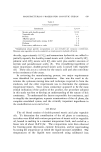
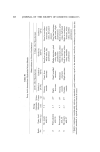
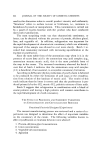
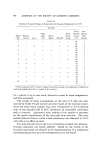
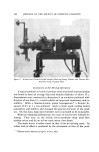
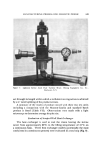
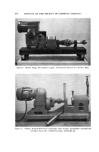
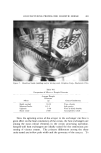
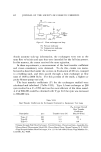
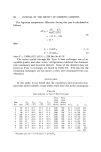
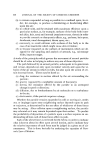
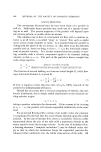
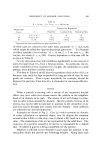
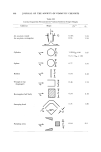
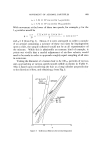
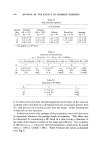
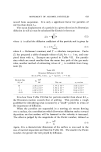
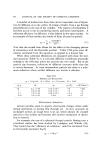
652 JOURNAL OF THE SOCIETY OF COSMETIC CHEMISTS NITI•OaEN • PSI i TI. Temperature indicator VA. Volt-amp meter obtain accurate scale-up information, the exchangers were run at the same flow velocities and rpm that were intended for the full-size process. In this manner, the cream received the same agitation. In these experiments, a measurement of the heat transfer coefficient and cream consistency were obtained. To do this, cream was manu- factured as described under the section on Evaluation of Miyers, pumped to a holding tank, and then passed through a heat exchanger at flow rates of 1400 to 2600 lb/hr. For this portion of the study, a higher ca- pacity Moyno pump was used. The heat transfer coefficients (U] for the exchangers studied were calculated and tabulated (Table VIII). Type A heat exchanger at 200 rpm resulted in a U of 225 and was the most efficient of the three tested. A U of 200-225 could be obtained with Type B if the rpm was increased to 500-600 rpm. Table VIII Heat Transfer Coefficients for Exchangers Evaluated in Equipment Test Loop Description rpm Transfer Area (ft 2) O•, Average Overall Heat Transfer Coefficient (Btu/ft2-øF-hr) Type A a 200 0.7 225 Type B b 200 3.0 77.5 Type Cc 52 1.3 168 a Votator Scraped-Wall Heat Exchanger, Votator Division, Chemetron Corp., Louisville, Ky. b Cherry-Burrel Thermutator Model 624, Cherry-Burrel Corp., Mount Vernon, N.Y. 10553. c Vogt Scraped-Surface Heat Exchanger, 6 in. X 8 in. lab model, Henry Vogt Machine Co., Louisville, Ky. 40201.

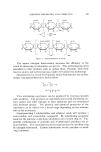
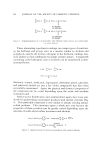
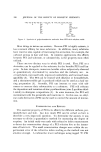
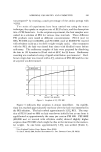
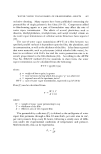
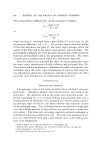
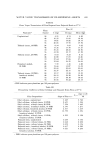
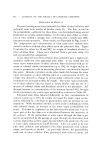
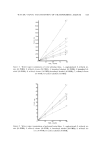
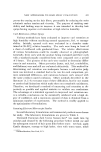
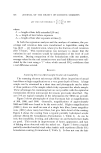
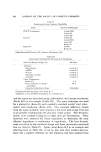
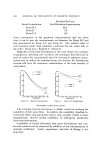
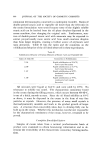
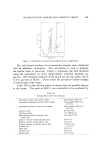
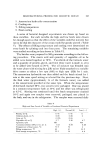
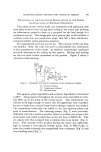
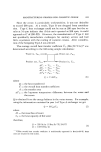
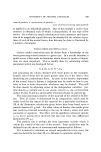
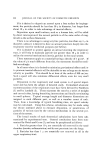
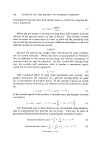
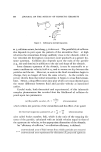
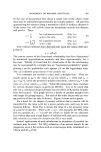
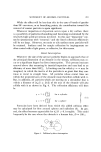
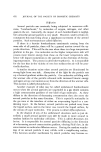
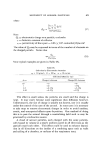
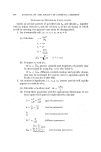
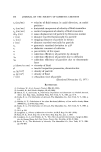
MANUFACTURING PROCESS FOK COSMETIC CREAM 653 Since the cream is particularly work-sensitive, it was not desirable to exceed 200 rpm. As a result, Type B was dropped from considera- tion. Type C heat exchanger could not be run at 20'0 rpm but the re- sults at 54 rpm indicate that if this unit operated at 200 rpm, it could approach a U of 200-225. However, the manufacturer of Type C did not specifically manufacture exchangers for sanitary service and had little experience with the cooling of cosmetic creams. After considera- tion of the foregoing Type A was selected. __ The average overall heat transfer coefficient Uw (Btu/ft2-øF-hr) * was determined according to the following sample calculation: Water in, Product out, Trout • Water out, • • Product in, A T,• = Tv•. -- Tw A To = Tv .... -- Twi• ATe = Tpi n -- Tvou,, • Tw = Tw .... -- Q = UA•T•.• where Q •- the heat transferred U = the overall heat transfer coefficient A = the transfer area zxT•,• z the log-mean temperature difference between the water and the cream Q is obtained from the energy balance in the water stream. For example, using the in[ormation contained in pass 1 of Type A exchanger we get. (2 = MC•,aTw (2) where M -- the mass flow of water Cv -- the heat capacity of the water therefore, Q = 528 lb/hr (1 Btu/lb-øF) 24.8øF Q = 13094 Btu/hr (3) * Since overall heat transfer coefficient is traditionally expressed in Btu/hr-ft•-øF, these units are retained in this section.
Purchased for the exclusive use of nofirst nolast (unknown)
From: SCC Media Library & Resource Center (library.scconline.org)