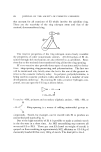
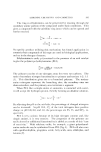
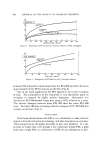
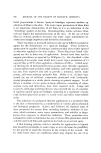
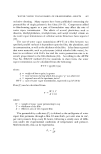
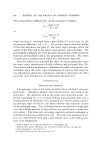
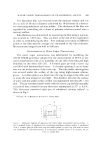
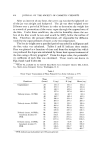
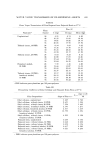
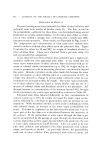
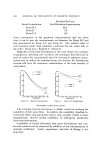
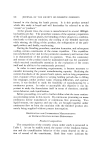
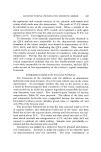
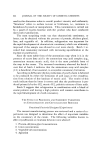
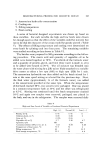
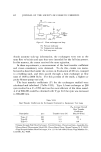
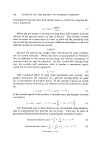
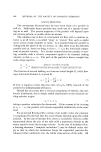
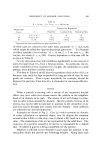
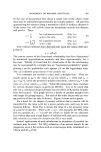
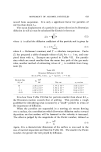
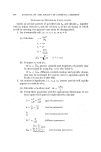
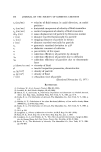
662 JOURNAL OF THE SOCIETY OF COSMETIC CHEMISTS horizontally from the start with initial speed Uo, called the stopping dis- tance, is given by pvdv2uo x8 = •u0 .... (1) 18/• When the air stream is moving, the drag force will depend upon the velocity of the particle relative to that of the air. This relative velocity must be taken in a vector sense in order to allow for the possibility that the air and the particle may be moving in different directions as well as at different speeds, at a particular instant. Gravity Because the particle has weight, there will always be some tendency for it to move vertically. When this force is incorporated in Newton's law, in addition to the always present drag, the vertical component of motion in still air may be obtained. In free vertical fall starting from rest, the particle will accelerate until it reaches a maximum speed, called the terminal velocity, given by us = g• (2) The combined effect of drag (both horizontal and vertical) and gravity determines the trajectory of a particle moving freely in quiet air, in the absence of all other forces. If the particle is given an initial horizontal velocity at speed u0, the distance traveled horizontally is given by x = xs(• - e -t/•) = u0•(1 - e-t/•) (3) If the vertical speed of the particle is initially zero, the distance traveled vertically is y =ust--usr(1--e -t/•) = usa-f --(1--e-t/•)] (4) The horizontal and vertical distances are determined independently, and in combination they describe the tra,:•ectory. This may be done in generalized dimensionless form by expressing the variables in ratios: horizontal distance ratio x x X s I•OT vertical distance ratio - y y t us• g•2 • 1 - •-t/, (5) (1 - e -t/v) (6) time ratio = t/•'

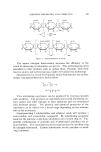
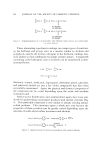
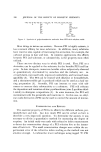
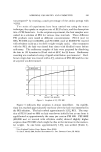
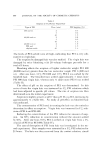
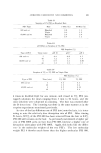
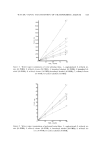
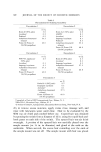
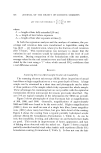
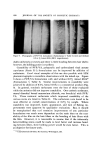
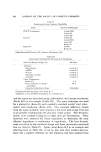
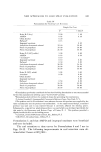
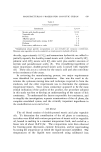
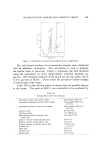
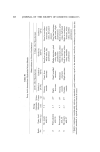
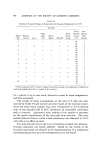
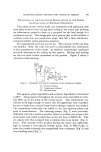
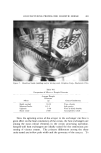
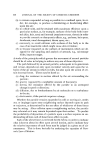
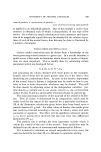
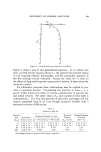
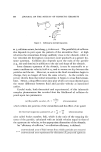
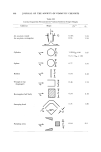
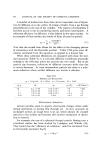
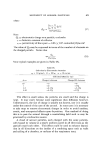
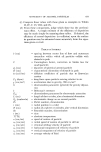
MOVEMENT OF AEROSOL PARTICLES 663 0 •) X/x s o5 tQ 9 Figure 1. General trajectory of particle in still air Figure 1 shows a plot of this generalized trajectory. It is evident that after a period of time equal to about 5 •, the particle has traveled almost its full stopping distance horizontally, and has practically attained its full free settling velocity vertically. Clearly the value of ß is basic to the effects of drag and/or gravity upon particle motion. It determines the values of xs and us. For illustrative purposes these relationships may be applied to par- ticles of practical interest. Considering the material to have p = 1 g/cm a, Table I shows the effect of various combinations of particle size and initial velocity. For other values of p, each number in the table is multiplied by •. It is clear that particles of about 50 t* and larger will not remain suspended long in air even though proiected initially with a horizontal velocity of 100 cm/sec. Table I Motion in Still Air Particle Stopping Distance (x,, cm) Terminal Vertical Distance Size Relaxation Velocity Traveled (d•, t•) Time (r, sec) u0 = 10 cm/sec u0 = 100 cm/sec (u, cm/sec) after 1 sec 1 ø 3.54 X 10-0 3.54 X 10 -s 3.54 X 10 -4 3.47 X 10 -a 3.47 X 10 -a 10 3.08 X 10 -4 3.08 X 10 -a 3.08 X 10 -2 3.02 X 10 -• 3.02 X 10 -• 50 7.70 X 10 -a 7.70 X 10 -20.770 7.55 7.55 100 3.08 X 10 -20.308 3.08 30.0 29.1 Cunningham factor is required (see footnote, page 661 ).
Purchased for the exclusive use of nofirst nolast (unknown)
From: SCC Media Library & Resource Center (library.scconline.org)