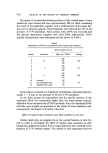
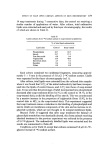
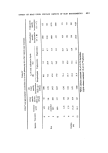
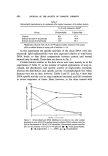
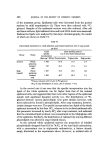
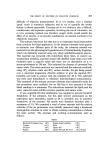
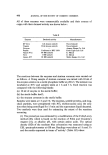
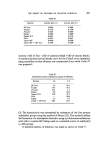
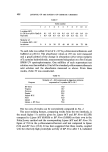
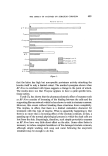
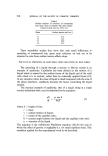
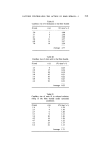
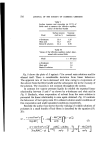
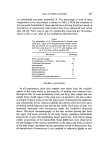
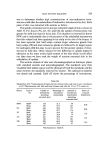
482 JOURNAL OF THE SOCIETY OF COSMETIC CHEMISTS the cultured tissues were not accurately known. In order to achieve stan- dardization of radioactivity data, total DNA was measured in all tissues and labelling parameters were then expressed relative to tissue DNA levels. For this purpose it was assumed that total DNA was representative of the total tissue cell nuclei, and, accordingly, the absolute amount of tissue taken. Total weights of cultured tissues were never considered since large errors were always incurred in weighing small fragments of tissue. A soap-treatment experiment was performed on both rats and guinea- pigs, to deduce whether the effects demonstrated were species specific for the rat, or more general phenomena associated with the response of mammalian skin to soap irritation. The animals received four treatments with soap per day, one of each species being treated for 3 consecutive days, one each for 2 days and one each for 1 day (giving, respectively, 12, 8 and 4 soap treatments). Control animals of each species received 12 topical treatments with water during 3 days. At the end of the treatment period histological samples were prepared for assessment of irritancy, and 200 gm thick epidermal sections were cultured with either •4C-thymidine or •C-glycerol. DNA specific activities were measured in the thymidine experiment (in dpm incorporated gg-X DNA) and lipid specific incorporations calculated from the glycerol experiment (expressed as dpm incorporated into lipid gg-X DNA). The distribution of radioactivity within the various lipid classes was measured by thin-layer chromatography. The results are summarized in Table IV. It was seen that in both rats and guinea-pigs the biochemical responses to soap irritation were quite similar. The irritancy scores for the guinea-pig were higher than the rat, probably reflecting a greater susceptibility to the method of treatment, and it was seen that there was a corresponding massive increase in total lipid radioactivity after 12 treatments. Analysis of the labelled lipids showed a similar increase in the proportion of triglycerides compared with phospholipids, as was seen with the rat. In both species the specific activity of DNA increased with number of soap treatments and in the animals treated 12 times, this began to decline. In the rat, total lipid labelling followed this trend too. In both species studied, soap treatment generally caused increases in specific incorporation into lipid and also in the proportion of triglyceride labelled too. When these two values were combined (column A x column C), to calculate specific incorporations into triglycerides (expressed in dpm incorporated into triglyceride gg-X DNA) it was found that there were increases in this parameter with treatment, reflecting a greater synthesis of this lipid class. These massive increases were

EFFECT OF SOAP UPON CERTAIN ASPECTS OF SKIN BIOCHEMISTRY 483
Purchased for the exclusive use of nofirst nolast (unknown)
From: SCC Media Library & Resource Center (library.scconline.org)