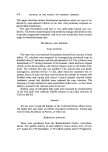
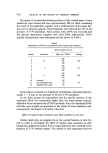
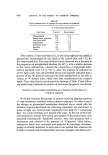
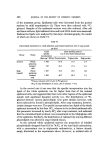
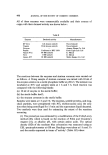
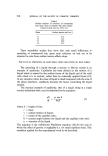
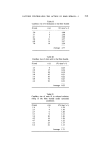
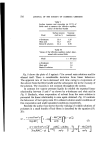
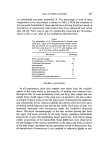
480 JOURNAL OF THE SOCIETY OF COSMETIC CHEMISTS Table III Lipid synthesis from x4C-glycerol in soap-treated rat epidermis % of total lipid radioactivity Lipid class Control Soap treated Phospholipids 55.8 11.7 Sterois/lower glycerides 17.9 7.0 Free Fatty acids 1.1 1.1 Triglycerides 17.9 73.1 Sterol/wax esters 1.3 2.2 Squalene 0.4 0.4 Others 5.6 4.5 After culture, it was found that 0.5• of the initial radioactivity added as glycerol was incorporated into the lipids of the control skin, and 1.3•o for the soap-treated skin. The most obvious feature observed was a decrease in the proportion of phospholipid labelling (by 44•o), with a smaller decrease in free sterol radioactivity, whereas the proportion of triglyceride radio- activity increased from 1.9 to 73.1•o. Also, the presence of radioactivity in free fatty acids, free and esterified sterols and squalene indicated that a portion of the x4C-glycerol substrate had been metabolized by the skin in culture to •4C-acetate units, which were then resynthesized into complex lipids. These data clearly corroborated the findings of Table II that follow- ing topical soap treatment the pattern of cutaneous lipogenesis was altered. Variation in glycerolipid metabolism as a function of the degree of irritation response We found routinely that groups of animals receiving identical numbers of soap treatments exhibited varied irritation responses. In order to see if the changes in glycerolipid metabolism described above varied with the irritation response developed, the following experiment was performed. A group of eight rats received soap treatments twice daily for 7 consecutive days: two control animals were treated with water. At the end of the treat- ment period the animals were killed and samples of the treated areas were examined histologically. Epidermal sections were also prepared with a keratotome and cultured in the presence of •4C-glycerol. After culture, radioactive lipids were extracted and analysed by thin-layer chromato- graphy as already described. In each case it was noticed that whenever the irritation response had developed there were also changes in the relative pro-

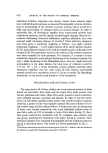
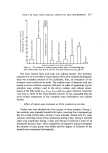
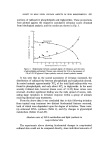
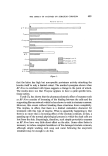
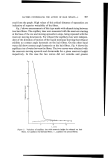
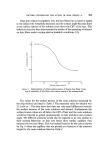
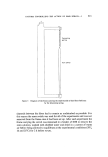
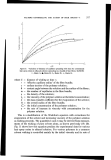
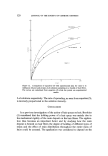
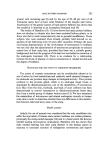
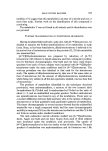
EFFECT OF SOAP UPON CERTAIN ASPECTS OF SKIN BIOCHEMISTRY 481 portions of radioactive phospholipids and triglycerides. These proportions were plotted against the respective cumulative irritation scores obtained [•rom histological analysis, and the results are shown in Fig. 3. I00 - - Phospholipids • 5o • _ - \ I I I I I I I I I I ,I I I 2 3 4 5 6 7 8 9 I0 II 12 Scored assessment of irritation Figure 3. Relationship between assessed degree of irritation and the types of glycerolipids synthesized. Tissues were cultured for 24 h in the presence of 5.0 IsCi U-x4C-glycerol. Open symbols, control closed symbols, treated. It was seen that as the scored assessment of irritancy increased, the distribution of radioactivity between phospholipid and triglyceride altered. In control animals approximately 705/o of the total lipid radioactivity was found in phospholipids, and only about 105/o in triglyceride. In the most severely irritated skin, however (mean score of 11.25) these values were reversed. Another significant finding was the wide spread of scores, indi- cating large variations in irritation response within a group of animals receiving identical soap treatments. From the above data it was concluded that in skin following irritation from topical soap treatment two distinct biochemical features occurred, both of which were dependent upon the degree of irritation. These were: (a) enhanced DNA synthesis (Table I), and (b), changes in glycerolipid metabolism (Tables H and III). Absolute rates of DNA metabolism and lipid synthesis in soap-irritated skin The experiments above showing biochemical changes in soap-treated cultured skin could not be compared directly, since individual amounts of
Purchased for the exclusive use of nofirst nolast (unknown)
From: SCC Media Library & Resource Center (library.scconline.org)